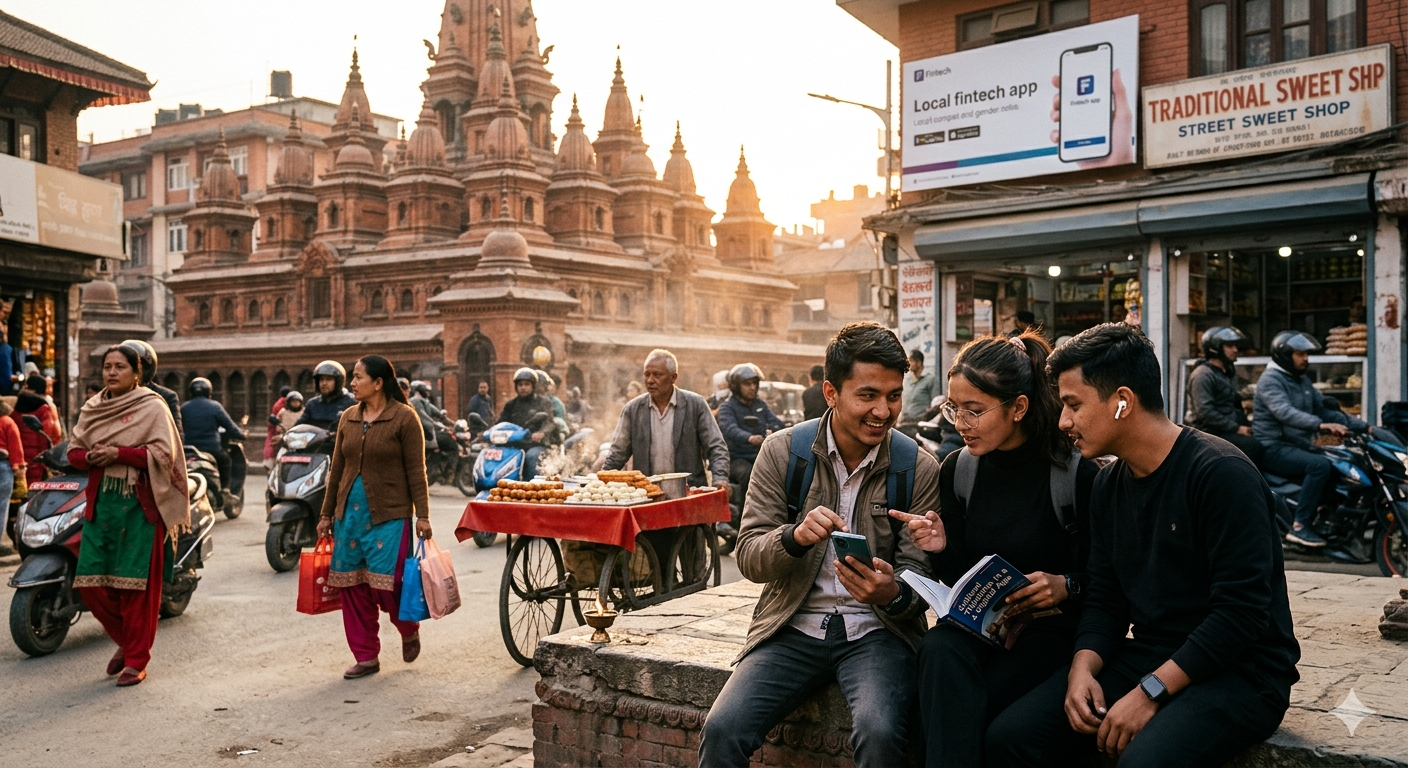
To the casual observer, Kathmandu presents itself as a living museum. A short walk through its winding alleys reveals a landscape dominated by the ancient: temples on nearly every street corner, the scent of incense wafting from morning rituals, and the vibrant, chaotic energy of festivals that have remained unchanged for centuries. Because religion is so deeply embedded in the rhythm of daily life, it is easy for a visitor to jump to a superficial conclusion: “This is a deeply traditional place; therefore, people do not question things.”
However, this perspective overlooks the complex cognitive evolution happening beneath the surface. Kathmandu is not a monolith of tradition; it is a city of two layers, where ancient rituals and globalized digital mindsets coexist in a state of productive tension.
The "Visibility Bias" of Logic
We often conflate public debate with the presence of critical thinking. In Western cities like those in the United States or Germany, logic is often "loud." Public discourse is characterized by open argumentation, highly organized systems, and a less visible presence of daily religious ritual. This leads to the assumption that these societies are inherently more logical.
Yet, development and "noise" do not always equal quality of thought. Even in highly developed nations, critical thinking is frequently replaced by confirmation bias. Algorithms on platforms like X (Twitter) and Facebook reinforce existing beliefs, creating ideological bubbles where emotional reasoning thrives. Openness increases the *visibility* of thinking, but it does not guarantee that the arguments are well-informed or evidence-based.
In contrast, in Kathmandu, critical thinking is often "quiet." It is growing fast, but it is frequently constrained by social contexts—such as the reluctance to openly challenge elders—meaning the questioning happens in private circles, on Reddit threads, or within the minds of the youth, rather than in the streets.The Digital Catalyst: From Rote Learning to Global DebateThe shift in how Kathmandu thinks is driven by a move from restricted information to an overabundance of it.The Old Model: Education was once authority-driven. Knowledge was "true" because the textbook said so. While this provided a structured foundation, it left little room for independent verification or multiple perspectives.The Modern Model:Today, platforms like YouTube, TikTok, and Reddit are the primary drivers of critical thinking. They have normalized the questioning of politics, gender roles, and even religion—discussions that were almost non-existent at scale 20 years ago.
However, this digital shift brings a new challenge of the illusory truth effect. When misinformation is repeated frequently on social media, people are more likely to accept it as fact. The burden has shifted from the *acquisition* of information to the *filtering* of it. Students today aren't necessarily more misinformed than previous generations; they are simply required to be much better at navigating a high-noise environment.
The Reality of the "Two-Layer" CityKathmandu’s current identity is a simultaneous experience of two distinct realities. Layer 1 (The Visible) - The UNESCO-listed cultural density, the elders following tradition, and the deep historical roots of Hinduism and Buddhism Layer 2 (The Invisible) - A thriving startup and fintech scene, youth who are skeptical of traditional politics, and a population that is increasingly exposed to global ideas through migration and the internet. These layers coexist in a way that can feel contradictory. A young developer might spend their morning performing a family ritual out of respect for their heritage, and their afternoon debating the ethics of AI or questioning social hierarchies on a global forum.
Nepal’s Path Forward
Building the Infrastructure of Thought. While the spark of critical thinking is bright among the urban youth, Nepal faces systemic hurdles. The education system remains heavy on rote learning, and the "brain drain" means many of the most critical thinkers leave the country to seek opportunities elsewhere.To move from *growing* critical thinking to *institutionalizing* it, the focus must shift toward s debate-Based Education and moving away from memorization and toward systems that reward evidence and problem-solving. Media Literacy envolves teaching the ability to verify sources and understand bias in an age of algorithmic dominance. Research Ecosystems should involve developing independent media and universities that allow for public, evidence-based inquiry.
Kathmandu is a city in transition. It is proving that a society can hold onto its temples while simultaneously embracing the skepticism and inquiry required for the modern world. The critical thinking is there; it is simply waiting for the social and educational systems to catch up to the agility of its people's minds.