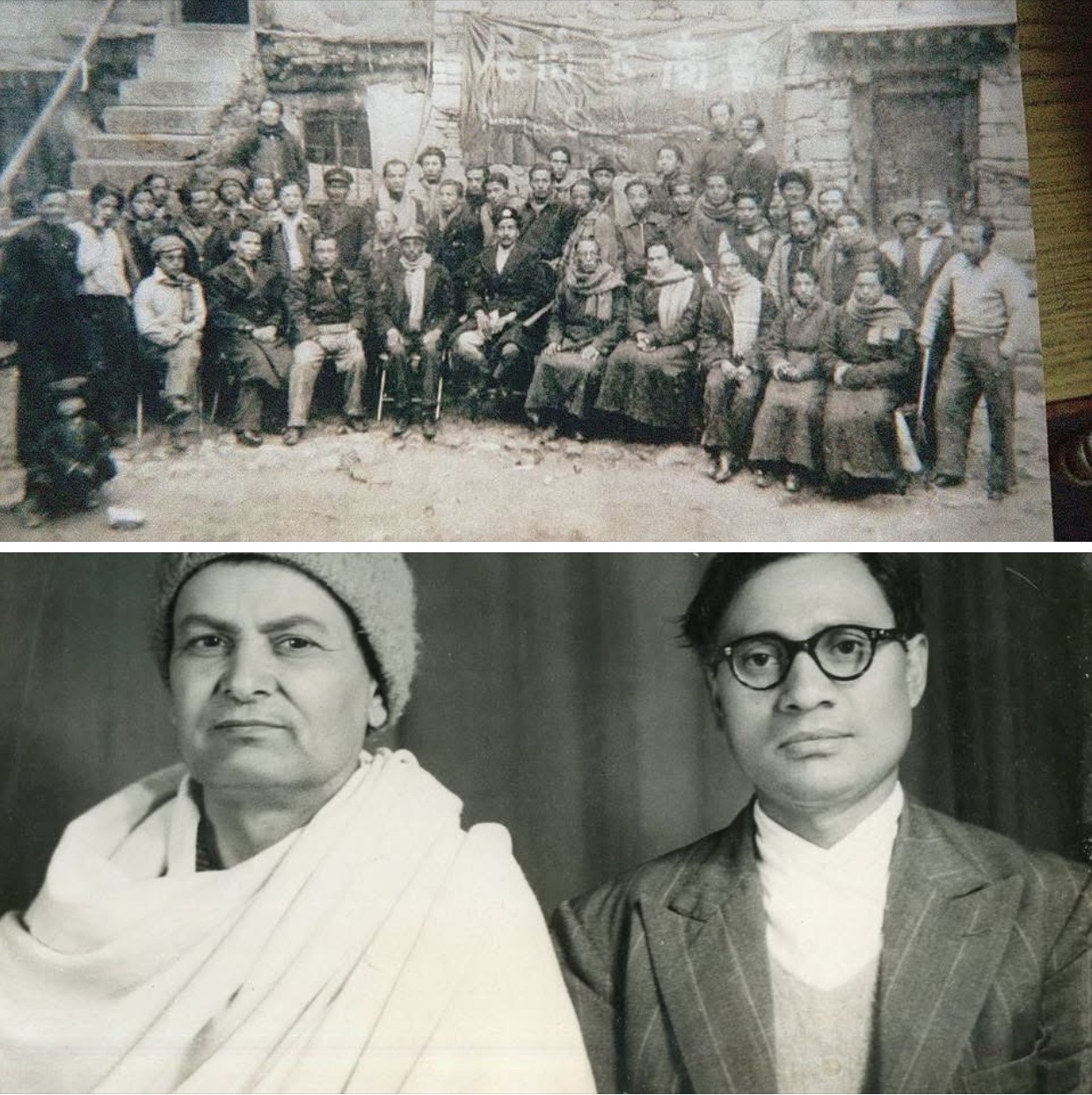
Navigating the "monastery politics" of 1930s Tibet was perhaps the most dangerous and delicate part of the Yami-Sankrityayan mission. At the time, Tibet was an isolationist theocracy, and its monasteries—like Sakya, Ngor, and Shalu—were not just religious centers; they were sovereign fortresses that guarded ancient knowledge as if they were state secrets.
As a respected Newar merchant, Dharma Ratna Yami had "social capital." He used his existing business relationships with the monastery’s administrators (Nyermas). He didn't frame Rahul as a "Marxist scholar" (which would have gotten them expelled). Instead, Yami introduced him as a "Pandit from the Holy Land of India" coming to pay homage to the Buddha's original words. This framing made the quest a religious pilgrimage rather than an academic heist.
The Tibetan government in Lhasa was wary of any foreign influence. While they were in the monasteries, Dharma Ratna Yami kept up the appearance of a trading mission.
TThe fact that the Lhasa Newar elders—the 'Lhasa Sahus,' many of whom are now over 90 years old—still speak of Dharma Ratna Yami, confirms that his reputation was known as a scholar. In the 1930s and 40s, Tibet was a place where "brave risks" often meant the difference between life and death.
In an article published in Smriti Grantha (BS 2046), Mr. Janak Lal Sharma wrote that Dharma Ratna Yami 'baked many papads' (struggled immensely) in trade; he was indirectly referencing hardships. The phrase "bake many papads" is a wonderful Nepali/Hindi idiom for enduring great hardship. For Yami, the 'hardship' was trying to survive in a world of profit when his mind was focused on visionary social change. Yami risked his business reputation and his legal standing in Tibet. He wasn't just a "translator"; he was a clandestine operative for human history.
It was this shared sense of purpose — and perhaps mutual recognition — that bound the two men so closely. No one else understood Dharma Ratna Yami as deeply as Rahul because they were both outcasts. Rahul had abandoned his traditional roots to become a wandering scholar; Yami had walked away from the security of a merchant’s life to pursue social reform. They were both, in their own ways, exiles from the worlds they were born into. And in each other, they recognized the same restless, uncompromising fire.