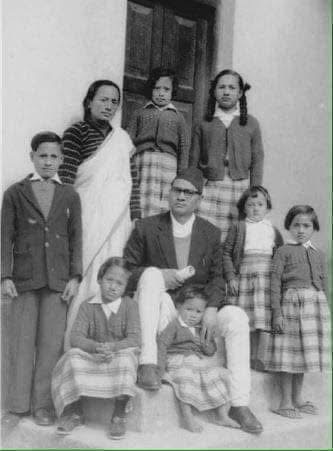
Some people are more than just mentors; they are "human medicine." You spend an hour with them, and the world—which felt heavy and chaotic moments before—suddenly feels manageable. Growing up in a house of seven children in the 1960s, I watched my mother, Heera Devi Yami, perform this alchemy every day.
She was a community intellectual and reformer who operated in the gap between the complex laws of Nepal and the people those laws were meant to serve. When women came to her crying, trapped by systems they didn't understand, she didn't just offer sympathy. She offered intellectual agency.
The Power of the Intelligent Question
My mother’s "medicine" was a rare skill: the ability to ask the right questions. She knew that advice is a temporary patch, but discovery is a permanent cure. By asking sharp, purposeful questions, she triggered a process of neuroplasticity in her visitors.
Rebuilding the Boat for Rougher Seas
Heera Devi Yami understood that to survive, these women needed a sturdier internal structure. She wasn't just helping them "feel better"; she was re-architecting their boats to handle much rougher seas. By letting them find the answers, she weighted their "keel" with self-efficacy. They left feeling capable, not just consoled.
Her calm, analytical presence helped "waterproof" their nervous systems. She taught them to stay regulated even when the waves of social pressure were high. Her questions acted as a telescope, helping them look past immediate tears toward a long-term strategy for justice.
Intellectual Decolonization
Her role was transformative because of the specific barriers of that era. When an entire ethnic group or community is systemically denied formal education, the "knowledge gap" becomes a tool of oppression. People aren't just struggling with a lack of facts; they are struggling with a lack of the "legal and social grammar" needed to defend themselves.
In this environment, Heera Devi Yami’s "human medicine" was actually a form of intellectual decolonization. In the 1960s, the law in Nepal was often written in a high, formal language that was inaccessible to those without schooling. By asking intelligent questions, she bypassed the need for her visitors to read complex scripts. She helped them conceptualize their rights, turning "abstract law" into "concrete reality."
She was building a mental bridge. If they couldn't read the law, she helped them "read" their situation through a legal lens. When people are denied education, they often internalize the idea that they are "not smart enough" to handle their own problems, creating a state of Learned Helplessness. When Heera Devi Yami asked a deep question—and waited for the answer—she was signaling that she believed in their intellect.
Turning Oral History into Strategy
Many ethnic groups in Nepal have a rich tradition of oral history but lack formal documentation. Heera Devi Yami used their own stories and lived experiences as the "data" for her questions. She didn't treat them as "blank slates" because they lacked schooling; she treated them as experts on their own survival. She helped them organize their memories into a logical sequence that could be used as evidence or a plan of action.
The "Multiplier Effect"
Because she was raising seven children while doing this, she was modeling a new way of being for the next generation. The community saw that education wasn't just about a diploma; it was about the capacity to analyze. She was re-architecting the community's "collective brain." If one woman learned how to ask those same intelligent questions to her neighbor, the "medicine" spread.
As the saying goes: "Education is not the filling of a pail, but the lighting of a fire." For those denied the pail, Heera Devi Yami provided the match.
Mastery in the Midst of Chaos
What was most incredible was her capacity to provide this "medicine" while raising seven children. She possessed a remarkable attentional focus. She could "gate" the noise of a bustling household to create a sanctuary of absolute presence for a stranger in crisis. She proved that true leadership isn't about isolation; it’s about the ability to find clarity in the center of the storm.
A Legacy of Clarity
Heera Devi Yami was a social architect who built her blueprints at the kitchen table. She proved that when we ask rather than tell, we aren't just giving a gift—we are helping someone rebuild their life from the inside out. To watch her was to learn that resilience is a choice of focus, and the most restorative medicine we can offer is simply to help someone be heard by their own inner wisdom.