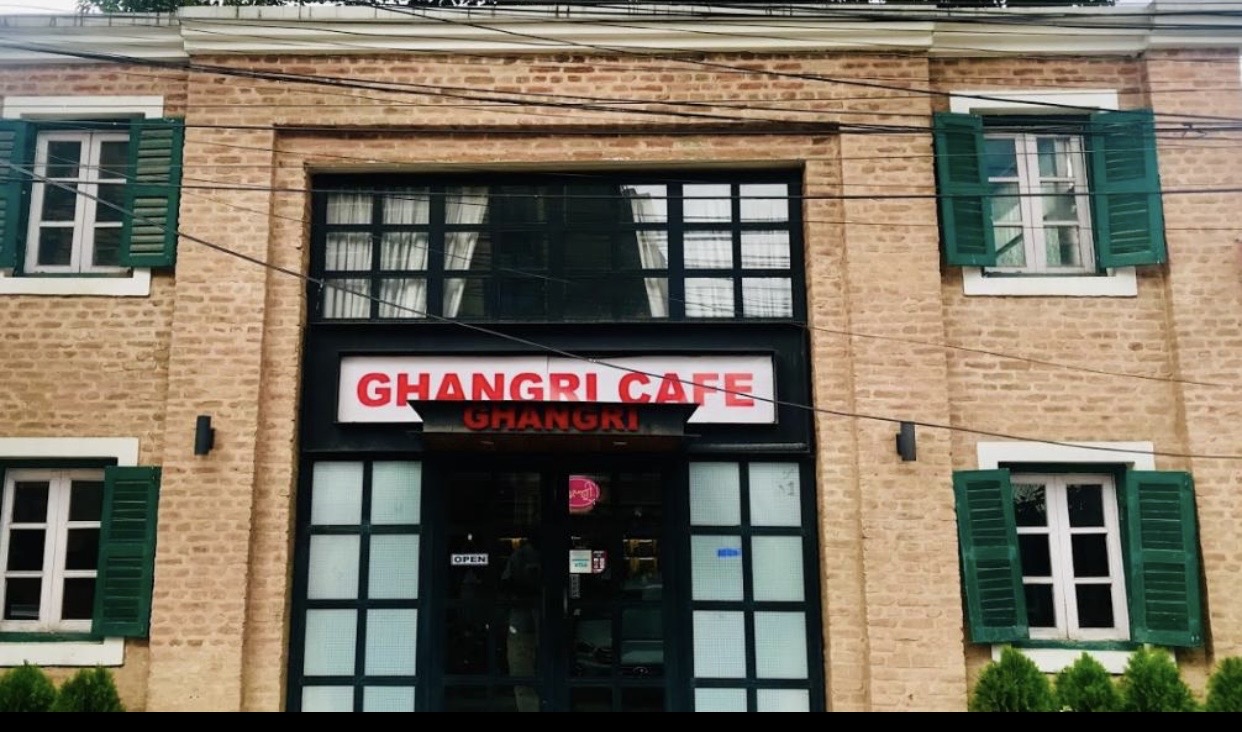
Gangri Sui Mai is more than just a culinary landmark in Kathmandu; it is a living testament to the centuries-old trans-Himalayan trade routes. Renowned for its Tibetan-style snacks—most notably its namesake Sui Mai (open momo), steamed dumplings, and traditional soups—the eatery serves as a social hub reflecting the deep cultural fusion between the Newar and Tibetan communities.
A Family History Forged in Trade
An article about the father Mr Rajkarnikar was also published in a Nepali newspaper, documenting the life of a Newar trader who married a Tibetan woman during the era of trans-Himalayan commerce. The feature highlighted their family history, rare photographs from Tibet, and the cultural blending that emerged through trade, marriage, language, religion, and food traditions between Newar and Tibetan societies. It served as an important reflection of Kathmandu’s historical connections with Tibet and the multicultural legacy created by merchant families across generations.The story of Gangri is rooted in the life of a Newar trader from Kathmandu who lived and worked in Tibet during the peak of trans-Himalayan commerce. Like many merchants of his era, he integrated deeply into Tibetan society, eventually marrying a Tibetan woman. Together, they raised a family of eleven children, creating a household that embodied the blending of two distinct cultures.
More Than Commerce: A Multicultural Legacy
Religious and artistic exchanges were equally significant. Newar artisans contributed to Buddhist art, temple architecture, metal casting, and paubha traditions across Tibet, while Tibetan Buddhism influenced monastic life and ritual culture within Nepal. Merchant families often supported monasteries, pilgrimage networks, and cultural institutions on both sides of the Himalayas.
These long-standing relationships shaped Kathmandu’s social history in profound ways. They helped create cosmopolitan trading neighborhoods, strengthened Buddhist cultural networks, encouraged linguistic and artistic exchange, and contributed to the multicultural identity of the Kathmandu Valley. Old family photographs, business records, letters, and oral histories from such families remain valuable historical evidence of a period when Nepal and Tibet were deeply interconnected through human relationships as much as through trade.
The relationship between Newar traders and Tibetan society went far beyond the exchange of textiles, metal crafts, and salt. For generations, these connections fostered a profound cultural synthesis. Children of these merchant families were often multilingual, navigating naturally between Nepal Bhasa, Tibetan, Nepali, and the various trade languages of the Silk Road. Food culture remains the most visible legacy of this era. Tibetan staples like momos, noodle soups, and butter tea were carried across the mountains and woven into the fabric of Kathmandu’s urban food scene. This period saw a massive exchange of religious and artistic traditions. Newar artisans influenced Tibetan temple architecture and metal casting, while Tibetan Buddhism enriched the monastic life and rituals within Nepal.
A Lasting Connection
The history of Gangri Sui Mai and the families behind it represents a period when Nepal and Tibet were interconnected by human relationships as much as by economics. Today, these restaurants and family records remain vital pieces of Kathmandu’s multicultural identity, preserving recipes and memories that carry the spirit of the historic trading era into the modern day.