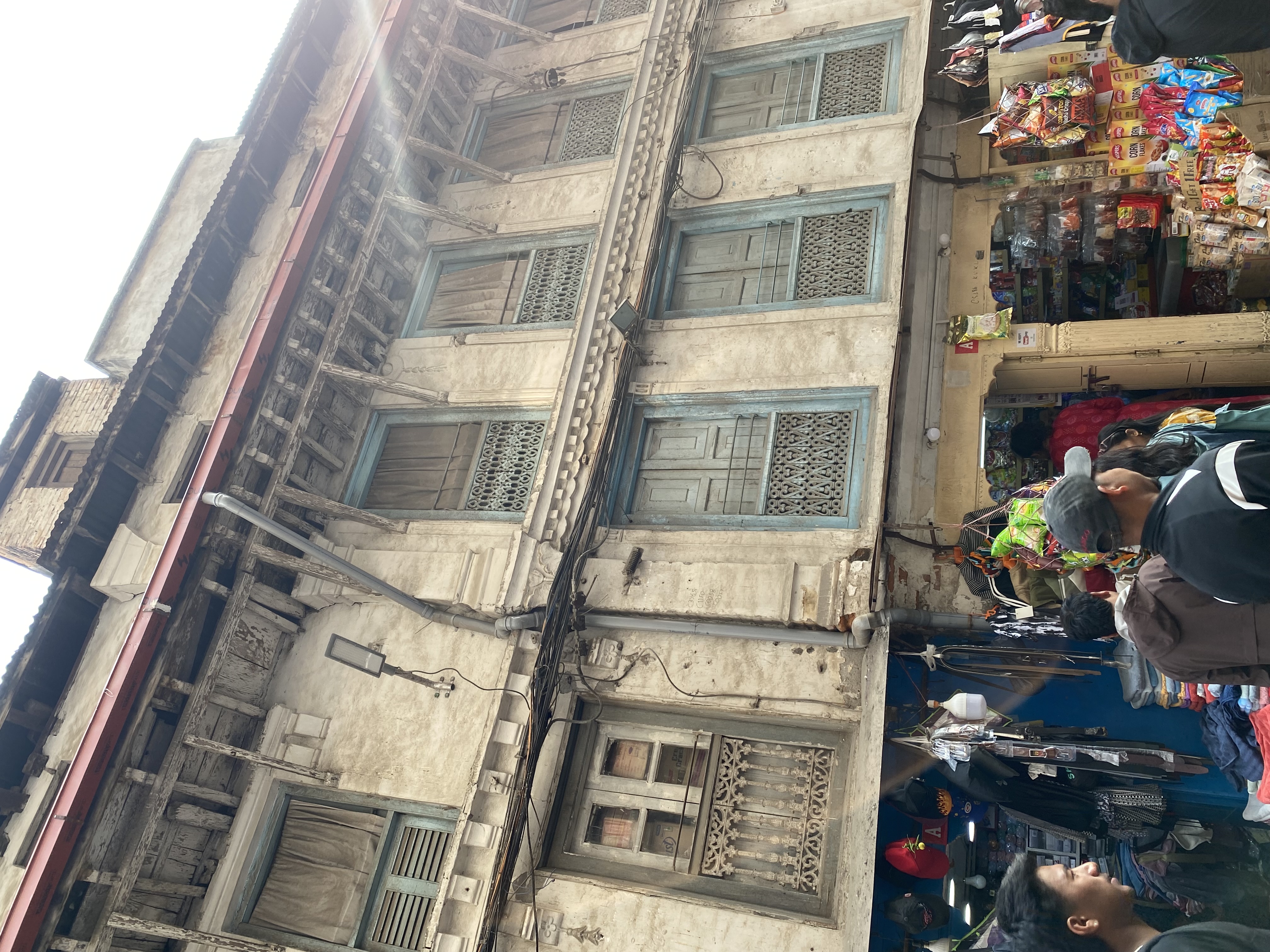
The Fall of the Tuladhar Merchant House and the Early Struggle of Dharma Ratna Yami.
Ratna Das Tuladhar, who was the grandfather of Dharma Ratna Yami, was once recognized as one of the ten wealthiest local businessmen in Kathmandu as per the survey done by Chandra Sammshere Jangh Bahadur Rana. During that era, there was a systemic trend of targeting such wealthy individuals. This was a deliberate strategy by the Rana regime, who represented a ruling minority and felt threatened by the economic strength of the local Newars. By targeting these merchants, the regime ensured that the Newar community—despite its great potential—remained in a "hand-to-mouth" state, unable to pose a political or economic challenge to their power.
The Bankruptcy and industrial Failure
When Ratna Das Tuladhar faced financial ruin, he did not give up easily. In a bold attempt to pivot his business, he invested in the shoe-making industry. He tried to establish this new industry in Nepal, but the venture ended in bankruptcy because he could not repay the loans. Broken by financial failure and falling gravely ill, Ratna Das eventually passed away.
The Dispersal of the Family
The aftermath of death of Ratna Das Tuladhar was devastating for the household. His four daughters-in-law were forced to return to their maternal homes (Maitighar) to raise their children in isolation. The male members of the family, including his four sons, survived only through the assistance of the Drabya Dhar Tuladhar, father of Chittadhar Hridaya (the renowned poet), who was married to one of eldest daughter of Ratna Das Tuladhar.
The Maternal Crisis of Dharma Ratna Yami
The financial situation was so dire that the maternal side of the family was fractured by the need to recover their lost fortune. Bhawani Ratna Tuladhar (Dharma Ratna Yami’s father), along with Man Das Tuladhar and Asha Ratna Tuladhar, all returned to Tibet in a desperate attempt to recoup their wealth.
Back in Kathmandu, the household was empty. The single woman the grandmother who cared for Dharma Ratna’s mother, who was in failing health. Tragedy struck when Dharma Ratna was only 15 years old; his mother passed away.
Exile to Asan Tole
Left with no resources, mother dead and his father Vawani Ratna Tuladhar away in Tibet, Dharma Ratna Yami's his grandmother ( stepmother his mother ) sent him away to work at shoe-making workshop in Asan Tole. In this period of manual labor, he earned a meager eight rupees per month. This small sum—his first taste of independent earnings—he used to deposit into the pocket of his maternal grandmother, marking the beginning of the long, hard road that would eventually lead him to become a revolutionary and an intellectual.
The Seven-Day Journey to Bankruptcy
Dharma Ratna’s journey toward the merchant life began in poverty. Seeking a way to build a future, he set out from Kathmandu towards routes of Lhasa. For safety, he had entrusted this "money bag" to maternal grandmother. At the time, his only capital was a small amount of money he had managed to save in the hands of his maternal grandmother which he took away without informing her and slipped away from her house. However, in a tragic twist of fate or misunderstanding, he essentially "swallowed" his own capital—meaning the money was spent on the way before he could even begin his venture. Despite this, he pressed on. He walked for seven grueling days through the rugged terrain of the hills, finally reaching Bhaisiya, near Birgunj. He was completely bankrupted. He stood at the gateway to the plains with no resources, no food, and no path forward.
The Turning Point: "The Mark of Not Being Able to Cry"
One Shitu Patrika article writen by Dharma Ratna Yami refers to a state of shock so deep that even tears are impossible. This was Dharma Ratna’s lowest point. However, it was this very bankruptcy that forced his hand. In the social structure of the time, there were only two ways out of such systemic poverty to remain in the valley and be "squeezed" by the Rana administration or to join the high-altitude caravans to Tibet.
From Bankruptcy to the Lhasa Trade
Having lost everything on the road to Birganj, Dharma Ratna realized that the only way to regain his standing and support his family was to accept the "Lhasa Fear." He eventually joined the merchant caravans, entering a world defined by the "Chitlang Protocol" and the treacherous Himalayan passes.
He did not become a merchant because he was wealthy; he became a merchant because the experience of being "bankrupt at Bhaisiya" taught him that he had nothing left to lose. This desperation turned into the "quiet strength" that allowed him to survive the dacoits and snowstorms of the Lhasa route, eventually becoming a prominent figure who could document the tragedies of his community.
Historical Significance
This story provides the missing link in our family history. It explains why the Yami family was so committed to social reform. He understood how the state made it impossible for a poor man to succeed locally. His own bankruptcy made him empathetic to the "living widows" and orphans created by the trade.
Dharma Ratna Yami’s merchant years were not just about trade; they were a long, dangerous penance for a man who had once stood in the dust of Birgunj with empty pockets and a silent heart. His transformation into a merchant was not born of privilege, but of a catastrophic failure that nearly broke him.
Translation needs editing
To improve translation quality for the languages of Nepal and protect citizens from the harms of "clumsy" or "culturally deaf" AI, a coordinated effort focusing on local data, technical refinement, and human oversight is essential. Because Nepali and its regional languages (such as Nepali, Maithili or Bhojpuri) are "low-resource" in the AI world, current models often fail to account for honorific markers and complex grammatical structures. By focusing on the areas guided by AI specialists, Nepal can transition from being a passive consumer of global AI to an active architect of its own digital linguistic future.