It is claimed that an astrologer in Nepal alerted local residents and travelers in the Bhote Koshi area a single second before the catastrophic flood struck on August 26, 2026. While supporters pointed to this SMS as proof of astrological foresight, it reveals a stark reality: an alert delivered one second before impact is not a life-saving warning—it is an empty post-hoc claim.
This raises a fundamental question: If spiritual insight or astrological calculations held real predictive power, why was there no actionable warning to save lives before the water rushed in? Why was Lord Shiva of Mount Kailash—often believed to protect pilgrims—unable to intervene and guide those traveling toward his abode to safety?
When human lives are on the line, the choice is clear: should we rely on mythology and performative predictions, or on science, automated early-warning sensors, infrastructure preparedness, and trained emergency personnel?
To build a society capable of surviving real-world threats, we must focus on how we educate and empower the next generation and their primary nurturers:
1. Teach children to ask "How do we know?"
Children must learn to distinguish between verified evidence, predictions, and traditional beliefs. Critical inquiry should be encouraged and celebrated rather than dismissed.
Historical Parallel: The Ashtagraha Panic of BS 2018 (1962 AD)
This pattern of unverified astrological claims is not new in Nepal. In Bikram Sambat 2018, widespread predictions of a catastrophic, high-intensity earthquake during the Ashtagraha alignment brought Kathmandu to a complete standstill, as terrified residents fled outdoors and conducted extensive pujas. When no earthquake occurred, the narrative quickly shifted: rumors spread that the sheer power of the pandits' rituals and public donations had "blocked" the tectonic disaster.
Unfalsifiable logic creates a win-win loop for predictors: if a disaster happens, they claim foresight; if it fails to occur, they claim credit for stopping it. Teaching children to evaluate verifiable evidence breaks this cycle of fear and psychological manipulation.
2. Teach trans-Himalayan geography through local history and mountain pioneers.
To truly grasp the severe, unpredictable realities of high-altitude trans-Himalayan terrain, children should study both regional literature and mountain history.
-
Literature & Historical Journeys: Students should read accounts like Dharma Ratna Yami's Reply from Tibet (Sandeya Lisaa, Lhasa Bolchee, Chinese translated version ), which documents the formidable physical, geographic, and socio-political challenges faced while traveling across high Himalayan passes to Lhasa.
-
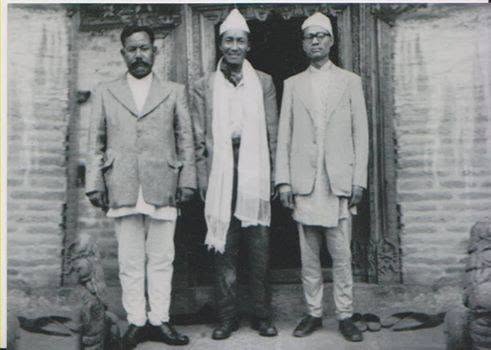
Expeditionary Courage: Alongside this, studying trailblazers like Tenzing Norgay Sherpa and Dorje Lhatoo teaches students how travelers braved hostile environments through keen observation, endurance, route planning, and calculated risk management.
Learning these accounts instills a deep respect for natural forces, terrain mechanics, and real-world preparation—replacing fatalism with empirical awareness.
3. Make STEAM education compulsory before Grade 5.
Science, Technology, Engineering, Arts, and Mathematics (STEAM) should not be reserved for higher grades. In disaster-prone regions, foundational STEAM education must be made compulsory prior to grade five. Young children need an integrated, hands-on understanding of natural forces, geography, and physical mechanisms to comprehend the climate events shaping their environment.
4. Empower mothers as community educators in documentation and AI literacy.
Mothers in disaster-affected and rural areas serve as the core emotional anchors of their communities. Their role should be expanded across four key pillars encouraging children, siblings, and neighborhood youth to write down and archive their disaster experiences, turning raw survival into community history and observational data, training. mothers to recognize online threats, safeguard family data, and protect young people from digital harm, teaching mothers how AI tools work so they can guide neighborhood children and extended family toward ethical usage, source verification, and critical evaluation and equipping mothers with an understanding of national data autonomy and local AI tools, ensuring communities retain control over their own knowledge, languages, and digital futures.
5. Teach science as a mindset, not just a subject.
Science is about observing, testing hypotheses, evaluating evidence, and updating conclusions when faced with new data.
6. Prioritize practical disaster preparedness.
In a region vulnerable to floods, landslides, and earthquakes, children need to understand how meteorology and early-warning systems work, when to avoid travel, where to evacuate, and how to reach emergency services.
7. Highlight the role of real-world responders.
When disaster strikes, lives are saved by trained human beings—rescuers, firefighters, medical teams, engineers, and volunteers. Competence and field preparation deserve our respect and investment.
8. Build digital and AI literacy across generations.
Information on a screen isn't inherently accurate. Young people and adult mentors alike must learn to verify sources, spot viral misinformation, use technology responsibly, and safeguard their privacy.
9. Combine critical thinking with empathy.
Scientific literacy shouldn't lead to arrogance. We can respect cultural traditions and personal faith while maintaining clear standards for evidence and public safety.
10. Replace passive hope with personal agency.
Instead of teaching children that blind faith will keep them safe, teach them:
"Understand the risks. Prepare thoroughly. Base decisions on facts. And act decisively to help others."