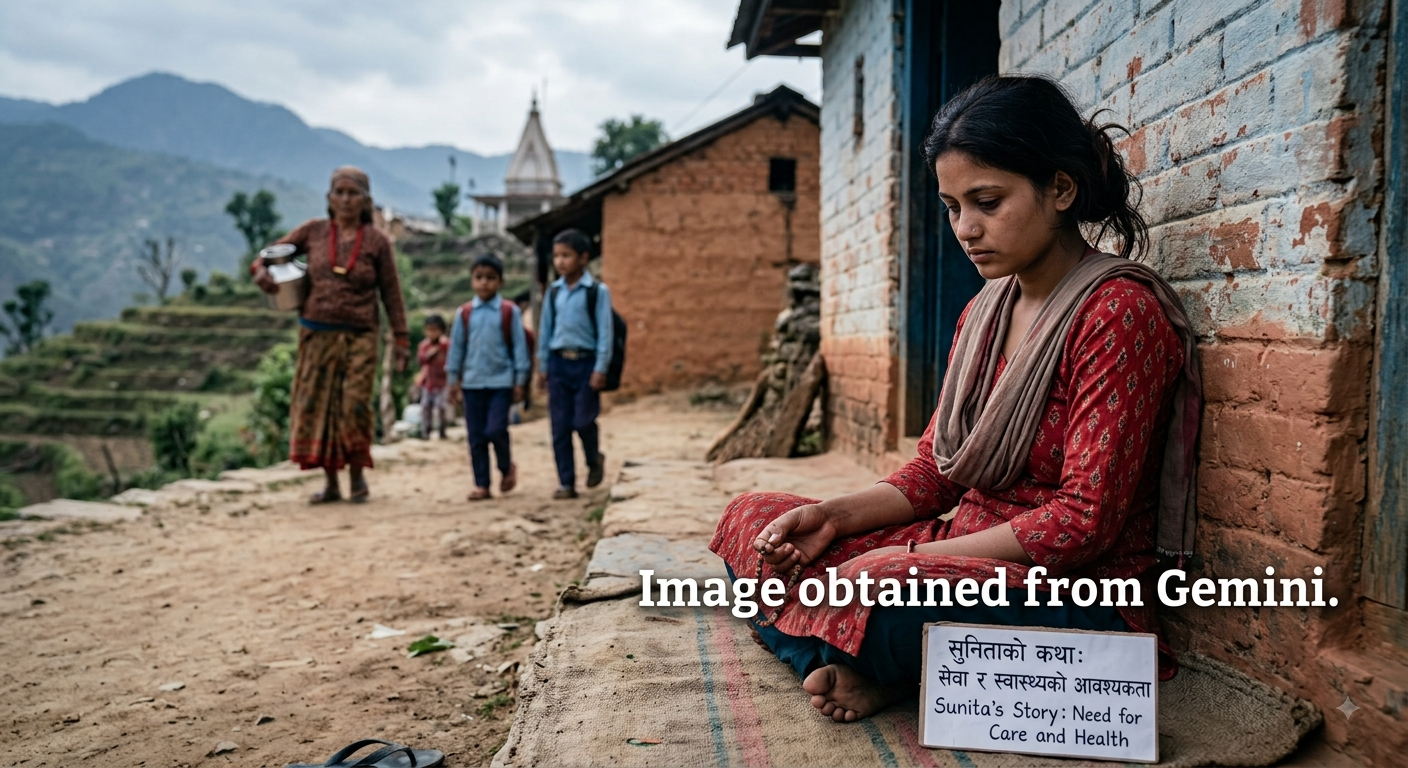
In many villages across Nepal, festivals and fasting are meaningful parts of life. They bring families, friends, and communities together and help preserve cultural traditions. However, when a person goes without food or water for a long period—such as during two days of fasting for the traditional festival of Teej—there can be serious health risks, especially during pregnancy. Without appropriate advice from a health worker, prolonged fasting can make a pregnant woman extremely weak and may put both the mother and the baby at risk.
Sunita’s Story
Sunita was a young pregnant woman living in a remote village. Following a local tradition, she went without food and water for an extended period during Teej festival. She became extremely weak and, sadly, lost her unborn baby. Losing her baby was a heartbreaking experience, but Sunita’s suffering was only beginning.
Instead of receiving medical care, kindness, and emotional support, Sunita was blamed for what had happened. People in her community turned away from her, and eventually she was forced to leave her home. At a time when she desperately needed help, protection, and a safe place to rest, she was left completely alone.
She was then taken to a local temple. However, instead of being protected and cared for, Sunita was reportedly treated badly and abused by people who were supposed to care for her. Think about how many painful events happened to her, one after another: extreme physical weakness, the loss of her baby, deep grief, rejection by family members and neighbors, displacement from her home, and experiences of abuse and physical violence.
When Suffering Is Mistaken for Something Supernatural
When a person experiences so many painful events, their emotional and mental well-being can be deeply affected. Sunita became extremely distressed, confused, and overwhelmed. Instead of recognizing that Sunita was suffering and needed medical and psychological support, some villagers believed that something magical or mysterious was happening. They believed that she was possessed by a divine spirit.
The same people who had previously driven Sunita away began returning to her. They brought her money and fruit and asked her for blessings. Her suffering and confusion were no longer understood as possible signs of a health crisis. Instead, people began treating her as a spectacle. A woman who needed a safe place was taken advantage of. A woman who needed medical and mental health support became a local attraction. A woman who needed love, dignity, and care became a source of attention and, potentially, income for others. This is a powerful reminder of how easily illness and psychological distress can be misunderstood when communities lack access to health information and compassionate care.
Understanding Why Babies Are Lost
Sunita’s story teaches us an important lesson about maternal and reproductive health. When a family loses an unborn baby, there can be many possible medical causes. These may include maternal illness, infections, pregnancy complications, problems with fetal development, or delays in receiving appropriate medical care. In many cases, the exact cause cannot be known without proper medical assessment. It is therefore wrong to automatically blame a mother or assume that she caused the loss without medical evidence.
Losing a baby can bring profound sadness, guilt, grief, and anxiety. When family members or neighbors blame the mother, her emotional suffering can become even more difficult to bear. Instead of asking, “What did she do wrong?” we should ask: “What happened to her, and how can we help her heal?” That change in attitude—from blame to compassion—can make an enormous difference.
Faith and Health Can Work Together
Learning from Sunita’s story does not mean that we should stop celebrating festivals or respecting cultural traditions. Festivals can bring people joy, belonging, strength, and connection. However, cultural practices should not put someone's health or life at unnecessary risk. Pregnant women, people who are ill, older adults, and others with health concerns may need special consideration before participating in prolonged fasting. They should be encouraged to seek advice from qualified health workers about whether fasting is safe for them.
Faith and health do not have to be in conflict. Religious leaders, community leaders, doctors, nurses, female community health volunteers, and families can work together to protect people's health while respecting cultural traditions. A simple message can save a life: Tradition matters, but life and health matter too.
How Smart Technology and AI Can Help Health Workers
Today, health workers in rural communities often have heavy workloads and limited resources. Simple digital technologies, including carefully designed Artificial Intelligence (AI) tools on mobile phones, could support health workers and potentially help prevent some health crises from becoming emergencies.
AI-supported tools could help health workers identify pregnancies that may require closer monitoring, organize patient information, provide reminders for follow-up visits, and flag situations that may require consultation with a qualified medical professional.
For example, a digital health system could remind a health worker that a pregnant woman needs a check-up or that certain symptoms require urgent attention. It could also help organize medical notes and patient histories, allowing health workers to spend more time talking with patients, listening to their concerns, and providing emotional support. However, AI should support health workers, not replace them. A technology system cannot understand a person's entire life, culture, emotions, or circumstances in the same way a trained human professional can.
Using Technology Safely and Fairly
For technology to genuinely help rural communities, strong safety principles must be followed. Humans Must Make the Final Decisions. AI can provide information, reminders, and suggestions, but a qualified health professional should make the final clinical decisions. Technology should never be treated as a substitute for a doctor, nurse, midwife, or trained health worker.
Build Systems With Communities, Not Just Programmers
Medical technology should not be designed by computer programmers alone. Developers should work together with doctors, nurses, midwives, community health workers, local leaders, and—most importantly—the people who will actually use the system. Mothers and families living in rural communities understand challenges that may not be obvious to technology developers. Their experiences should help shape the design of health tools.
Protect Patient Privacy
Health information is private and must be protected. Digital systems should collect only the information that is necessary, keep it secure, and ensure that patients understand how their information is being used.
Treat Everyone Fairly
Technology must be designed to serve everyone fairly, regardless of where they live, their economic circumstances, gender, age, or social status. Rural communities should not receive lower-quality care simply because they have fewer resources.
How We Can Build a Kinder Community
When someone is going through a terrible experience, rumors, stigma, rejection, and mistreatment can make their suffering much worse. Sometimes communities mistake illness or psychological distress for magic, possession, or supernatural events. We can break this cycle by choosing compassion and evidence-based health care.
We can begin with simple actions by never abandoning someone when they are suffering. Do not blame a mother for a pregnancy loss without medical evidence. Take someone who is seriously ill, confused, or distressed to a clinic, doctor, or trained health worker. Listen before judging. Protect vulnerable people from abuse and violence. Respect cultural and religious traditions while also protecting health and safety.Tell someone who is grieving, “This is not your fault, and you are not alone.” Make sure pregnant women and other vulnerable people receive appropriate health information and support. Every person deserves dignity, protection, compassion, and proper health care when they are in pain. Sunita’s story reminds us that a health crisis can become much worse when it is surrounded by blame, stigma, misinformation, and abuse. But it also shows us where change can begin.
We can choose kindness over blame, medical care over rumors, evidence over superstition, and human dignity over exploitation. By combining compassionate communities, accessible health services, respect for cultural traditions, and responsible technology, we can help make our villages safer, healthier, and more caring places for everyone.