The Caste System and Daily Purity Rituals in Kel Tole
During the autocracy of the Rana regime (1846–1951) and earlier eras, untouchability was deeply entrenched in Nepal. Higher castes were strictly forbidden from coming into physical contact with lower castes. If an accidental touch occurred, mothers would harshly scold their children and perform an immediate purification ritual using gold-water (sun pani).
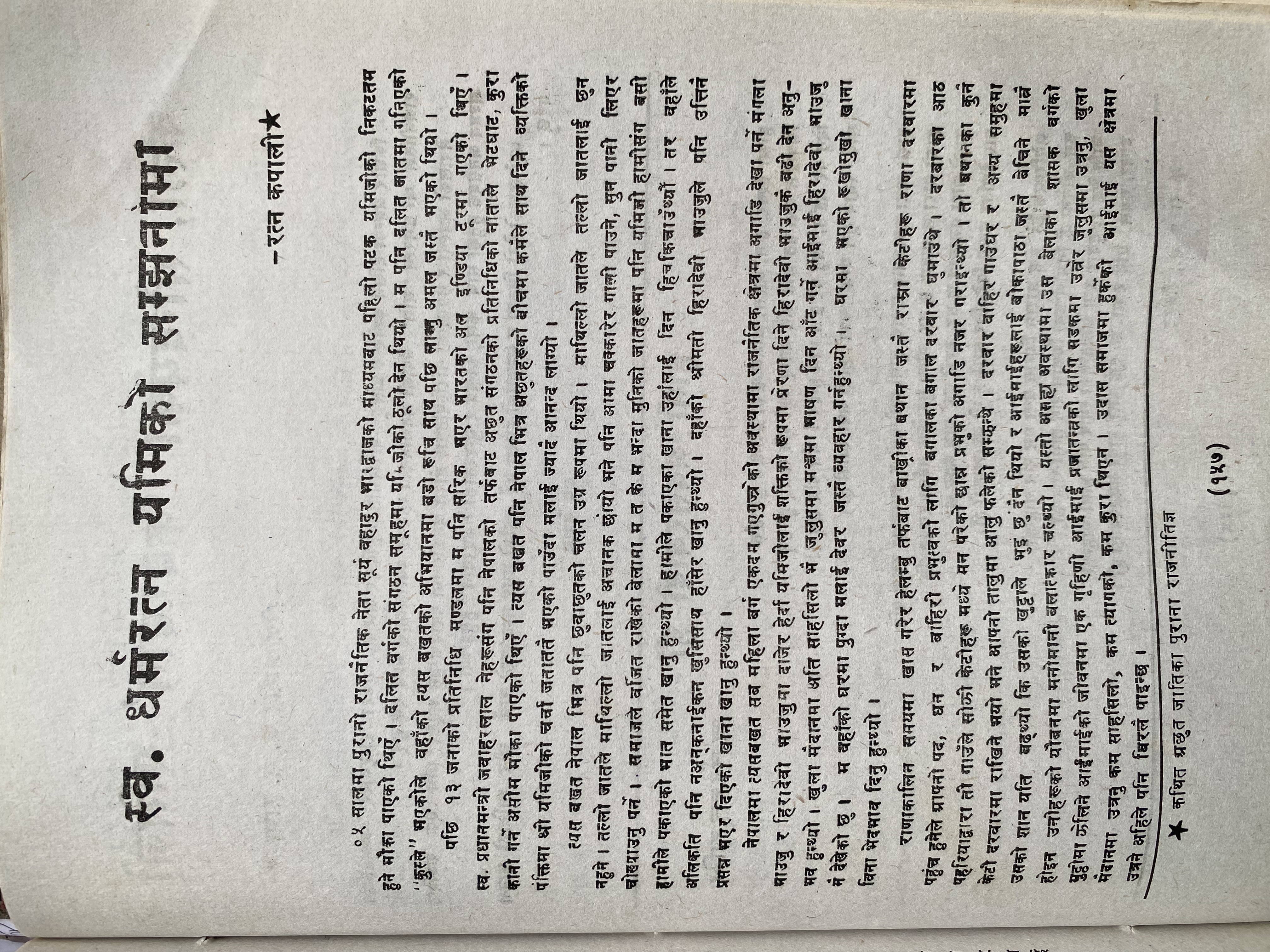
This rigid caste system and its strict ritual purity rules were vividly apparent in traditional Kathmandu neighborhoods like Kel Tole, where Heera Devi Yami grew up. Her maternal home stood adjacent to a courtyard inhabited by families of the Kusle caste (traditionally tailors, musicians, and temple caretakers), who were treated as untouchables. Children from neighboring high-caste merchant families—including the Kansakar and Tuladhar households—were strictly forbidden from playing with or touching Kusle children. Any accidental physical contact required a priest (gubhaju or purohit) to perform a formal cleansing ritual (suddhi) at home.
Dietary taboos were equally unyielding. High-caste households considered poultry and eggs strictly impure and spiritually defiling. Meanwhile, Kusle families raised chickens on their top-floor verandas (baithak or chota levels). When high-caste families washed kitchen utensils on their open balconies, leftover food scraps often remained. Chickens from the Kusle households would sometimes fly across to eat those scraps. If a high-caste family discovered that a chicken had stepped onto their balcony, the entire house had to be scrubbed down with water, followed by formal rituals to undo the perceived spiritual pollution.
Personal Awakening: The Secret Eggs
These rigid social and dietary restrictions directly impacted Heera Devi’s upbringing. Suffering from severe malnutrition as a child, she became dangerously frail and thin. Recognizing her desperate need for protein, her uncle devised a covert remedy: he would secretly roast eggs inside the hot ashes of the kitchen hearth and quietly toss them through her bedroom window.
After eating the eggs in secret, Heera Devi gradually regained her health and strength. Experiencing firsthand how a simple, "forbidden" food restored her vitality shattered her belief in harmful social superstitions, inspiring her lifelong rejection of caste hierarchies and dietary taboos.
Courageous Radical Reform and Domestic Rebellion
This personal awakening shaped her courageous commitment to social reform. At a time when society enforced strict prohibitions, Heera DEvi Yami and her husband, Dharma Ratna Yami, actively supported marginalized groups, sitting and publicly eating food cooked by Dalit communities—including castes considered lower than the Kusles. Heera Devi joined him wholeheartedly, eating food offered to her without the slightest hesitation or prejudice. Whenever guests, underground activists, or poor travelers visited their home, she treated them like family, serving whatever simple food was available.
As recalled in the oral testimony of Ram Maya ("Haku"), an 80-year-old woman from a marginalized caste, the Yami household intentionally turned domestic life into a site of social rebellion:
-
Kitchen Integration: In traditional Newar architecture, the 5th-floor kitchen (chota) was the most ritually sacred space in the home. Dharma Ratna and Heera Devi employed Ram Maya and her grandmother directly in their 5th-floor kitchen. Because the kitchen was visible to pedestrians on the street, neighbors and passersby would regularly gather outside and shout criticisms: "Look, look, untouchables are working in the kitchen!"
-
Subversive Hospitality: When high-caste visitors (such as local Bajracharyas) visited their home, Dharma Ratna would force them to drink tea prepared by Ram Maya and her family. Frightened by societal backlash, Ram Maya would try to hide, but Dharma Ratna insisted on defying the taboo. After visiting, shocked guests mostly politician Brahmins were often seen rushing to the riverbanks at Pashupatinath Temple to bathe, sprinkle sun pani, and hire priests to undo their ritual contamination.
-
Pro-Pork and Rooftop Poultry Campaigns: Because pork was associated with untouchable castes, Dharma Ratna would stand on his top-floor balcony displaying cooked pork, calling out to neighbors to eat it. Even while locked up in Nakhu Jail in the 1940s, he ordered pork to be delivered to his cell. Later, in 1951, Heerra DEvi and her husband built a farm of 200 chickens on his rooftop—earning him the local nickname "Head of Hen Minister"—mocking purity rules and pioneering a cultural shift that eventually led to widespread acceptance of poultry in urban Newar diets.
Feudal Oppression of Women and Public Activism
Her activism was even more extraordinary given the prevailing plight of women in Nepal. During the Rana regime, young women—particularly from ethnic minority regions like Helambu etc —were brought to palaces like herds of livestock to display wealth and status. Palace guards (Aath Pahariya) selected young village girls to present before their lords. While families were coerced into considering it prestigious if a daughter entered the palace, women were fundamentally treated as commodities and subjected to systemic sexual violence.
In an era where women were treated as playthings by the ruling class and confined strictly to domestic life, stepping into the political sphere required exceptional courage. Alongside leaders of the anti-Rana movement, Heera Devi Yami stood out as a powerful political force. She was one of the rare women of her era with the bravery to step into open grounds, join public rallies, and deliver speeches on stage for democracy—leaving behind a lasting legacy of resilience against caste discrimination and political oppression.
Detailed Historical Context & Analysis
1. Codified Caste Oppression: The 1854 Muluki Ain
During the Rana era, untouchability and social hierarchies were not merely informal customs—they were state law, codified under Prime Minister Jung Bahadur Rana's Muluki Ain (Civil Code) of 1854. Society was legally divided into four broad categories: Tagadhari (Sacred thread wearers – Brahmins, Chhetris, elite Newars), Matawali (Alcohol drinkers), Pani Na Chalne Chhoi Chhinnumanai (Castes whose water could not be accepted, but whose touch did not require purification) and Pani Na Chalne Chhoi Chhinnumai (Untouchable castes whose physical touch required ritual cleansing)
Under this code, allowing an "untouchable" person into the kitchen was a punishable offense. The public defiance at Khyo Keba directly targeted the legal authority of the Muluki Ain, demonstrating that state-mandated untouchability could be dismantled at the household level.
2. Dietary Taboos as Social Stratification
In mid-20th-century Nepal, dietary habits directly signaled one’s position in the social and caste hierarchy. High-caste communities strictly avoided certain meats, using food choice as a marker of spiritual superiority. Swine were historically raised by or associated with marginalized and Dalit communities; high-caste households strictly prohibited touching or eating pork. Dharma Ratna’s public consumption of pork was a calculated act of civil disobedience. Poultry was considered unclean (mleccha) compared to ducks or goats. When Dharma Ratna and Heera Devi established their rooftop chicken farm in the 1950s, it directly challenged the culinary boundaries enforced by upper-caste elites.
3. Anti-Rana Activism, Poverty, and Political Risk
Under the Rana regime, political organization, literacy movements, and public dissent were punishable by life imprisonment, exile, or execution (as seen in the 1941 martyrdom of Dharma Bhakta Mathema, Shukraraj Shastri, Dashrath Chand, and Ganga Lal Shrestha).
The Yami household endured extreme economic hardship, routinely buying food on credit to feed underground activists hiding from state spies. When Dharma Ratna was appointed a Cabinet Minister following the fall of the Rana regime in February 1951, the household was so destitute that they lacked a few grains of rice to prepare a traditional Sinha (tika) for his swearing-in ceremony. He had to borrow a coat from leader Daya Ram Bhakta Mathema and famously drank water at a public tap, telling onlookers: "This is both my rice and pulses."
4. Ground-Level Resistance and Gandhian Influence
While male political leaders often fought the state in formal political arenas, women led the social front under intense community backlash and state surveillance. Because literacy was tightly controlled by the Ranas, Heera Devi Yami ran secret literacy classes for the children of farmers and marginalized communities, accepting modest gifts of vegetables in return. During the political sweeps of the 1940s, Heera Devi actively organized food, care, and financial relief for sick political prisoners in Nakhu and Bhadragol jails and supported their destitute families. Her exposure to the Indian Independence Movement (witnessing Mahatma Gandhi's campaigns firsthand in Kolkata and Kalimpong prior to 1947) directly shaped her grassroots methods—combining non-violent social reform, educational outreach, and anti-caste advocacy in Nepal.