Nations require a clear vision to guide their journey through periods of rapid transformation. Nepal today stands at such a crossroads. The rise of Artificial Intelligence (AI), robotics, biotechnology, cybersecurity, and digital technologies is fundamentally changing how societies learn, work, govern, innovate, and compete.
At the same time, Nepal continues to face challenges of poverty, unemployment, brain drain, weak institutions, governance deficits, climate vulnerability, and uneven development. Technology alone cannot solve these problems. Nor can political ideals succeed without capable institutions and modern tools.
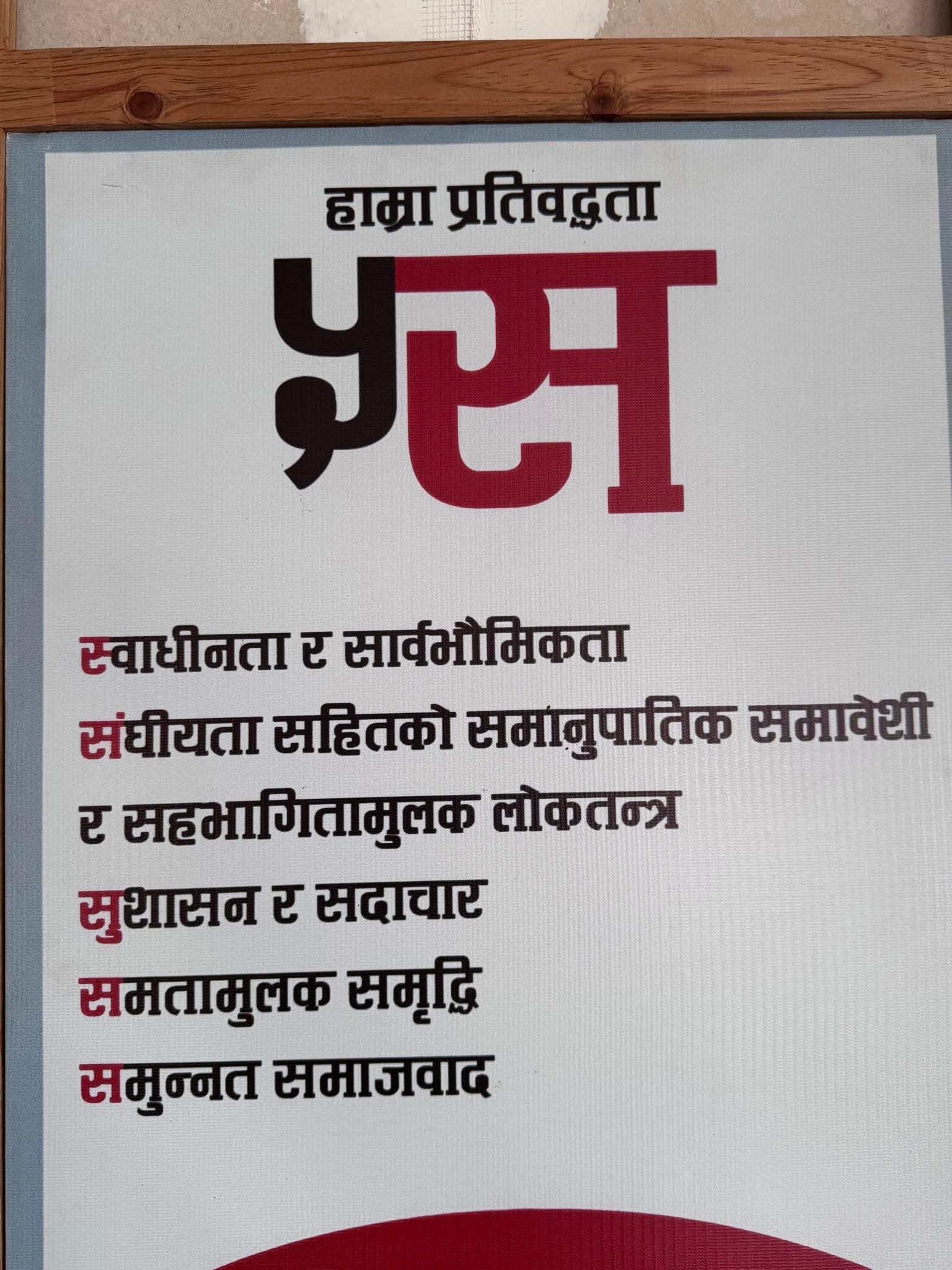
The Five “Ss” provide a framework for Nepal’s transformation by ensuring Sovereignty (स्वाधीनता), Inclusive Democracy (समानुपातिक समावेशी तथा सहभागितामूलक लोकतन्त्र), Good Governance and Ethical Conduct (सुशासन र सदाचार), Equitable Prosperity (समतामूलक समृद्धि), and Advanced Socialism (समुन्नत समाजवाद). These principles remain highly relevant today. However, in the age of AI, they require renewed interpretation and implementation.
1. Sovereignty in the Digital Age
Historically, sovereignty was defined by territorial integrity, national independence, and freedom from external domination. Today, sovereignty has acquired new dimensions. A nation that does not control its data, digital infrastructure, cybersecurity systems, and technological capabilities risks losing strategic autonomy, regardless of its political independence.
Digital sovereignty requires robust national cybersecurity capabilities, protection of citizens’ data, indigenous technological capacity, targeted AI research and development, national cloud and digital infrastructure, and secure digital public services. Nepal must avoid becoming merely a consumer of foreign technologies; it should become a creator, innovator, and contributor. This requires strategic investment in AI research centers, semiconductor and electronics education, cybersecurity institutions, indigenous language technologies, and digital innovation ecosystems. Just as previous generations fought to preserve political sovereignty, the present generation must secure Nepal’s technological sovereignty.
2. Inclusive, Proportional, and Participatory Democracy
Democracy is strongest when every citizen has a meaningful voice. The Constitution of Nepal recognizes inclusion, participation, proportional representation, federalism, and social justice as pillars of democratic governance. AI can strengthen democracy by expanding access to government information, supporting multilingual communication, increasing transparency, enhancing citizen participation, improving public service delivery, and strengthening evidence-based policymaking.
Nepal’s diversity is one of its greatest strengths. AI systems should, therefore, natively support Nepali, Nepal Bhasa (Newari), Maithili, Bhojpuri, Tamang, Tharu, Limbu, Gurung, Magar, and other indigenous languages. Technology must empower every citizen, regardless of geography, gender, ethnicity, disability, age, or economic status.
At the same time, AI presents severe risks of disinformation, deepfakes, algorithmic bias, digital exclusion, and the manipulation of public opinion. Strong democratic institutions and ethical safeguards are therefore essential. Technology must strengthen democracy, not weaken it.
3. Good Governance and Ethical Leadership
Governance determines whether national resources are effectively transformed into public welfare. Many governance challenges stem not from a lack of policy, but from weak implementation, poor accountability, and corruption. AI can help transform public administration through automated citizen services, faster processing of applications, digital record management, and real-time performance monitoring, enhanced procurement monitoring, automated fraud detection, audit analytics, and deep financial transparency, Data-driven planning, predictive analytics, and continuous impact assessments, advanced early warning systems, flood prediction, landslide monitoring, and emergency response coordination.
However, good governance is ultimately a human responsibility. No algorithm can substitute for integrity. Technology can improve efficiency, but only ethical leadership can ensure justice and accountability. Therefore, AI governance must be firmly anchored in transparency, accountability, fairness, human oversight, privacy protection, and public trust.
4. Equitable Prosperity Through Innovation
Economic growth without inclusion creates instability. Prosperity must reach rural communities, marginalized groups, women, youth, and vulnerable populations. AI offers Nepal unprecedented opportunities for economic transformation across key sectors. Smart agriculture can assist farmers through climate forecasting, precision irrigation, pest prediction, crop optimization, and market intelligence. AI can expand healthcare access through telemedicine, diagnostic assistance, disease surveillance, rural healthcare support, and personalized treatment planning. AI can democratize education through personalized learning, intelligent tutoring systems, localized digital content creation, skills development, and lifelong learning opportunities. Nepal’s tourism sector can benefit from smart destination management, digital heritage preservation, multilingual visitor services, and personalized travel experiences. AI can unlock new high-value career paths in software development, data analytics, robotics, creative industries, knowledge services, and digital exports. The objective is not merely GDP growth. The ultimate goal is to create a society where every citizen has the genuine opportunity to contribute and prosper.
5. Advanced Socialism for the Knowledge Economy
The aspiration of socialism has always been human dignity, social justice, equality of opportunity, and collective well-being. In the twenty-first century, socialism must evolve to address the realities of a knowledge-driven economy.
Advanced socialism should actively encourage innovation, scientific thinking, entrepreneurship, creativity, social responsibility, and equal opportunity. A modern socialist vision does not oppose technology; rather, it ensures that technology serves society.
The concentration of data, wealth, and technological power in a few hands can create severe new forms of inequality. Therefore, Nepal must mandate universal digital access, comprehensive digital literacy, inclusive innovation frameworks, ethical AI deployment, robust social protection during workforce transitions, and the equitable distribution of technological benefits. Advanced socialism in the AI age means combining innovation with inclusion, and productivity with justice.
Human Capital: Nepal’s Greatest Resource
No country can become prosperous without investing in its people. Nepal’s greatest asset is not its mountains, rivers, or minerals; its greatest asset is its people. Therefore, Nepal must prioritize. Science, Technology, Engineering, Arts, and Mathematics education should be modernized and strengthened from primary schools to universities. Every student should graduate understanding digital technologies, AI fundamentals, data literacy, cybersecurity, and ethical technology use. Women and young people must become equal partners in Nepal’s digital transformation. Their participation is essential for authentic innovation, inclusion, and sustainable development.
Strengthening Research and Innovation
Research universities and national institutions must become the country's engines of innovation. Elite institutions such as the Institute of Engineering (IOE), Institute of Medicine (IOM), Nepal Academy of Science and Technology (NAST), alongside leading teaching hospitals, should be structurally strengthened as national centers of excellence and formally recognized as Institutions of National Importance (INIs).
AI for a Federal Nepal
Federalism provides a historic opportunity to bring government closer to citizens. AI can strengthen decentralized governance through local planning systems, smart municipalities, provincial data platforms, objective resource allocation models, and citizen service portals. Every province and local government should have seamless access to digital tools that improve service delivery and development planning. Federalism and technology, when combined, can create highly responsive and accountable local governance.
Ethical AI and Human Values
AI should never be viewed merely as a technical challenge. It is fundamentally a social, ethical, and political issue. Nepal should adopt a human-centered AI approach based on human dignity, inclusion, transparency, accountability, sustainability, cultural diversity, and democratic values. Technology must remain a tool for humanity. Human wisdom must always guide artificial intelligence.
Vision for Nepal 2040
Imagine a Nepal where every child receives a quality education, every citizen has access to healthcare, and farmers utilize AI-powered agricultural services. Public services are transparent and efficient, local governments use data for precision planning, and indigenous languages flourish in digital spaces. Young innovators create global technology solutions, women participate equally in leadership, and universities become world-class centers of research.
This vision is entirely achievable. The challenge is not whether the technology exists; the challenge is whether we possess the leadership, strong institutions, and collective determination to use it wisely.
Institutions of National Importance: Engines of Nepal’s AI Transformation
Artificial Intelligence will not transform Nepal merely through top-down policies, imported technologies, or isolated projects. Sustainable transformation requires resilient public institutions capable of generating knowledge, conducting research, developing human capital, and advising the government.
Nepal already possesses several elite public institutions that have produced generations of engineers, doctors, scientists, researchers, and national leaders. These institutions represent invaluable national assets and should be formally recognized and fortified as Institutions of National Importance (INIs) through special legislative acts.
Institutions such as the IOE, IOM, NAST, and other strategically important public institutions should be granted greater academic autonomy, dedicated funding mechanisms, modern research infrastructure, and long-term institutional support.
Through dedicated parliamentary legislation, these INIs should receive :
-
Protected, ring-fenced budgets specifically for research and innovation.
-
Advanced computing infrastructure and specialized AI laboratories.
-
Dedicated Centers of Excellence in Artificial Intelligence, Robotics, Biotechnology, Cybersecurity, Climate Science, and Digital Governance.
-
Expanded opportunities for international collaboration with leading global universities and research institutions.
-
Greater flexibility in talent recruitment, research partnerships, and innovation programs, including strong linkages with government, industry, and provincial institutions.
The purpose is not simply to strengthen university campuses; the objective is to create national knowledge hubs capable of shaping Nepal’s future. These INIs will serve as the intellectual backbone of the nation by supporting evidence-based policymaking, developing AI-assisted governance solutions, producing a highly skilled workforce, advising local and provincial governments, and building indigenous technological capabilities to safeguard our digital sovereignty.
Just as the IITs in India, national research universities in Singapore, and leading public universities in South Korea spearheaded their countries’ transformations, Nepal’s Institutions of National Importance can become the primary drivers of innovation-led development. The future competitiveness of Nepal will depend not on physical infrastructure alone, but on intellectual infrastructure. Strong institutions produce strong nations.
Conclusion
The Five “Ss” remain a powerful roadmap for Nepal’s future: Sovereignty that protects both territory and digital independence; Inclusive Democracy that gives every citizen a voice; Good Governance that promotes accountability and trust; Equitable Prosperity that creates opportunities for all; and Advanced Socialism that combines innovation with social justice.
Artificial Intelligence is not an end in itself; it is a tool. Its ultimate value will depend on how wisely it is governed, how broadly its benefits are shared, and how effectively it serves humanity. If guided by the principles embodied in the Five “Ss”, Nepal can build a future that is sovereign, democratic, prosperous, innovative, inclusive, and just.
The task before us is not simply to adopt AI. It is to build a society where technology serves people, democracy strengthens innovation, and development advances human dignity. That is the promise of the Five “Ss” in the Age of Artificial Intelligence.