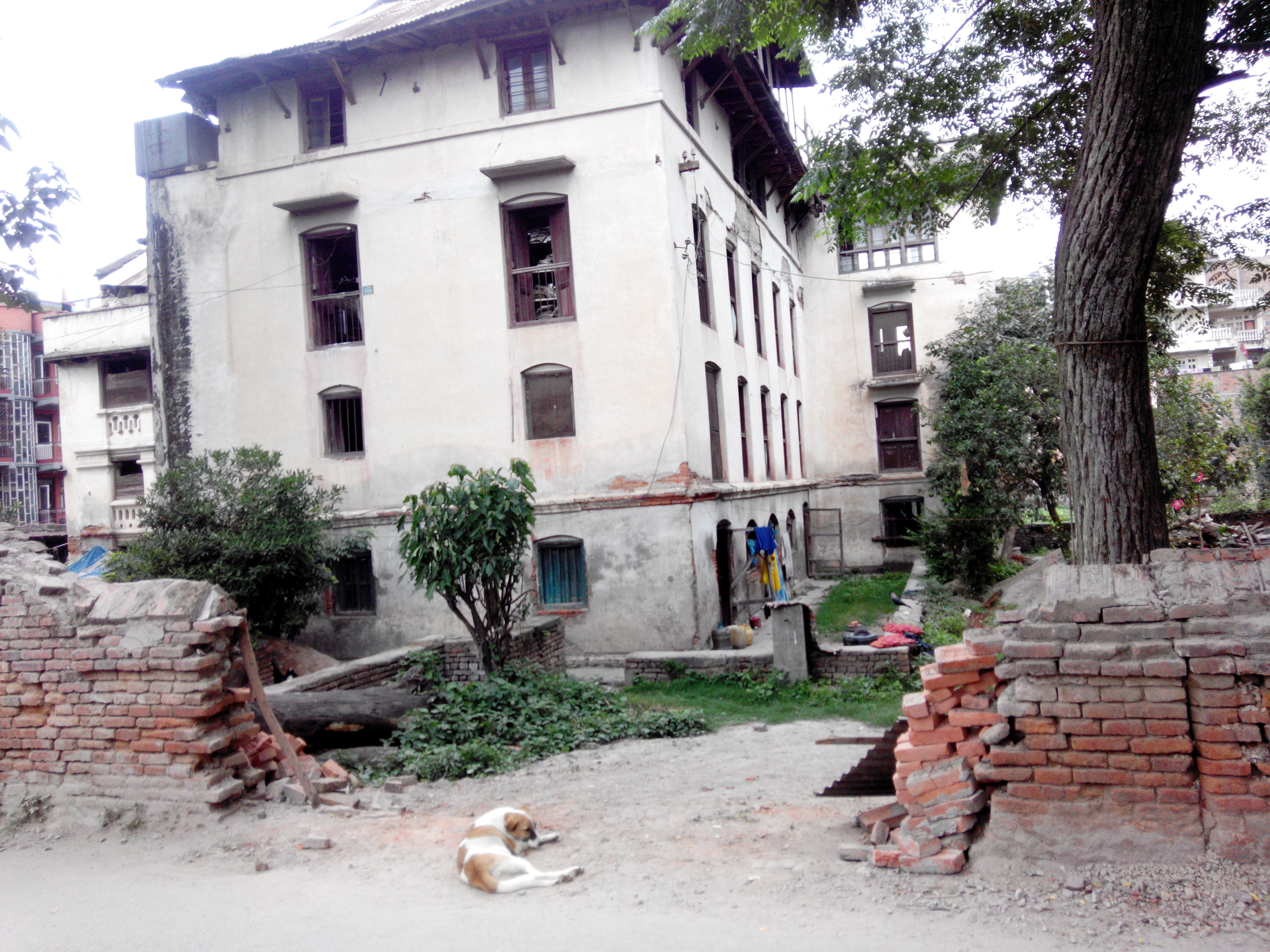
The earthquake was not simply a geological event. It was a moment that exposed the vulnerabilities hidden in our homes, communities, infrastructure and institutions. My own house was badly damaged. So was my father’s house. The damage did not come from one factor alone. It reflected a combination of vulnerabilities that had accumulated over time. I have written separately about the destruction and suffering that my family and many others experienced. I do not want to repeat that story here.
What should we have learned from that experience before the next disaster arrives?
In the days following the earthquake, I used Facebook to share photographs and information from badly affected areas, particularly from Kathmandu's historic core, because I wanted people to understand the scale of what was happening and become more aware of the suffering around them. At that time, our ability to collect, analyse and distribute information was limited. We depended heavily on people on the ground, photographs, telephone calls, newspapers, television, radio and informal networks.Today, the technological possibilities are very different.
Artificial intelligence can potentially help us analyse satellite imagery, rainfall, river levels, terrain, geological information, infrastructure, historical disaster records and citizen-generated reports. It can help identify patterns, detect changes and support faster risk assessment. But the central question remains the same:
How do we turn information into timely action that protects people?
That is where women, communities and human decision-making become essential.
The earthquake exposed more than damaged buildings
The 2015 earthquake taught Nepal a profound lesson: disaster risk does not begin when the ground starts shaking. Risk exists before the earthquake. It exists in the way buildings are constructed, where settlements are located, whether roads remain accessible, whether emergency services can reach communities, whether information reaches people in time, whether vulnerable households have support and whether institutions know who is responsible for what. My experience of seeing both my own house and my father's house badly damaged made this lesson personal. A disaster does not create every vulnerability from nothing. Often, it exposes vulnerabilities that were already there. That distinction is important as Nepal faces increasing risks from floods, landslides, extreme rainfall, fires, droughts, heat and other climate-related hazards. We cannot prevent every hazard. But we can reduce the conditions that allow a hazard to become a catastrophe.
My experience in 2015 taught me that disaster vulnerability is not created by the hazard alone. It is created by the conditions surrounding people when the hazard arrives.
This is where today's technology offers a new opportunity.
From personal suffering to public preparedness
Looking back at the earthquake, I often think about what information might have helped us before the disaster rather than after it. Could we have identified vulnerable structures earlier? Could we have mapped households requiring special assistance? Could we have known which roads were likely to become inaccessible? Could we have identified communities where emergency communication would be difficult? Could we have connected local knowledge with scientific information before the earthquake? These questions are not about pretending that artificial intelligence can predict the exact moment an earthquake will occur. The opportunity is different. AI can help us understand patterns of vulnerability.
It can combine information about buildings, terrain, population density, roads, infrastructure, historical events, environmental conditions and other relevant data to help decision-makers identify areas where preparedness should be strengthened. The objective should not be to tell a family, "Your house will collapse." The objective should be to help communities and authorities ask earlier:
Where are our vulnerabilities, who is most exposed, what resources are available, and what should we do now?
That is the difference between technology used for prediction alone and technology used for preparedness.
Women are part of Nepal's disaster infrastructure
When disaster strikes, women are often among those who understand the community at the most practical level. They know which children are at home. They know where elderly people live. They know which family includes a pregnant woman. I was hanging around the pregnant woman whose due date happend to be on the date oe of earcthquake 2015. The have experiensed handling her frightend ind. My friend'd daughter died while delivering. They know who may have a disability or mobility difficulty. They know which household may have no one to help carry an injured family member. They know local paths, water sources, neighbourhood relationships and informal support networks. Much of this knowledge never appears in a government database.
Disaster intelligence.
Women should therefore not be treated simply as beneficiaries of disaster programmes. They should be recognized as decision-makers, planners, communicators and managers of community resilience. This means meaningful participation in municipal disaster committees, ward-level preparedness groups, emergency communication systems, reconstruction planning and community response teams. It also means resources, training, authority and access to information.
Women should not enter the disaster-response system only after a crisis. They should help design the system before the crisis.
Connecting women's knowledge with AI
Imagine a municipality preparing for an extreme rainfall event. A scientific system may show that rainfall intensity is increasing and that a particular watershed is approaching a dangerous threshold. Satellite imagery may show changes in land cover or a developing landslide. A river sensor may indicate rising water levels. An AI system may identify several neighbourhoods with elevated exposure. But a woman leading a local community group may know something that none of these datasets contain. She may know that an elderly person lives alone in a house beside a drainage channel. A health worker may know that a person with limited mobility lives nearby. A teacher may know that children normally use a particular road to reach school. A farmer may know that a drainage channel has repeatedly overflowed at a specific location. A ward representative may know where emergency supplies are stored. These are different forms of intelligence. The future of disaster management should connect them.
AI should not replace community intelligence. It should amplify it.
From early warning to early action
Nepal has made progress in disaster early-warning systems, but a warning is useful only when people receive it, understand it, trust it and know what action to take. A warning that reaches a central office but never reaches the vulnerable household is not enough. A warning written in technical language that people do not understand is not enough. A warning without transport, shelters, communication or local response capacity is not enough. The goal must therefore shift from early warning to early action.
An AI-enabled disaster system could potentially integrate:weather forecasts; rainfall measurements; river and reservoir levels; satellite imagery; terrain and geological information; landslide and flood risk; road and bridge conditions; population and settlement information; critical infrastructure; historical disaster records; municipal reports and verified citizen photographs and reports.
But the final decision must remain connected to human institutions and local communities. An algorithm may identify a risk. A person must decide what to do. A community must act. And someone must remain accountable.
The last mile is human
Nepal's geography makes the last mile especially important. A sophisticated warning system in Kathmandu cannot by itself protect a family in a remote mountain settlement. Some communities may have weak internet connectivity. Some may have unreliable electricity. Some people may not use smartphones. Some older citizens may have difficulty reading small text or navigating digital systems. Therefore, disaster technology must be designed around real people rather than around technology itself. Warnings may need to travel through multiple channels:mobile alerts, SMS, radio, television, local government systems, schools, health workers, community volunteers, women's organizations and trusted local leaders.
Artificial intelligence can help generate and prioritize information, but communication must remain understandable and accessible. Technology should adapt to communities—not demand that communities adapt to technology.
Climate disasters require a different kind of preparedness
The lessons of the 2015 earthquake should not remain confined to earthquake preparedness. Nepal now faces multiple and interacting hazards. Heavy rainfall can produce floods and landslides. Landslides can block roads and isolate communities. Floods can damage electricity, communication and health infrastructure. Extreme weather can affect agriculture and food security. A single disaster can create a chain of secondary emergencies. This means Nepal needs multi-hazard preparedness, rather than separate systems that operate in isolation. The same community may need to prepare for earthquakes, floods, landslides, fires and extreme weather. An integrated system can help connect these risks. But integration should not mean putting everything into one giant technological platform and assuming the problem is solved. It means connecting people, institutions, data, infrastructure and decision-making.
Citizen-generated information: a lesson from 2015
My use of Facebook after the earthquake also taught me something important. People who are physically present during a disaster often see things before formal systems do. A photograph taken from a street can reveal damage that may not yet appear in an official report. A citizen may report that a road is blocked. A community member may know that a bridge has become unsafe. A local woman may know that an entire neighbourhood needs assistance. Today, AI can potentially help organize and analyse enormous amounts of citizen-generated information. It could help identify repeated reports, compare images, detect patterns and direct attention to areas requiring verification. But this creates another responsibility:
information must be verified.
A disaster is not the time to assume that every photograph, video, message or social-media post is authentic.
When misinformation becomes another disaster
Disasters create fear. Fear creates demand for information. And that environment can be exploited. False evacuation messages, fabricated photographs, manipulated videos, fake government notices and AI-generated content can spread rapidly. People may make dangerous decisions based on information that appears convincing but is false. This means disaster preparedness in the age of AI must include AI literacy and information literacy. People should learn how to distinguish between: an official warning; an AI-assisted preliminary assessment; a verified field report; a citizen report awaiting verification; and unverified information circulating online. The public should know where authoritative information comes from. Institutions should communicate clearly and consistently. Technology companies and public agencies should build safeguards against manipulation.
During a disaster, misinformation can become another hazard. Responsible AI must reduce fear, not monetize it.
AI security is disaster security
There is another issue that Nepal must not overlook: cybersecurity. A disaster-warning system is critical infrastructure. If communication systems fail, if warning databases are compromised, if emergency information is manipulated, or if digital systems are attacked during a crisis, the consequences can be serious. AI systems therefore need security testing before they are deployed in emergencies. Nepal needs professionals who can test these systems, identify vulnerabilities and conduct red-team exercises. Disaster preparedness should include:
AI security, cybersecurity, data protection, system resilience and human oversight.
The question is not only: "Can the AI system make a prediction?" It is also: "Can we trust the system when people's lives depend on it?"
Do not build Kathmandu-only AI
One of the greatest risks in Nepal's digital transformation is designing systems around the experience of connected urban populations. A disaster platform designed in Kathmandu may work beautifully in an office with reliable electricity, broadband internet and multiple digital devices. That does not mean it will work in a remote village. Nepal needs to design AI-enabled disaster systems for its diversity of geography and communities—from the mountains to the hills and the Tarai. That means local languages, simple interfaces, offline capabilities, low-bandwidth communication and community-based response mechanisms. Women and local organizations should participate in designing these systems because they understand the practical realities of the communities that the technology is supposed to serve.
Universities and the Nepali diaspora have a role
Nepal cannot build this capacity through government alone. Universities can contribute expertise in artificial intelligence, climate science, GIS, remote sensing, civil engineering, hydrology, geology, cybersecurity, telecommunications and social science. Nepali professionals living around the world can contribute knowledge, research collaboration, technology and mentoring. Students can work on real disaster problems rather than treating AI as an abstract academic subject. Research institutions can develop models suited to Nepal's terrain and data realities. The goal should be to build Nepal's own disaster intelligence capacity. We should not simply import technologies developed for completely different environments. Nepal's mountains, settlements, languages, infrastructure and social structures require locally informed solutions.
Every disaster should become a lesson
One of the most important changes we can make is cultural rather than technological. After every disaster, we should systematically ask:What happened? What warnings existed? Who received them? Who did not? What information was missing? Which roads failed? Which buildings failed? Which communication channels worked? Which institutions coordinated effectively? Where did coordination break down? What did local communities know that formal systems did not? What did women know that was not captured in official assessments? What should change before the next disaster? A disaster should not simply become another event in our history. It should become a source of institutional learning.
The 2015 earthquake should continue to teach us—not only about earthquakes, but about vulnerability, preparedness, communication, community leadership and the consequences of waiting until disaster has already arrived.
A new social contract for disaster resilience
The future of disaster resilience requires different actors to accept different responsibilities. Government must provide standards, infrastructure, public warning systems, coordination and accountability. Municipalities must understand local risks and maintain preparedness. Technical institutions must develop reliable and transparent tools. Universities must generate knowledge and train the next generation. Technology companies must build safe and accountable systems. Media must communicate accurately, especially during emergencies. Communities must participate in preparedness rather than waiting for rescue. And women must be recognized as full partners in decision-making, not merely recipients of assistance. AI can connect many of these capabilities. But AI cannot create political will, community trust or ethical responsibility.
Ten priorities for Nepal
If Nepal is serious about preparing for the next generation of disasters, I would suggest ten priorities:
- Put preparedness before response
Invest before disaster strikes, not only after damage has occurred.
- Build an integrated multi-hazard information system
Connect earthquake, flood, landslide, weather, fire and climate-risk information.
- Put women in decision-making positions
Give women authority, resources and access to information at municipal and community levels.
- Build community disaster intelligence
Capture local knowledge alongside scientific and digital data.
- Strengthen last-mile warning systems
Ensure that warnings reach the people who need them most.
- Make AI literacy part of disaster literacy
People need to understand both the opportunities and dangers of AI-generated information.
- Protect disaster data
Sensitive information about vulnerable households and infrastructure must be protected.
- Test AI systems before emergencies
Reliability, cybersecurity and human oversight must be tested before lives depend on them.
- Make rural Nepal a design priority
Do not design systems only for people with smartphones, broadband and reliable electricity.
- Institutionalize lessons from every disaster
Every major disaster should produce measurable improvements in preparedness.
From 2015 to 2026: learning before the next disaster
The earthquake of 2015 changed the way many Nepalis understood disaster. For me, the experience was deeply personal. My own house and my father's house were badly damaged. I witnessed the suffering around me and used the communication tools available to me at the time to make that suffering more visible. That experience belongs to the history of what happened. But the more important question now is what we do with the lesson. In 2015, we had photographs, telephones, Facebook, radio, television and human networks.
In 2026, we have far more powerful tools.
We have artificial intelligence, satellite imagery, sensors, geographic information systems, digital communications and the ability to analyse enormous amounts of information. But greater technological capability also creates greater responsibility. We must not build systems that merely produce more data. We must build systems that help people make better decisions earlier. And we must ensure that technology strengthens—not weakens—human responsibility. The future I imagine is not one where AI replaces people during disasters. It is one where AI helps people see risk earlier, women help communities act faster, scientists provide reliable knowledge, institutions coordinate effectively, and citizens have the information they need to protect themselves and one another.
The lesson of 2015 should therefore not be only that Nepal suffered a devastating earthquake. It should be that we learned where our vulnerabilities were—and that we have a responsibility to act on those lessons. We cannot always prevent the disaster. But we can decide, before it comes, how prepared we will be. And that preparation must begin with people with women, with communities, with knowledge, with ethics and with technology that serves humanity