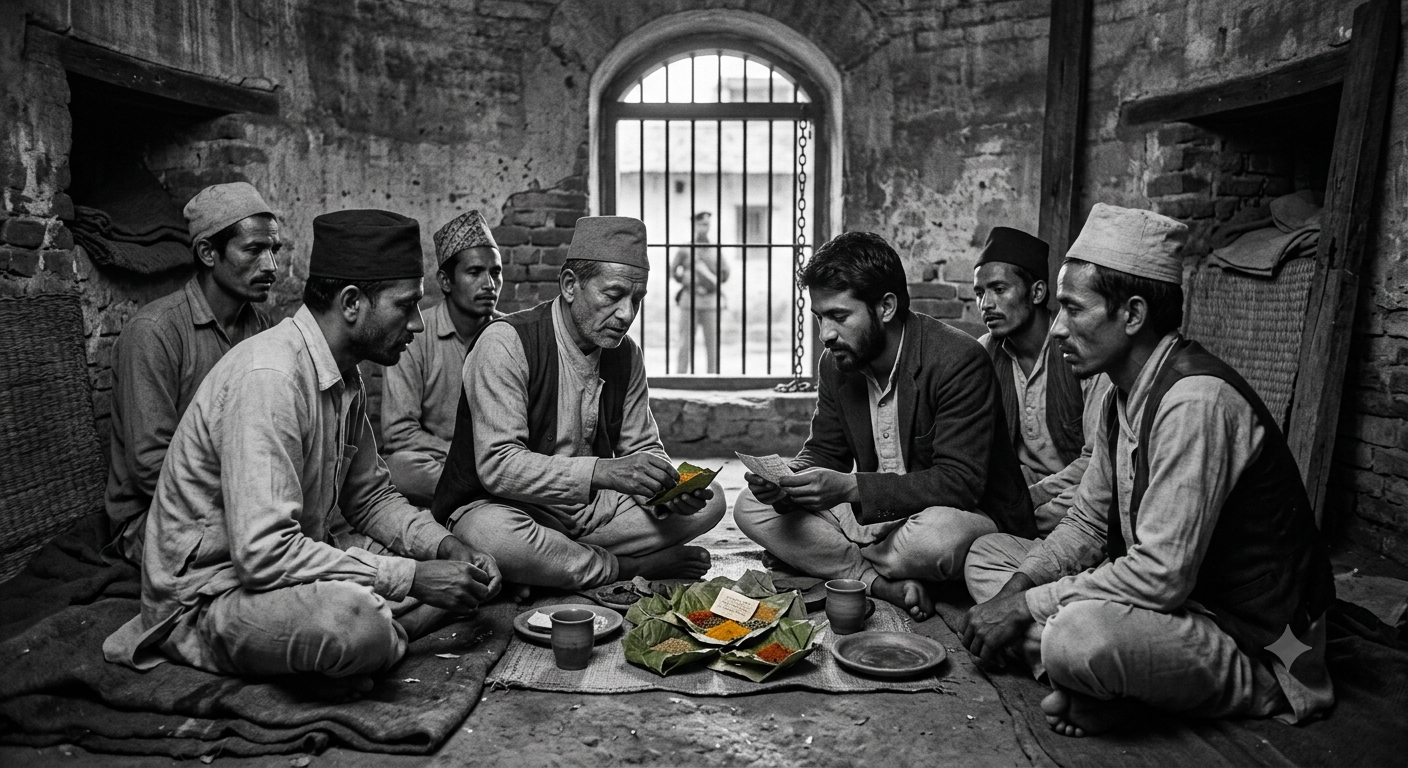
In 1948 (2005 BS), as Prime Minister Mohan Shumsher crushed democratic reforms and suppressed Nepal's fledgling draft constitution, political activists opposing the Rana regime were rounded up and I was locked in Golghar—a high-security isolation unit inside Kathmandu's Central Jail.
Under strict censorship, paper and writing materials were strictly forbidden to block covert communication. Even daily spice deliveries were inspected and handed to inmates wrapped only in natural leaves. Yet, underground networks found a way. Tucked deep inside one of those leaf-wrapped masala packets was a smuggled note with news from outside: a fellow freedom fighter, Heera Devi Yami, had given birth to a baby boy.
Imprisoned for demanding a constitutional rule over autocratic decree, the inmates were deeply moved by the news. In a symbolic act of defiance and hope for Nepal's political future, they collectively named the newborn Vidhan—the Nepali word for constitution—immortalizing the cause for which they were caged.