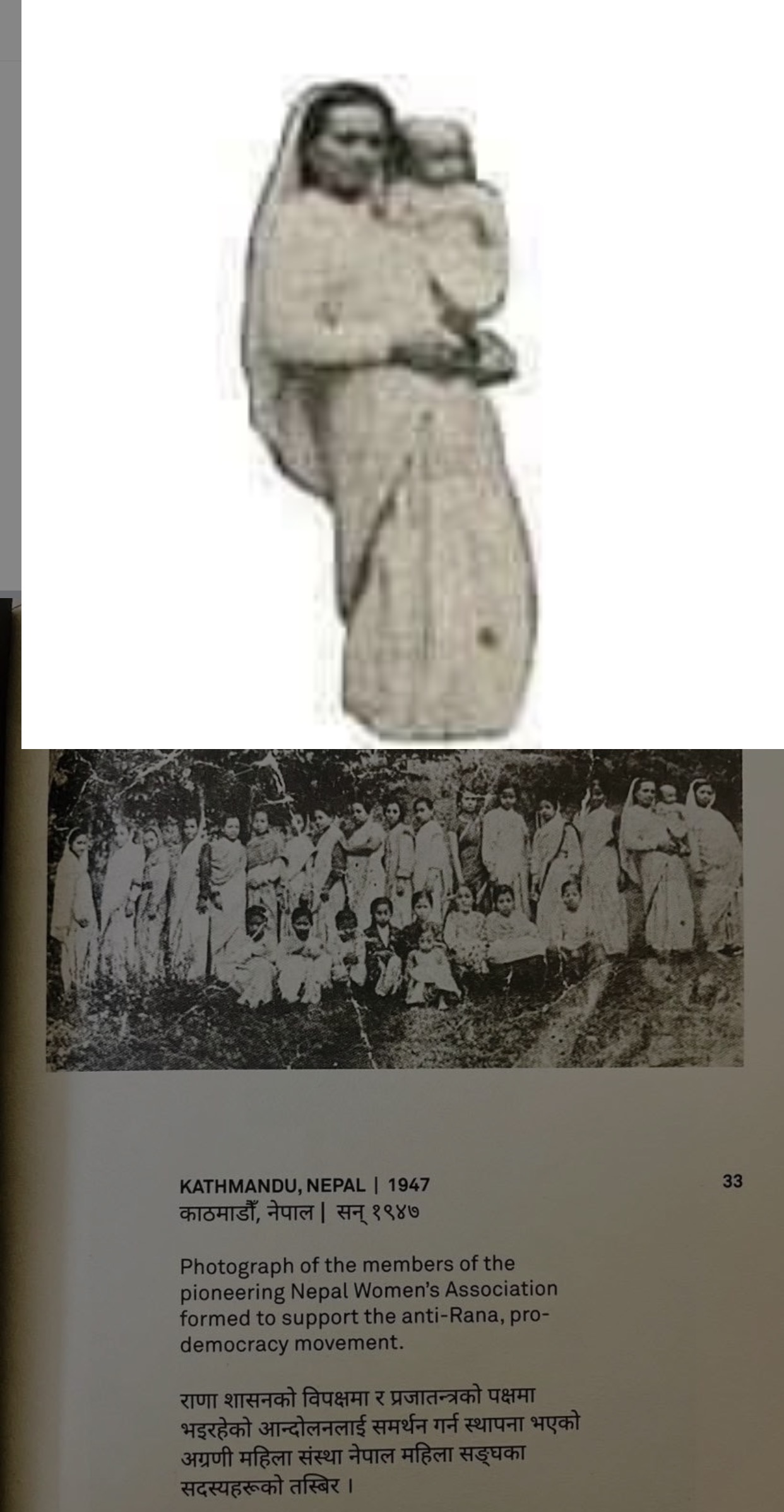
Heera Devi Kansakar was born into the prosperous Kansakar household of Kel Tole, in Kathmandu at a time when Nepal was firmly under the autocratic rule of the Rana prime ministers. The Kansakars were among the prominent Newar merchant families whose wealth came from trade networks that connected Kathmandu with Lhasa, Calcutta, and other commercial centers of South Asia. Yet, despite the material security of her birth, Heera Devi’s childhood was marked by prolonged illness and emotional hardship.
From an early age she suffered from gandamala—scrofula, or lymphatic tuberculosis—a disease that, in the late nineteenth and early twentieth centuries, was widely feared and poorly understood. Treatment options in Kathmandu were limited, and the disease often left visible scars and physical weakness. While she was still struggling with this illness, her mother died. Within six months, her father, Hira Kaji Kansakar, remarried, and Heera Devi grew up in a household where her position became more uncertain.
When she was nineteen, her elder brother Dhankaji Kansakar took her to Calcutta, then the intellectual and medical hub of British India. Many affluent Nepali families sought treatment there, as Calcutta housed some of the best Western-trained doctors in the region. By fortunate coincidence, they encountered Dr. Dineshananda Vaidya, who was studying there. After examining her condition and hearing her history, he referred them to a German physician practicing in the city. German doctors were highly regarded at the time for their expertise in surgery and modern medical techniques.
Under this doctor’s care for six months, Heera Devi was cured of the active disease. However, the surgeries had left deep scars on her neck, chest, and armpits, and years of illness had weakened and distorted her body. The doctor advised that she spend another six months recuperating in Kalimpong, a hill station in the eastern Himalayas known for its healthy climate and frequented by Nepali traders and expatriates.
There, she came under the guardianship of her relative Bhajuratna Kansakar, a renowned merchant, but even more under the loving care of his wife, who nursed her with extraordinary devotion. After regaining strength, a Bengali doctor in Kalimpong photographed her and sent a report to the German physician in Calcutta. His reply permitted her to return home, but advised a year of rest and warned against marriage during that time.
Before returning to Kathmandu, Bhajuratna’s wife took Heera Devi on a pilgrimage to Buddhist holy sites in India. Her brother Dhankaji joined as her guardian. During this journey, they reached Rajgir, famous for its hot springs and its association with the Buddha. While bathing there, at the age of twenty, Heera Devi experienced menstruation for the first time in her life. She later recalled that this marked the beginning of her regular monthly cycle, something that had been delayed by years of illness.
These early trials—disease, displacement, and recovery—formed the background to the remarkable life she would later lead.
At the same time, Nepal’s political climate was growing increasingly tense. The Rana regime, which had ruled since 1846, maintained strict control over political expression. Intellectuals and writers who questioned authority were imprisoned. In B.S. 1997 (1940–41 A.D.), during a major political crackdown, Dharmaratna Yami—later Heera Devi’s husband—was arrested in connection with his writings for the newspaper Panchika. He was sentenced to confiscation of property and eighteen years in prison, where he endured chains and torture.
After World War II, as the British Empire weakened and political winds shifted across South Asia, Rana Prime Minister Juddha Shumsher retired. Around B.S. 2002 (1945–46 A.D.), political prisoners were released. Dharmaratna emerged from prison after five years, with no property, no employment, and strict restrictions on his movement.
It was during this time that Heera Devi came into his life.
While attending a ritual at her maternal uncle’s house near Dharmaratna’s maternal home, she was noticed by his aunt Jogmaya, who hoped to arrange his marriage. When Dharmaratna first saw Heera Devi through a window, he was struck by her calm strength—her wheat-fair complexion, glasses, open forehead, and determined eyes. He felt an inexplicable bond and agreed to pursue the proposal.
Her family, however, strongly objected. They viewed Dharmaratna as an atheist, a political agitator, and a destitute former prisoner. Yet Heera Devi insisted on meeting him. At the Saraswati temple near Bijeshwari, he frankly told her of his poverty, uncertain future, and the hardships she would face. She listened and replied with quiet conviction:
“You have lived not for yourself but for the country. A person who lives for the country cannot be bad. I ask only one promise: even if we have only a single soybean to eat, we will share it equally, and you must never be involved with another woman.”
He accepted. From then on, they were inseparable.
They married informally and began life together in Handigaon, living modestly. To support the household, Heera Devi taught neighborhood children, earning 50–60 rupees a month. She never complained, even in times of scarcity.
Meanwhile, history was unfolding rapidly. On 15 August 1947, India gained independence. This event electrified politically conscious Nepalis. Members of the Nepali National Congress, operating from India, instructed activists in Kathmandu to mark the occasion.
At a small gathering in Maru Dovel, portraits of Gandhi, Nehru, and Prime Minister Padma Shumsher Rana were displayed. Heera Devi, chosen to speak, arrived with students she had trained. She explained the meaning of India’s independence and the hope it represented for Nepal.
The Rana authorities quickly intervened. Colonel Chand Bahadur Thapa arrived with police, objecting to the display of “Dhotiwalas’” pictures alongside the King’s image. Heera Devi and others were arrested and subjected to harsh detention conditions. Even there, she showed resilience, encouraging fellow detainees.
Reading newspapers like The Statesman, which reported on B.P. Koirala’s underground activities, she gained renewed courage. She soon became deeply involved in organizing women and youth for political awareness.
In B.S. 2002–2004, Heera Devi helped establish educational programs for girls at institutions such as Padyajyoti School and Shantinikunj School. These were not merely academic centers but training grounds for political consciousness. Girls were prepared to run women’s organizations and assist the underground democratic movement.
On 22 Shrawan 2004 B.S., at a picnic in Mhepi attended by students and prominent women, the Nepal Women’s Association was formally initiated. Figures such as Maya Sadhana Pradhan, Snehlata Mithethu, Kankalata Nakarmi, Pratibha Karmacharya, and many others participated. Membership grew rapidly.
Under Heera Devi’s leadership, women were organized into networks that spread across Kathmandu, Bhaktapur, Patan, and beyond into hills and Terai. They conducted awareness campaigns, trained youth, and supported underground political work. An estimated six to seven thousand people were reached through these initiatives.
The Rana rulers grew alarmed, but repression could not halt the momentum. Women distributed food, organized gatherings, and maintained morale. Schools became centers of both learning and activism.
Through illness, social stigma, poverty, imprisonment, and political repression, Heera Devi Kansakar emerged as a quiet but formidable force. She transformed personal suffering into public service, helping to lay the foundation for organized women’s participation in Nepal’s democratic struggle.
Her life stands at the intersection of medicine, migration, marriage, and political awakening in mid-twentieth-century Nepal. More than a supportive spouse, she was an organizer, educator, and pioneer whose work empowered countless women and strengthened the broader movement for democracy.
Heera Devi Kansakar’s life unfolded during one of the most politically turbulent and transformative periods in Nepal’s history. Born into the prosperous Kansakar merchant family of Kel Tole, Bhotahiti, Kathmandu, she grew up at a time when the country was under the rigid autocratic control of the Rana prime ministers, whose hereditary rule since 1846 had reduced the Shah kings to ceremonial figures and suppressed political freedom, education, and public discourse.
Her early years were marked by prolonged illness. Suffering from gandamala (lymphatic tuberculosis), she spent much of her childhood in physical pain and social isolation. At a time when tuberculosis was poorly treated in Nepal, her family sent her to Calcutta—the medical center of British India—where modern Western medicine was available. There, under the care of a German physician, she was cured after months of treatment. She later recuperated in Kalimpong, a hill station that served as an important meeting ground for Nepali traders, exiles, and intellectuals moving between Nepal and India.
This geographical movement between Kathmandu, Calcutta, Kalimpong, and the Buddhist pilgrimage routes of India exposed Heera Devi, from a young age, to a wider political world than most Nepali women of her generation ever encountered. She saw firsthand the contrast between British India’s evolving political consciousness and Nepal’s suffocating isolation under Rana rule.
By the time she returned to Kathmandu, Nepal’s underground political dissatisfaction had begun to take shape. The execution of the Praja Parishad martyrs in 1941 had shaken the educated youth. Writers, teachers, and reformists were being arrested. Among them was Dharmaratna Yami, who would later become her husband. He had been imprisoned in the historic B.S. 1997 political case for his writings against the regime, sentenced to long imprisonment with confiscation of property.
When Dharmaratna was released in B.S. 2002 after the end of World War II, he returned to society as a marked man—poor, unemployed, watched by authorities, and feared by ordinary citizens. It was into this politically charged and socially precarious situation that Heera Devi stepped when she chose to marry him, despite her family’s strong objections.
Her decision was not merely personal; it was political. She consciously chose to bind her life to a man who had sacrificed everything for democratic ideals. Her famous promise—that even a single soybean would be shared equally and that he must remain faithful—symbolized not only marital commitment but a partnership in struggle.
Their household in Handigaon became more than a home; it became a quiet node in the growing underground network of democratic activists.
The end of World War II dramatically altered South Asia’s political landscape. The British Empire weakened, and India’s freedom struggle reached its climax. On 15 August 1947, India gained independence. For politically conscious Nepalis, this was a moment of immense psychological awakening. If the British could leave India, could the Ranas not be challenged in Nepal?
The Nepali National Congress, formed by Nepali exiles in India, began sending messages and instructions to activists inside Nepal. One such instruction was to commemorate India’s Independence Day in Kathmandu as a symbolic act of hope.
Heera Devi was chosen to deliver a speech at the gathering in Maru Dovel. This decision itself was remarkable in a society where women were rarely seen in public political roles. Standing before portraits of Gandhi, Nehru, and Prime Minister Padma Shumsher Rana, she explained the significance of India’s independence and its implications for Nepal.
The Rana police quickly intervened. She and others were arrested and subjected to harsh detention. Yet this event marked her transition from a supporter of political ideas to an active participant in political resistance.
During her detention, she read reports in The Statesman about B.P. Koirala and underground democratic movements in Nepal. These reports strengthened her resolve. Upon release, she began organizing women, students, and young girls—not merely for education, but for political awakening.
At schools like Padyajyoti and Shantinikunj, she quietly integrated political awareness into teaching. Girls were trained not only in literacy and domestic skills but in organization, public speaking, and social responsibility. These schools became safe fronts for political mobilization.
By B.S. 2004, this work culminated in a historic moment: at a picnic gathering in Mhepi, attended by students and prominent women from Kathmandu’s Newar community, the foundations of the Nepal Women’s Association were laid. This was one of the earliest organized efforts to bring Nepali women into structured political participation.
Heera Devi and her colleagues created networks that spread through Kathmandu, Bhaktapur, Patan, and gradually into rural areas. Women were organized into groups, trained, and assigned roles in awareness campaigns, message-carrying, and support for underground activists. Thousands were reached through these initiatives.
The Rana regime, already wary of male political activists, was slow to recognize the scale of women’s involvement. By the time they did, a resilient support structure for the democratic movement had already formed.
Heera Devi’s political work was inseparable from her domestic life. While earning a modest income teaching children, she sustained a household that doubled as a meeting place for activists. She provided food, shelter, encouragement, and organizational support. She participated in protests, distributed garlands and food to demonstrators, and maintained morale during arrests and crackdowns.
Her strength lay not in fiery speeches or public leadership but in patient organization, education, and moral courage. She represented a new kind of political actor in Nepal: the politically conscious woman who worked behind the scenes to build durable social networks.
As Nepal moved toward the revolution of 1950–51 and the eventual fall of Rana rule, the groundwork laid by people like Heera Devi became visible. Women who had been trained through her efforts emerged as organizers, teachers, and participants in the democratic movement. The Nepal Women’s Association grew into an enduring institution.
Heera Devi Kansakar’s life thus mirrors the political awakening of Nepal itself: from illness and constraint to recovery and action; from private suffering to public purpose; from the isolation of Rana Kathmandu to the connected political currents of South Asia.
She did not merely live through history—she helped prepare the social foundation that made Nepal’s democratic struggle possible.
At a critical moment in Nepal’s underground democratic struggle, when most prominent male activists had been arrested and imprisoned by the Rana regime, a quiet but decisive initiative was taken that would shape the future of women’s political participation in the country.
Prem Bahadur Kansakar, himself connected to the network of politically conscious Newar families of Kathmandu, recognized a serious danger: with male leaders rounded up and jailed, the underground movement risked losing continuity, communication, and morale. Surveillance was intense, meetings were dangerous, and any visible gathering of men immediately attracted suspicion. It was in this tense atmosphere that a new strategy emerged—one that relied on women and students, who were less likely to be suspected of political organization.
Prem Bahadur turned to Heera Devi Yami (Kansakar), whose life experience had uniquely prepared her for such a role. Having traveled to Calcutta and Kalimpong for medical treatment, she had seen British India’s political ferment, read newspapers, and understood how organization and education could quietly nurture political consciousness. She was also already known among neighborhood girls and students as a teacher and mentor.
In complete secrecy, Prem Bahadur Kansakar began assembling a small group at his residence. The gathering appeared innocent: women and students coming together for what could easily be explained as a social or educational outing. But in reality, it was carefully planned as the first step toward forming a structured women’s organization that could sustain the democratic movement while men were in prison.
Heera Devi played a central role in mobilizing this group. She contacted her students and women she had previously trained through informal educational activities. Because of the trust she had built, they came without hesitation. The plan was to avoid suspicion by organizing what seemed like a picnic excursion to an isolated wooded area on the outskirts of Kathmandu known as Mhepi (then a jungle area).
From Prem Bahadur Kansakar’s house, the group quietly proceeded toward Mhepi. There were no banners, no slogans, no visible signs of politics—only women, girls, and a few trusted organizers moving discreetly. The location was deliberately chosen for its seclusion, away from the eyes of Rana informants.
There, in that quiet forest clearing, discussions took place that would lead to the formation of what became known as the Nepal Women’s Association—the first organized women’s political body in the country. The participants discussed the situation: male leaders in jail, the need to maintain communication, the necessity of spreading awareness among households, and the importance of preparing women to take active roles in the struggle.
Heera Devi Yami, because of her exposure to India and her experience in organizing students, was naturally looked upon as a guiding figure. She helped shape the discussions, encouraged the women to see themselves not as passive supporters but as active participants in the democratic movement, and emphasized education, discipline, and secrecy.
This gathering at Mhepi was not loud, dramatic, or publicly declared. It was quiet, cautious, and purposeful. Yet its impact was profound. From this meeting, networks of women began to form across Kathmandu, Bhaktapur, and Patan. They carried messages, organized small educational groups, maintained morale, and ensured that the underground movement did not collapse during the period when its male leadership was imprisoned.
Prem Bahadur Kansakar’s careful planning and Heera Devi Yami’s leadership made this possible. What appeared outwardly as a simple women’s outing into the woods was, in reality, a historic political act carried out under the nose of an authoritarian regime.
At a critical moment in Nepal’s underground democratic struggle, when most prominent male activists had been arrested and imprisoned by the Rana regime, a quiet but decisive initiative was taken that would shape the future of women’s political participation in the country.
Prem Bahadur Kansakar, himself connected to the network of politically conscious Newar families of Kathmandu, recognized a serious danger: with male leaders rounded up and jailed, the underground movement risked losing continuity, communication, and morale. Surveillance was intense, meetings were dangerous, and any visible gathering of men immediately attracted suspicion. It was in this tense atmosphere that a new strategy emerged—one that relied on women and students, who were less likely to be suspected of political organization.
Prem Bahadur turned to Heera Devi Yami (Kansakar), whose life experience had uniquely prepared her for such a role. Having traveled to Calcutta and Kalimpong for medical treatment, she had seen British India’s political ferment, read newspapers, and understood how organization and education could quietly nurture political consciousness. She was also already known among neighborhood girls and students as a teacher and mentor.
In complete secrecy, Prem Bahadur Kansakar began assembling a small group at his residence. The gathering appeared innocent: women and students coming together for what could easily be explained as a social or educational outing. But in reality, it was carefully planned as the first step toward forming a structured women’s organization that could sustain the democratic movement while men were in prison.
Heera Devi played a central role in mobilizing this group. She contacted her students and women she had previously trained through informal educational activities. Because of the trust she had built, they came without hesitation. The plan was to avoid suspicion by organizing what seemed like a picnic excursion to an isolated wooded area on the outskirts of Kathmandu known as Mhepi (then a jungle area).
From Prem Bahadur Kansakar’s house, the group quietly proceeded toward Mhepi. There were no banners, no slogans, no visible signs of politics—only women, girls, and a few trusted organizers moving discreetly. The location was deliberately chosen for its seclusion, away from the eyes of Rana informants.
There, in that quiet forest clearing, discussions took place that would lead to the formation of what became known as the Nepal Women’s Association—the first organized women’s political body in the country. The participants discussed the situation: male leaders in jail, the need to maintain communication, the necessity of spreading awareness among households, and the importance of preparing women to take active roles in the struggle.
Heera Devi Yami, because of her exposure to India and her experience in organizing students, was naturally looked upon as a guiding figure. She helped shape the discussions, encouraged the women to see themselves not as passive supporters but as active participants in the democratic movement, and emphasized education, discipline, and secrecy.
This gathering at Mhepi was not loud, dramatic, or publicly declared. It was quiet, cautious, and purposeful. Yet its impact was profound. From this meeting, networks of women began to form across Kathmandu, Bhaktapur, and Patan. They carried messages, organized small educational groups, maintained morale, and ensured that the underground movement did not collapse during the period when its male leadership was imprisoned.
Prem Bahadur Kansakar’s careful planning and Heera Devi Yami’s leadership made this possible. What appeared outwardly as a simple women’s outing into the woods was, in reality, a historic political act carried out under the nose of an authoritarian regime.
At a critical moment in Nepal’s underground democratic struggle, when most prominent male activists had been arrested and imprisoned by the Rana regime, a quiet but decisive initiative was taken that would shape the future of women’s political participation in the country.
Prem Bahadur Kansakar, himself connected to the network of politically conscious Newar families of Kathmandu, recognized a serious danger: with male leaders rounded up and jailed, the underground movement risked losing continuity, communication, and morale. Surveillance was intense, meetings were dangerous, and any visible gathering of men immediately attracted suspicion. It was in this tense atmosphere that a new strategy emerged—one that relied on women and students, who were less likely to be suspected of political organization.
Prem Bahadur turned to Heera Devi Yami (Kansakar), whose life experience had uniquely prepared her for such a role. Having traveled to Calcutta and Kalimpong for medical treatment, she had seen British India’s political ferment, read newspapers, and understood how organization and education could quietly nurture political consciousness. She was also already known among neighborhood girls and students as a teacher and mentor.
In complete secrecy, Prem Bahadur Kansakar began assembling a small group at his residence. The gathering appeared innocent: women and students coming together for what could easily be explained as a social or educational outing. But in reality, it was carefully planned as the first step toward forming a structured women’s organization that could sustain the democratic movement while men were in prison.
Heera Devi played a central role in mobilizing this group. She contacted her students and women she had previously trained through informal educational activities. Because of the trust she had built, they came without hesitation. The plan was to avoid suspicion by organizing what seemed like a picnic excursion to an isolated wooded area on the outskirts of Kathmandu known as Mhepi (then a jungle area).
From Prem Bahadur Kansakar’s house, the group quietly proceeded toward Mhepi. There were no banners, no slogans, no visible signs of politics—only women, girls, and a few trusted organizers moving discreetly. The location was deliberately chosen for its seclusion, away from the eyes of Rana informants.
There, in that quiet forest clearing, discussions took place that would lead to the formation of what became known as the Nepal Women’s Association—the first organized women’s political body in the country. The participants discussed the situation: male leaders in jail, the need to maintain communication, the necessity of spreading awareness among households, and the importance of preparing women to take active roles in the struggle.
Heera Devi Yami, because of her exposure to India and her experience in organizing students, was naturally looked upon as a guiding figure. She helped shape the discussions, encouraged the women to see themselves not as passive supporters but as active participants in the democratic movement, and emphasized education, discipline, and secrecy.
This gathering at Mhepi was not loud, dramatic, or publicly declared. It was quiet, cautious, and purposeful. Yet its impact was profound. From this meeting, networks of women began to form across Kathmandu, Bhaktapur, and Patan. They carried messages, organized small educational groups, maintained morale, and ensured that the underground movement did not collapse during the period when its male leadership was imprisoned.
Prem Bahadur Kansakar’s careful planning and Heera Devi Yami’s leadership made this possible. What appeared outwardly as a simple women’s outing into the woods was, in reality, a historic political act carried out under the nose of an authoritarian regime.
At a critical moment in Nepal’s underground democratic struggle, when most prominent male activists had been arrested and imprisoned by the Rana regime, a quiet but decisive initiative was taken that would shape the future of women’s political participation in the country.
Prem Bahadur Kansakar, himself connected to the network of politically conscious Newar families of Kathmandu, recognized a serious danger: with male leaders rounded up and jailed, the underground movement risked losing continuity, communication, and morale. Surveillance was intense, meetings were dangerous, and any visible gathering of men immediately attracted suspicion. It was in this tense atmosphere that a new strategy emerged—one that relied on women and students, who were less likely to be suspected of political organization.
Prem Bahadur turned to Heera Devi Yami (Kansakar), whose life experience had uniquely prepared her for such a role. Having traveled to Calcutta and Kalimpong for medical treatment, she had seen British India’s political ferment, read newspapers, and understood how organization and education could quietly nurture political consciousness. She was also already known among neighborhood girls and students as a teacher and mentor.
In complete secrecy, Prem Bahadur Kansakar began assembling a small group at his residence. The gathering appeared innocent: women and students coming together for what could easily be explained as a social or educational outing. But in reality, it was carefully planned as the first step toward forming a structured women’s organization that could sustain the democratic movement while men were in prison.
Heera Devi played a central role in mobilizing this group. She contacted her students and women she had previously trained through informal educational activities. Because of the trust she had built, they came without hesitation. The plan was to avoid suspicion by organizing what seemed like a picnic excursion to an isolated wooded area on the outskirts of Kathmandu known as Mhepi (then a jungle area).
From Prem Bahadur Kansakar’s house, the group quietly proceeded toward Mhepi. There were no banners, no slogans, no visible signs of politics—only women, girls, and a few trusted organizers moving discreetly. The location was deliberately chosen for its seclusion, away from the eyes of Rana informants.
There, in that quiet forest clearing, discussions took place that would lead to the formation of what became known as the Nepal Women’s Association—the first organized women’s political body in the country. The participants discussed the situation: male leaders in jail, the need to maintain communication, the necessity of spreading awareness among households, and the importance of preparing women to take active roles in the struggle.
Heera Devi Yami, because of her exposure to India and her experience in organizing students, was naturally looked upon as a guiding figure. She helped shape the discussions, encouraged the women to see themselves not as passive supporters but as active participants in the democratic movement, and emphasized education, discipline, and secrecy.
This gathering at Mhepi was not loud, dramatic, or publicly declared. It was quiet, cautious, and purposeful. Yet its impact was profound. From this meeting, networks of women began to form across Kathmandu, Bhaktapur, and Patan. They carried messages, organized small educational groups, maintained morale, and ensured that the underground movement did not collapse during the period when its male leadership was imprisoned.
Prem Bahadur Kansakar’s careful planning and Heera Devi Yami’s leadership made this possible. What appeared outwardly as a simple women’s outing into the woods was, in reality, a historic political act carried out under the nose of an authoritarian regime.
At a critical moment in Nepal’s underground democratic struggle, when most prominent male activists had been arrested and imprisoned by the Rana regime, a quiet but decisive initiative was taken that would shape the future of women’s political participation in the country.
Prem Bahadur Kansakar, himself connected to the network of politically conscious Newar families of Kathmandu, recognized a serious danger: with male leaders rounded up and jailed, the underground movement risked losing continuity, communication, and morale. Surveillance was intense, meetings were dangerous, and any visible gathering of men immediately attracted suspicion. It was in this tense atmosphere that a new strategy emerged—one that relied on women and students, who were less likely to be suspected of political organization.
Prem Bahadur turned to Heera Devi Yami (Kansakar), whose life experience had uniquely prepared her for such a role. Having traveled to Calcutta and Kalimpong for medical treatment, she had seen British India’s political ferment, read newspapers, and understood how organization and education could quietly nurture political consciousness. She was also already known among neighborhood girls and students as a teacher and mentor.
In complete secrecy, Prem Bahadur Kansakar began assembling a small group at his residence. The gathering appeared innocent: women and students coming together for what could easily be explained as a social or educational outing. But in reality, it was carefully planned as the first step toward forming a structured women’s organization that could sustain the democratic movement while men were in prison.
Heera Devi played a central role in mobilizing this group. She contacted her students and women she had previously trained through informal educational activities. Because of the trust she had built, they came without hesitation. The plan was to avoid suspicion by organizing what seemed like a picnic excursion to an isolated wooded area on the outskirts of Kathmandu known as Mhepi (then a jungle area).
From Prem Bahadur Kansakar’s house, the group quietly proceeded toward Mhepi. There were no banners, no slogans, no visible signs of politics—only women, girls, and a few trusted organizers moving discreetly. The location was deliberately chosen for its seclusion, away from the eyes of Rana informants.
There, in that quiet forest clearing, discussions took place that would lead to the formation of what became known as the Nepal Women’s Association—the first organized women’s political body in the country. The participants discussed the situation: male leaders in jail, the need to maintain communication, the necessity of spreading awareness among households, and the importance of preparing women to take active roles in the struggle.
Heera Devi Yami, because of her exposure to India and her experience in organizing students, was naturally looked upon as a guiding figure. She helped shape the discussions, encouraged the women to see themselves not as passive supporters but as active participants in the democratic movement, and emphasized education, discipline, and secrecy.
This gathering at Mhepi was not loud, dramatic, or publicly declared. It was quiet, cautious, and purposeful. Yet its impact was profound. From this meeting, networks of women began to form across Kathmandu, Bhaktapur, and Patan. They carried messages, organized small educational groups, maintained morale, and ensured that the underground movement did not collapse during the period when its male leadership was imprisoned.
Prem Bahadur Kansakar’s careful planning and Heera Devi Yami’s leadership made this possible. What appeared outwardly as a simple women’s outing into the woods was, in reality, a historic political act carried out under the nose of an authoritarian regime.
At a critical moment in Nepal’s underground democratic struggle, when most prominent male activists had been arrested and imprisoned by the Rana regime, a quiet but decisive initiative was taken that would shape the future of women’s political participation in the country.
Prem Bahadur Kansakar, himself connected to the network of politically conscious Newar families of Kathmandu, recognized a serious danger: with male leaders rounded up and jailed, the underground movement risked losing continuity, communication, and morale. Surveillance was intense, meetings were dangerous, and any visible gathering of men immediately attracted suspicion. It was in this tense atmosphere that a new strategy emerged—one that relied on women and students, who were less likely to be suspected of political organization.
Prem Bahadur turned to Heera Devi Yami (Kansakar), whose life experience had uniquely prepared her for such a role. Having traveled to Calcutta and Kalimpong for medical treatment, she had seen British India’s political ferment, read newspapers, and understood how organization and education could quietly nurture political consciousness. She was also already known among neighborhood girls and students as a teacher and mentor.
In complete secrecy, Prem Bahadur Kansakar began assembling a small group at his residence. The gathering appeared innocent: women and students coming together for what could easily be explained as a social or educational outing. But in reality, it was carefully planned as the first step toward forming a structured women’s organization that could sustain the democratic movement while men were in prison.
Heera Devi played a central role in mobilizing this group. She contacted her students and women she had previously trained through informal educational activities. Because of the trust she had built, they came without hesitation. The plan was to avoid suspicion by organizing what seemed like a picnic excursion to an isolated wooded area on the outskirts of Kathmandu known as Mhepi (then a jungle area).
From Prem Bahadur Kansakar’s house, the group quietly proceeded toward Mhepi. There were no banners, no slogans, no visible signs of politics—only women, girls, and a few trusted organizers moving discreetly. The location was deliberately chosen for its seclusion, away from the eyes of Rana informants.
There, in that quiet forest clearing, discussions took place that would lead to the formation of what became known as the Nepal Women’s Association—the first organized women’s political body in the country. The participants discussed the situation: male leaders in jail, the need to maintain communication, the necessity of spreading awareness among households, and the importance of preparing women to take active roles in the struggle.
Heera Devi Yami, because of her exposure to India and her experience in organizing students, was naturally looked upon as a guiding figure. She helped shape the discussions, encouraged the women to see themselves not as passive supporters but as active participants in the democratic movement, and emphasized education, discipline, and secrecy.
This gathering at Mhepi was not loud, dramatic, or publicly declared. It was quiet, cautious, and purposeful. Yet its impact was profound. From this meeting, networks of women began to form across Kathmandu, Bhaktapur, and Patan. They carried messages, organized small educational groups, maintained morale, and ensured that the underground movement did not collapse during the period when its male leadership was imprisoned.
Prem Bahadur Kansakar’s careful planning and Heera Devi Yami’s leadership made this possible. What appeared outwardly as a simple women’s outing into the woods was, in reality, a historic political act carried out under the nose of an authoritarian regime.
At a critical moment in Nepal’s underground democratic struggle, when most prominent male activists had been arrested and imprisoned by the Rana regime, a quiet but decisive initiative was taken that would shape the future of women’s political participation in the country.
Prem Bahadur Kansakar, himself connected to the network of politically conscious Newar families of Kathmandu, recognized a serious danger: with male leaders rounded up and jailed, the underground movement risked losing continuity, communication, and morale. Surveillance was intense, meetings were dangerous, and any visible gathering of men immediately attracted suspicion. It was in this tense atmosphere that a new strategy emerged—one that relied on women and students, who were less likely to be suspected of political organization.
Prem Bahadur turned to Heera Devi Yami (Kansakar), whose life experience had uniquely prepared her for such a role. Having traveled to Calcutta and Kalimpong for medical treatment, she had seen British India’s political ferment, read newspapers, and understood how organization and education could quietly nurture political consciousness. She was also already known among neighborhood girls and students as a teacher and mentor.
In complete secrecy, Prem Bahadur Kansakar began assembling a small group at his residence. The gathering appeared innocent: women and students coming together for what could easily be explained as a social or educational outing. But in reality, it was carefully planned as the first step toward forming a structured women’s organization that could sustain the democratic movement while men were in prison.
Heera Devi played a central role in mobilizing this group. She contacted her students and women she had previously trained through informal educational activities. Because of the trust she had built, they came without hesitation. The plan was to avoid suspicion by organizing what seemed like a picnic excursion to an isolated wooded area on the outskirts of Kathmandu known as Mhepi (then a jungle area).
From Prem Bahadur Kansakar’s house, the group quietly proceeded toward Mhepi. There were no banners, no slogans, no visible signs of politics—only women, girls, and a few trusted organizers moving discreetly. The location was deliberately chosen for its seclusion, away from the eyes of Rana informants.
There, in that quiet forest clearing, discussions took place that would lead to the formation of what became known as the Nepal Women’s Association—the first organized women’s political body in the country. The participants discussed the situation: male leaders in jail, the need to maintain communication, the necessity of spreading awareness among households, and the importance of preparing women to take active roles in the struggle.
Heera Devi Yami, because of her exposure to India and her experience in organizing students, was naturally looked upon as a guiding figure. She helped shape the discussions, encouraged the women to see themselves not as passive supporters but as active participants in the democratic movement, and emphasized education, discipline, and secrecy.
This gathering at Mhepi was not loud, dramatic, or publicly declared. It was quiet, cautious, and purposeful. Yet its impact was profound. From this meeting, networks of women began to form across Kathmandu, Bhaktapur, and Patan. They carried messages, organized small educational groups, maintained morale, and ensured that the underground movement did not collapse during the period when its male leadership was imprisoned.
Prem Bahadur Kansakar’s careful planning and Heera Devi Yami’s leadership made this possible. What appeared outwardly as a simple women’s outing into the woods was, in reality, a historic political act carried out under the nose of an authoritarian regime.
At a critical moment in Nepal’s underground democratic struggle, when most prominent male activists had been arrested and imprisoned by the Rana regime, a quiet but decisive initiative was taken that would shape the future of women’s political participation in the country.
Prem Bahadur Kansakar, himself connected to the network of politically conscious Newar families of Kathmandu, recognized a serious danger: with male leaders rounded up and jailed, the underground movement risked losing continuity, communication, and morale. Surveillance was intense, meetings were dangerous, and any visible gathering of men immediately attracted suspicion. It was in this tense atmosphere that a new strategy emerged—one that relied on women and students, who were less likely to be suspected of political organization.
Prem Bahadur turned to Heera Devi Yami (Kansakar), whose life experience had uniquely prepared her for such a role. Having traveled to Calcutta and Kalimpong for medical treatment, she had seen British India’s political ferment, read newspapers, and understood how organization and education could quietly nurture political consciousness. She was also already known among neighborhood girls and students as a teacher and mentor.
In complete secrecy, Prem Bahadur Kansakar began assembling a small group at his residence. The gathering appeared innocent: women and students coming together for what could easily be explained as a social or educational outing. But in reality, it was carefully planned as the first step toward forming a structured women’s organization that could sustain the democratic movement while men were in prison.
Heera Devi played a central role in mobilizing this group. She contacted her students and women she had previously trained through informal educational activities. Because of the trust she had built, they came without hesitation. The plan was to avoid suspicion by organizing what seemed like a picnic excursion to an isolated wooded area on the outskirts of Kathmandu known as Mhepi (then a jungle area).
From Prem Bahadur Kansakar’s house, the group quietly proceeded toward Mhepi. There were no banners, no slogans, no visible signs of politics—only women, girls, and a few trusted organizers moving discreetly. The location was deliberately chosen for its seclusion, away from the eyes of Rana informants.
There, in that quiet forest clearing, discussions took place that would lead to the formation of what became known as the Nepal Women’s Association—the first organized women’s political body in the country. The participants discussed the situation: male leaders in jail, the need to maintain communication, the necessity of spreading awareness among households, and the importance of preparing women to take active roles in the struggle.
Heera Devi Yami, because of her exposure to India and her experience in organizing students, was naturally looked upon as a guiding figure. She helped shape the discussions, encouraged the women to see themselves not as passive supporters but as active participants in the democratic movement, and emphasized education, discipline, and secrecy.
This gathering at Mhepi was not loud, dramatic, or publicly declared. It was quiet, cautious, and purposeful. Yet its impact was profound. From this meeting, networks of women began to form across Kathmandu, Bhaktapur, and Patan. They carried messages, organized small educational groups, maintained morale, and ensured that the underground movement did not collapse during the period when its male leadership was imprisoned.
Prem Bahadur Kansakar’s careful planning and Heera Devi Yami’s leadership made this possible. What appeared outwardly as a simple women’s outing into the woods was, in reality, a historic political act carried out under the nose of an authoritarian regime.
At a critical moment in Nepal’s underground democratic struggle, when most prominent male activists had been arrested and imprisoned by the Rana regime, a quiet but decisive initiative was taken that would shape the future of women’s political participation in the country.
Prem Bahadur Kansakar, himself connected to the network of politically conscious Newar families of Kathmandu, recognized a serious danger: with male leaders rounded up and jailed, the underground movement risked losing continuity, communication, and morale. Surveillance was intense, meetings were dangerous, and any visible gathering of men immediately attracted suspicion. It was in this tense atmosphere that a new strategy emerged—one that relied on women and students, who were less likely to be suspected of political organization.
Prem Bahadur turned to Heera Devi Yami (Kansakar), whose life experience had uniquely prepared her for such a role. Having traveled to Calcutta and Kalimpong for medical treatment, she had seen British India’s political ferment, read newspapers, and understood how organization and education could quietly nurture political consciousness. She was also already known among neighborhood girls and students as a teacher and mentor.
In complete secrecy, Prem Bahadur Kansakar began assembling a small group at his residence. The gathering appeared innocent: women and students coming together for what could easily be explained as a social or educational outing. But in reality, it was carefully planned as the first step toward forming a structured women’s organization that could sustain the democratic movement while men were in prison.
Heera Devi played a central role in mobilizing this group. She contacted her students and women she had previously trained through informal educational activities. Because of the trust she had built, they came without hesitation. The plan was to avoid suspicion by organizing what seemed like a picnic excursion to an isolated wooded area on the outskirts of Kathmandu known as Mhepi (then a jungle area).
From Prem Bahadur Kansakar’s house, the group quietly proceeded toward Mhepi. There were no banners, no slogans, no visible signs of politics—only women, girls, and a few trusted organizers moving discreetly. The location was deliberately chosen for its seclusion, away from the eyes of Rana informants.
There, in that quiet forest clearing, discussions took place that would lead to the formation of what became known as the Nepal Women’s Association—the first organized women’s political body in the country. The participants discussed the situation: male leaders in jail, the need to maintain communication, the necessity of spreading awareness among households, and the importance of preparing women to take active roles in the struggle.
Heera Devi Yami, because of her exposure to India and her experience in organizing students, was naturally looked upon as a guiding figure. She helped shape the discussions, encouraged the women to see themselves not as passive supporters but as active participants in the democratic movement, and emphasized education, discipline, and secrecy.
This gathering at Mhepi was not loud, dramatic, or publicly declared. It was quiet, cautious, and purposeful. Yet its impact was profound. From this meeting, networks of women began to form across Kathmandu, Bhaktapur, and Patan. They carried messages, organized small educational groups, maintained morale, and ensured that the underground movement did not collapse during the period when its male leadership was imprisoned.
Prem Bahadur Kansakar’s careful planning and Heera Devi Yami’s leadership made this possible. What appeared outwardly as a simple women’s outing into the woods was, in reality, a historic political act carried out under the nose of an authoritarian regime.
Heera Devi Kansakar was born into the Kansakar household of Kel Tole, Bhotahiti, in Kathmandu at a time when the city was not only the political center of Nepal under Rana rule but also the heart of a centuries-old mercantile civilization. To understand her life, it is essential to understand the world of the Kathmandu Newar traders into which she was born—a world that stretched far beyond the valley, across the Himalaya, and deep into the trade arteries of Central and South Asia.
For hundreds of years, Newar merchants from Kathmandu had maintained trading houses along what scholars often call the trans-Himalayan branch of the Silk Road. These routes connected Kathmandu with Kuti (Nyalam) and Kerung (Gyirong) passes into Tibet, onward to Lhasa, and through Tibet toward Central Asia and China. To the south, trade extended to Patna, Banaras, Calcutta, and in the east to Darjeeling and Kalimpong. By the late nineteenth and early twentieth centuries, Newar merchant families like the Kansakars, Tuladhars, Shakyas, Tamrakars, and Bajracharyas maintained permanent trade houses—known as Lhasa Newar kothis—in Tibet.
These merchants transported wool, salt, borax, musk, gold dust, and yak tails from Tibet into Nepal and India, and carried back cotton textiles, silk, coral, turquoise, pearls, spices, metal utensils, and manufactured goods. Newar traders were renowned for their bookkeeping, multilingual skills, and cultural adaptability. They spoke Nepal Bhasa at home, Tibetan in Lhasa, Hindi and Bengali in India, and often some English. They were also carriers of ideas, news, and political awareness between isolated Kathmandu and the wider world.
Kalimpong, where Heera Devi later recuperated, was one of the most important junctions in this network. After the British opened trade with Tibet in the nineteenth century, Kalimpong became a major entrepôt where Tibetan caravans, Nepali porters, British officials, missionaries, and Newar merchants converged. Many Newar families maintained residences there, using it as a resting point between Lhasa and Calcutta. It was a place where Himalayan trade met modern education, medicine, and politics.
Heera Devi’s own relative, Bhajuratna Kansakar, was part of this mercantile world. His ability to take responsibility for her care in Kalimpong was not accidental; it reflected the long-established Newar presence and social infrastructure there. The loving attention she received from his wife was characteristic of the tight kinship networks that sustained Newar traders living far from home for years at a time.
Thus, even before she became politically active, Heera Devi’s life was shaped by this transnational Newar trading culture. Her journey from Kathmandu to Calcutta for medical treatment, then to Kalimpong for recovery, and onward on pilgrimage through Buddhist sites in India followed routes long familiar to Newar merchants. She grew up hearing stories of Lhasa winters, caravan journeys over snow passes, dealings with Tibetan officials, and the cosmopolitan life of trading towns. This environment fostered a broader worldview than that of most Nepali women of her time.
While Kathmandu under the Ranas remained politically closed and socially conservative, Newar trading families were exposed to British India’s political ferment, Tibetan monastic culture, and global goods and ideas. Newspapers, medicines, books, and political discussions traveled back along the same routes as silk and wool.
By the time Heera Devi returned from her treatment, Nepal was entering a period of political awakening. The execution of Praja Parishad martyrs in 1941, the imprisonment of writers like Dharmaratna Yami, and the growing influence of the Nepali National Congress in India were all part of conversations circulating quietly within merchant homes that had connections beyond Nepal.
When she later chose to marry Dharmaratna, a former political prisoner, she did so as someone already accustomed to thinking beyond the narrow social boundaries of Rana Kathmandu. Her decision reflected the independent mindset common among women of trading families, who often managed households and finances while men were away for years in Tibet or India.
Her work organizing girls’ education and political awareness drew upon the same skills that sustained Newar trade networks: organization, communication, trust, and mobility. Schools such as Padyajyoti and Shantinikunj became, in a sense, modern equivalents of the old trading houses—places where information, discipline, and purpose were cultivated.
When she helped form the Nepal Women’s Association in B.S. 2004, the women involved were largely from these same Newar mercantile and artisan communities—families historically accustomed to travel, adaptation, and cooperation across borders. The networks that once moved wool and silk across the Himalaya now helped move ideas of democracy and social reform through Kathmandu’s neighborhoods.
In this way, Heera Devi Kansakar’s political awakening cannot be separated from the mercantile civilization of the Newars. The Silk Road routes to Lhasa, the trading depots of Kalimpong, and the medical centers of Calcutta were not distant places but part of her community’s lived geography. They shaped her outlook, exposed her to broader currents of thought, and prepared her—quietly but profoundly—for the role she would play in Nepal’s democratic movement.
Her life thus stands at the meeting point of two great historical currents: the decline of the trans-Himalayan trade world that had sustained Newar prosperity for centuries, and the rise of modern political consciousness that would transform Nepal.
mmmmmmmmmmm
Heera Devi Kansakar was born into the prosperous Kansakar household of Kel Tole, Bhotahiti, Kathmandu, at a time when Nepal was firmly under the autocratic rule of the Rana prime ministers. Yet Kathmandu in her childhood was not only a political capital under repression; it was also the center of a centuries-old mercantile civilization created by the Newars. The Kansakars belonged to that world of merchant families whose wealth, discipline, and worldview had been shaped not within the narrow boundaries of the valley, but along the great trans-Himalayan trade routes that linked Kathmandu to Lhasa, Kalimpong, Calcutta, Banaras, and beyond.
For generations, Newar traders had maintained trading houses (kothis) in Tibet. Caravans moved from Kathmandu northward through Kuti (Nyalam) and Kerung (Gyirong) passes, crossing snowbound Himalayan trails into the Tibetan plateau and onward to Lhasa. These routes formed part of what historians often describe as the Himalayan branch of the Silk Road. From Tibet came wool, salt, borax, musk, yak tails, gold dust, and other highland products. From Kathmandu and India went cotton textiles, silk, coral, turquoise, pearls, spices, metalware, and manufactured goods.
To the south and east, the same merchants traveled to Patna, Banaras, Calcutta, Darjeeling, and Kalimpong. By the late nineteenth and early twentieth centuries, Kalimpong had become a crucial meeting point of this network. After the British opened trade relations with Tibet, Kalimpong grew into a vibrant trade mart where Tibetan caravans, British officials, missionaries, Indian merchants, and Newar traders met. Many Newar families owned houses there, using the town as a midway resting and commercial center between Lhasa and Calcutta.
Newar traders were multilingual and cosmopolitan. They spoke Nepal Bhasa at home, Tibetan in Lhasa, Hindi and Bengali in India, and often some English. They were known for precise bookkeeping, disciplined organization, and strong kinship networks that allowed them to live for years away from home. Just as they transported goods across mountains, they also carried news, books, medicines, and political ideas back to Kathmandu.
Heera Devi was born into this living geography. Even before she stepped outside Nepal, the stories, habits, and mental horizons of her household were shaped by Lhasa winters, caravan journeys, Kalimpong markets, and Calcutta streets.
Yet her childhood was marked not by travel but by illness. From an early age she suffered from gandamala (lymphatic tuberculosis), a disease widely feared and poorly treated in Kathmandu at the time. The illness left visible swelling, scars, and weakness. While she was still struggling with this condition, her mother died. Within six months, her father, Hira Kaji Kansakar, remarried, and Heera Devi’s emotional security weakened further.
When she was nineteen, her elder brother Dhankaji Kansakar took her along the well-trodden Newar trade route—not for commerce, but for survival—to Calcutta, the medical and intellectual hub of British India. Many affluent Nepali families sought treatment there because modern Western medicine was available. By fortunate coincidence, they met Dr. Dineshananda Vaidya, who referred them to a German physician known for surgical expertise.
After six months of treatment, the active disease was cured. But years of illness and surgery left scars on her neck, chest, and armpits, and her body was weak. The doctor advised further recovery in Kalimpong, whose cool climate and familiar Newar social presence made it ideal.
There she came under the care of her relative Bhajuratna Kansakar, a prominent trader, and even more under the loving attention of his wife. This care was typical of Newar merchant kinship culture—families accustomed to supporting one another across long distances. A Bengali doctor in Kalimpong later photographed her and sent a report to the German doctor in Calcutta, who permitted her to return home after a year of rest and advised against marriage for the time being.
Before returning, she went on pilgrimage through Buddhist holy sites in India. At Rajgir, while bathing in a hot spring at the age of twenty, she experienced menstruation for the first time—something long delayed by illness. She later recalled this as a turning point in her physical recovery.
These journeys—Kathmandu to Calcutta, Calcutta to Kalimpong, Kalimpong through Buddhist India—followed the very routes long familiar to Newar traders. Through them, Heera Devi saw a world far broader than Rana-ruled Kathmandu.
By the time she returned home, Nepal’s political climate was tightening. The Rana regime strictly suppressed dissent. In B.S. 1997 (1940–41 A.D.), many intellectuals were arrested. Among them was Dharmaratna Yami, later her husband, imprisoned for his writings in Panchika. He was sentenced to property confiscation and long imprisonment in chains.
After World War II, when Juddha Shumsher retired, political prisoners were released around B.S. 2002. Dharmaratna emerged penniless, unemployed, and watched by authorities.
It was into this tense atmosphere that Heera Devi entered his life. When she was seen by his aunt Jogmaya at a family ritual, a marriage proposal arose. Dharmaratna, seeing her through a window, was struck by her quiet strength. Her family objected strongly to a match with a destitute political ex-prisoner. But Heera Devi insisted on meeting him.
At the Saraswati temple near Bijeshwari, he frankly described his poverty and uncertain future. She replied:
“You have lived for the country. A person who lives for the country cannot be bad. Even if we have only one soybean to eat, we will share it equally. But you must never be involved with another woman.”
Their marriage was a partnership in struggle. They lived modestly in Handigaon, where she supported the household by teaching children for a small income.
History soon accelerated. On 15 August 1947, India became independent. This electrified politically conscious Nepalis. The Nepali National Congress, operating from India, instructed activists in Kathmandu to mark the day.
At Maru Dovel, portraits of Gandhi, Nehru, and Padma Shumsher were displayed. Heera Devi, chosen to speak, arrived with students she had trained and explained India’s independence as a sign of hope for Nepal. The Rana police quickly intervened. She and others were arrested and detained harshly.
While in custody, she read The Statesman, which reported B.P. Koirala’s underground activities. This strengthened her resolve.
After release, she turned to organizing women and girls through education. At Padyajyoti and Shantinikunj schools, she quietly integrated political awareness into teaching. Girls were trained in discipline, organization, and social responsibility.
On 22 Shrawan 2004 B.S., at a picnic in Mhepi attended by students and leading women of Kathmandu’s Newar community, the foundations of the Nepal Women’s Association were laid. Many participants came from the same merchant and artisan families historically involved in trans-Himalayan trade.
The organizational skills, trust networks, and communication habits once used to run trading houses were now redirected toward political awakening. Women were grouped, trained, and sent into neighborhoods to spread awareness. Thousands were reached.
The Rana rulers were slow to grasp the scale of women’s involvement. By the time they reacted, a resilient support structure for the democratic movement had formed.
Heera Devi’s life joined two great historical currents: the fading world of Newar trans-Himalayan commerce and the rising tide of modern political consciousness. The routes that once carried silk, wool, and coral between Lhasa, Kalimpong, and Kathmandu had also carried ideas, newspapers, medicine, and new thinking.
From illness and recovery along these routes, to marriage with a political prisoner, to organizing women for democracy, her life mirrored Nepal’s passage from isolation toward awakening.
She did not merely witness history. Drawing on the cosmopolitan legacy of Newar trade and her own quiet resilience, she helped build the social foundation that enabled women to participate in Nepal’s democratic struggle.
mmmmmmmmmmmm
Prem Bahadur Kansakar was a fighter for democracy who helped organize resistance to the Rana autocracy and helped found key political parties. He was an educator and community organizer who established schools and libraries. He was also a linguistic and cultural activist who revived Nepal Bhasa literature and founded institutions like Chwasa Pasa, Nasa Khala, and Asa Archives. He was a writer and scholar whose literary work helped urban and rural Nepalese reconnect with their cultural identity.
At a critical moment in Nepal’s underground democratic struggle, when most prominent male activists had been arrested and imprisoned by the Rana regime, a quiet but decisive initiative was taken that would shape the future of women’s political participation in the country.
Prem Bahadur Kansakar, himself connected to the network of politically conscious Newar families of Kathmandu, recognized a serious danger: with male leaders rounded up and jailed, the underground movement risked losing continuity, communication, and morale. Surveillance was intense, meetings were dangerous, and any visible gathering of men immediately attracted suspicion. It was in this tense atmosphere that a new strategy emerged—one that relied on women and students, who were less likely to be suspected of political organization.
Prem Bahadur turned to Heera Devi Yami (Kansakar), whose life experience had uniquely prepared her for such a role. Having traveled to Calcutta and Kalimpong for medical treatment, she had seen British India’s political ferment, read newspapers, and understood how organization and education could quietly nurture political consciousness. She was also already known among neighborhood girls and students as a teacher and mentor.
In complete secrecy, Prem Bahadur Kansakar began assembling a small group at his residence. The gathering appeared innocent: women and students coming together for what could easily be explained as a social or educational outing. But in reality, it was carefully planned as the first step toward forming a structured women’s organization that could sustain the democratic movement while men were in prison.
Heera Devi played a central role in mobilizing this group. She contacted her students and women she had previously trained through informal educational activities. Because of the trust she had built, they came without hesitation. The plan was to avoid suspicion by organizing what seemed like a picnic excursion to an isolated wooded area on the outskirts of Kathmandu known as Mhepi (then a jungle area).
From Prem Bahadur Kansakar’s house, the group quietly proceeded toward Mhepi. There were no banners, no slogans, no visible signs of politics—only women, girls, and a few trusted organizers moving discreetly. The location was deliberately chosen for its seclusion, away from the eyes of Rana informants.
There, in that quiet forest clearing, discussions took place that would lead to the formation of what became known as the Nepal Women’s Association—the first organized women’s political body in the country. The participants discussed the situation: male leaders in jail, the need to maintain communication, the necessity of spreading awareness among households, and the importance of preparing women to take active roles in the struggle.
Heera Devi Yami, because of her exposure to India and her experience in organizing students, was naturally looked upon as a guiding figure. She helped shape the discussions, encouraged the women to see themselves not as passive supporters but as active participants in the democratic movement, and emphasized education, discipline, and secrecy.
This gathering at Mhepi was not loud, dramatic, or publicly declared. It was quiet, cautious, and purposeful. Yet its impact was profound. From this meeting, networks of women began to form across Kathmandu, Bhaktapur, and Patan. They carried messages, organized small educational groups, maintained morale, and ensured that the underground movement did not collapse during the period when its male leadership was imprisoned.
Prem Bahadur Kansakar’s careful planning and Heera Devi Yami’s leadership made this possible. What appeared outwardly as a simple women’s outing into the woods was, in reality, a historic political act carried out under the nose of an authoritarian regime.
In the mid-1940s, Kathmandu’s political climate was tense and perilous. Most prominent male activists of the underground democratic movement had been rounded up and imprisoned by the Rana regime, leaving a leadership vacuum that threatened to stall the struggle. Recognizing this danger, Prem Bahadur Kansakar took the initiative to organize a secret gathering of women and students who had been trained and mentored by Heera Devi Yami. The goal was to ensure that the movement could continue, even in the absence of its male leaders.
The meeting was arranged at Prem Bahadur’s residence under the guise of a social or educational gathering, ensuring that neighbors or informants would see nothing suspicious. Heera Devi, despite being a mother of an infant daughter, Dharma Devi, arrived carrying her child. The young mother’s presence with a breastfed infant did not hinder her; rather, it became a symbol of the movement’s resilience. She had mastered the delicate balance of nurturing her child while simultaneously leading political organizing—breastfeeding Dharma Devi as she gave instructions, explained strategies, and coordinated logistics.
From Prem Bahadur’s house, the women and students quietly departed for Mhepi, a secluded wooded area on the outskirts of Kathmandu chosen for its isolation. The journey itself required careful planning: routes were selected to avoid the prying eyes of the police and informants, and the group moved in small clusters, blending with ordinary city life. Heera Devi carried her daughter throughout, ensuring she remained fed and protected, even while discussing secret messages, distributing leaflets, and assigning responsibilities.
At Mhepi, the group held the first organizational meeting of what would later become the Nepal Women’s Association. Here, Heera Devi Yami took the lead. Drawing upon her experience from India, where she had witnessed political mobilization, education of women, and underground activism, she guided the discussion how to maintain communication with imprisoned male leaders, how to train women and students in awareness of democratic ideals, how to conduct underground educational activities under the radar of the Rana authorities and how to organize discreet meetings and gatherings, mimicking social or religious functions to avoid suspicion.
The presence of Dharma Devi added both practical and symbolic dimensions. Practically, the child’s presence reinforced the perception of the gathering as innocuous; politically, she symbolized the future for which the struggle was being waged. Heera Devi often whispered instructions while nursing, moving between participants, teaching them not only organization but the discipline and caution required for underground activity.
By the end of the Mhepi gathering, a network of women and students had been established across Kathmandu, Bhaktapur, and Patan. These women became carriers of messages, organizers of local educational groups, and morale boosters, ensuring that the underground movement remained operational despite the absence of its male leaders. Under Heera Devi’s guidance, they learned to balance public invisibility with strategic activity—a hallmark of effective resistance under authoritarian rule.
This pioneering effort demonstrated a new model of political activism: women as both caretakers and leaders, capable of sustaining revolutionary work while managing domestic responsibilities. The initiative at Mhepi became the seed for the Nepal Women’s Association, which grew into a formal organization with thousands of members. Its network later played a critical role in spreading democratic consciousness, mobilizing students, and supporting underground political activity during the final years of Rana rule.
Through it all, Heera Devi’s dual role as a mother and activist remained central. Dharma Devi’s presence was a constant reminder that the struggle for democracy was inseparable from the nurturing of future generations. Her leadership, conducted with a child in her arms, exemplified courage, adaptability, and foresight—qualities that helped sustain Nepal’s underground movement during one of its most precarious periods.