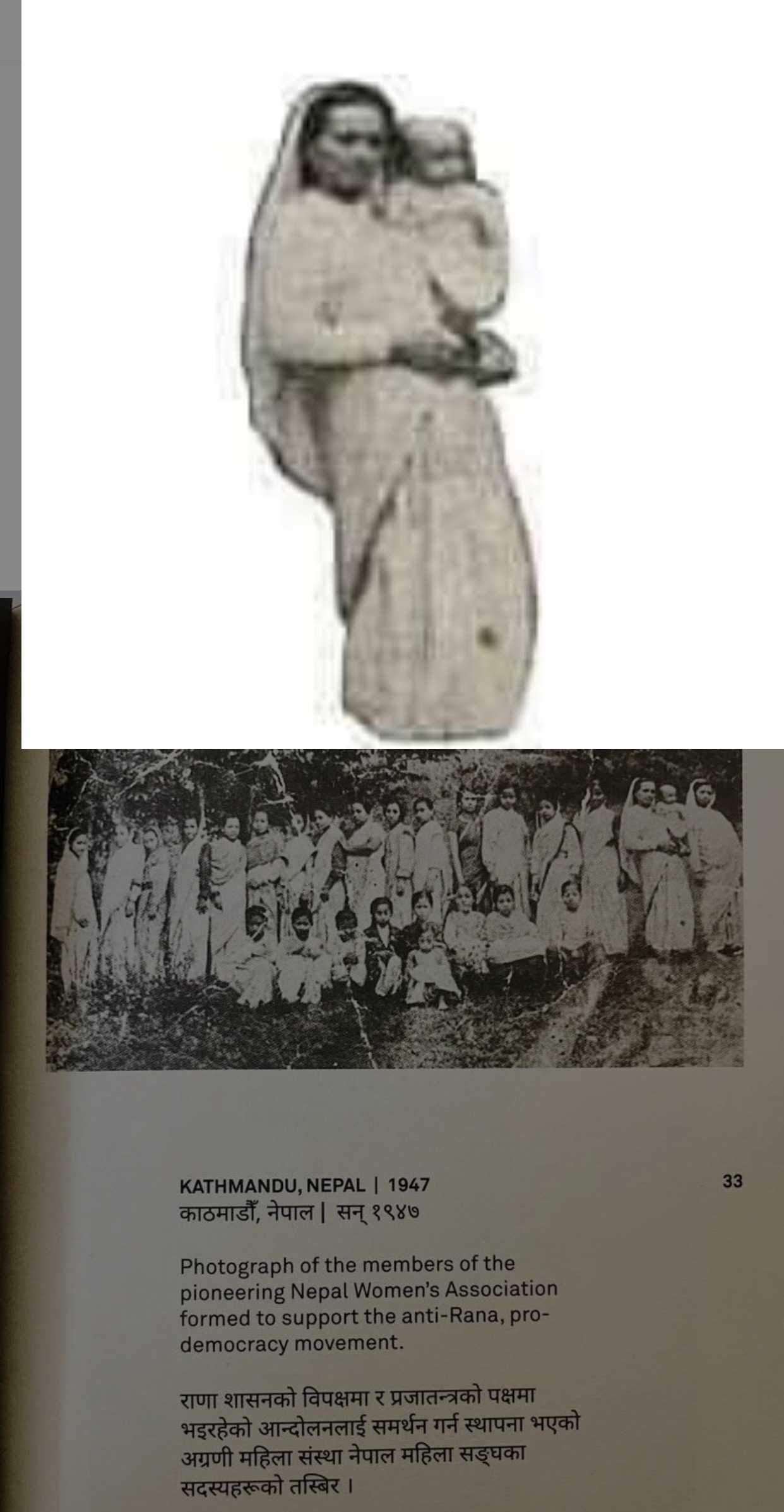
At a time in Nepal when women were not allowed to go to cremation grounds, women were forbidden from lighting the funeral pyre, even touching the dead body for rituals was socially restricted for women and religious and social customs were rigid and unquestioned
Heera Devi Yami broke all of those barriers.
When a close family member passed away—at a time when fear of an unknown and deadly illness gripped the community—no one was willing to step forward to perform the last rites. The deceased was Jagat Laxmi Baniya of Itum Bahal, Kathmandu, a first cousin of Dharma Ratna Yami from maternal side(Mother's younger sister's daughter. She was the sister of Lani Devi Tuladhar, Nani Devi Tuladhar, Jagat Tulaxmi dhar, and Resh Tuladhar of Asan Tole.
Due to the limited medical facilities available in Kathmandu at the time, her condition had worsened. She had moved to the Yami house in Bhurunghel in hopes of recovering her health, but she passed away in 1951. By the time of her death, the body had severely decomposed. The nature of the disease was unknown, and people were terrified to come into physical contact with the remains.
In that moment of fear and hesitation, Heera Devi Yami stepped forward.
She went to the cremation ground herself. She arranged the funeral wood. She placed the body on the pyre. And with her own hands, she lit the fire—performing the final rites when no one else dared to.
Why This Was Extraordinary
In that era, this act was not just unusual — it was considered religious defiance, social rebellion, cultural taboo and an act that could lead to social boycott. But for Heera Devi Yami, human dignity was greater than social rules.
What This Reveals About Her Character
This single act shows moral courage over social fear, rational thinking over blind tradition, emotional strength under crisis and deep respect for human dignity. This was not activism in speech.
This was activism in action.
Legacy of This Incident
Heera Devi Yami had already lived those values. She did not ask permission. She did not seek approval. She did what was right. And people remembered because such acts are never forgotten. Her courage, her defiance of injustice, and her belief that dignity is above custom.