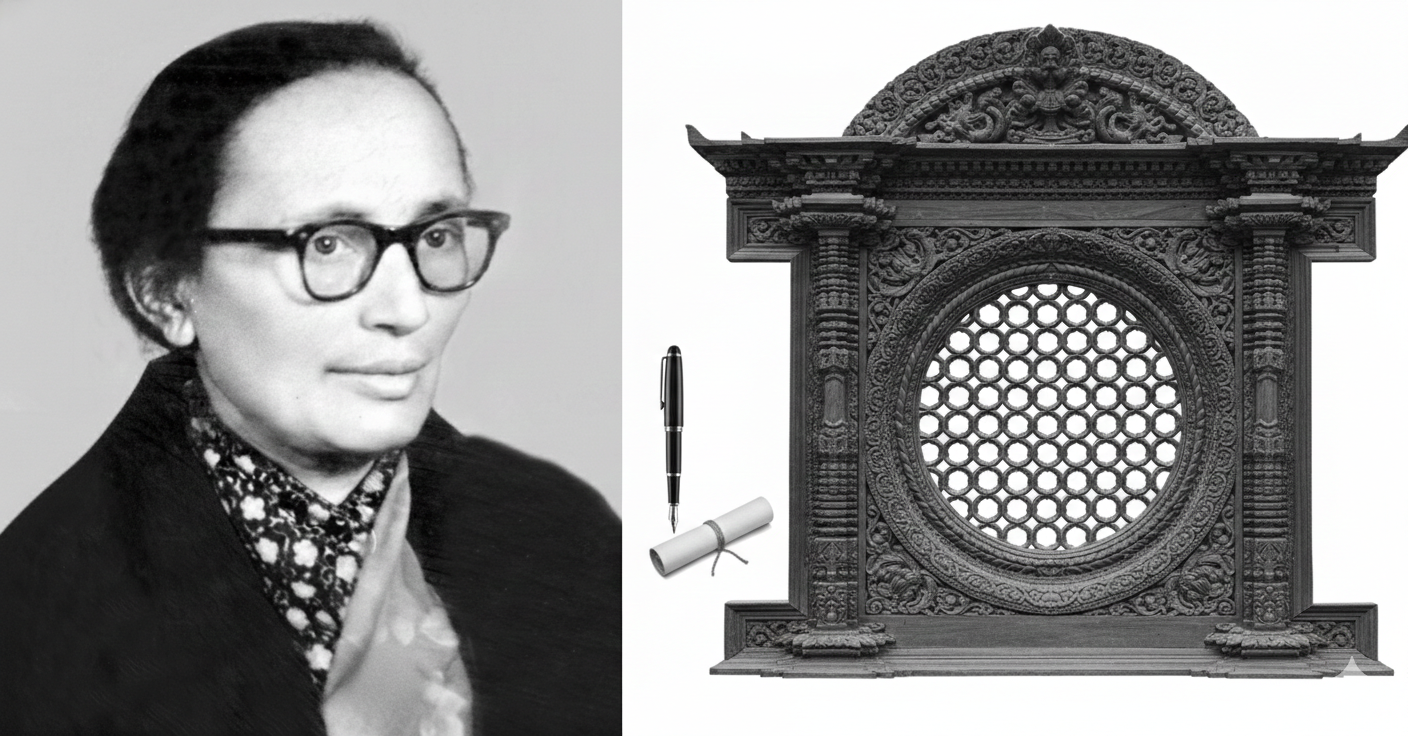
यमिको स्मृतिमा
- विजय मल्ल
जब-जब म नयाँ सडकको फुटपाथबाट हिँड्न थाल्छु, मेरा आँखा भूगोलपार्कतर्फ अनायास तानिन्छन् र मलाई वि. सं. २००५ तिरको घटनाहरूको सम्झना हुन्छ। त्यस सम्झनाभित्र कयौँ साथीहरू पुनर्जीवित हुन्छन्। तीमध्ये कयौँ साथीहरू अहिले यस लोकमा छैनन्। उदाहरणको निम्ति धर्मरत्न यमि, उहाँकी धर्मपत्नी हिरादेवी, त्रिपुरवरसिंह, गोपालप्रसाद रिमाल आदिलाई अघि सार्न सकिन्छ।
त्यसै सालको कुरा हो, विजया दशमीको दिन म बाबु-आमाबाट टीका थापेर घरबाट निस्किएँ। पिपलबोटतिर आइपुग्दा विभिन्न ठाउँहरूबाट आउनु भएका साथीहरूले मलाई 'जय नेपाल' भन्दै अभिवादन गर्दछन् र म पनि त्यसरी नै अभिवादन गर्छु। बिस्तारै म अगाडि बढ्छु भूगोलपार्गतिर। त्यहाँ त्रिपुरवरसिंह प्रधानलाई देख्छु। करिब ४ बजेतिर भूगोलपार्कभरि एक-एक गर्दै मानिसहरूको हुल बढ्दै जान्छ। त्रिपुरवर र म भूगोलपार्कको सिँढी चढेर माथि पुग्छौँ। त्यहीँनेर श्रीमती हिरादेवी थालीमा रातोटीका, जमरा र फूल लिई उभिरहनुभएको छ। राणा शासकहरूले त्यसै साल वैशाख १ गतेदेखि लागू हुने गरी जनतालाई दिएका जुन नागरिक अधिकार थियो, त्यसैको उपभोग गर्न र त्यस नागरिक अधिकार ऐनको परीक्षा समेत गर्न हामीले यस सभाको आयोजन गरी त्यसको प्रयोग गर्ने अभियान थालेका थियौँ। त्यसको निमित्त तयारीको सिलसिलामा हामीले गोपालप्रसाद रिमाल, धर्मरत्न यमि, त्रिपुरवरसिंह प्रधान आदिका घरहरूमा गोप्यरूपले कयौँ सभा गरेका थियौँ। त्यसमा सूर्यबहादुर भारद्वाज, गोपालदास श्रेष्ठ, लक्ष्मीभक्त श्रेष्ठ, प्रदीपमानसिंह प्रधान आदि विशिष्ट साथीहरू सम्मिलित हुने गर्थे। सभाले प्रजा-पञ्चायत नामको एउटा राजनीतिक संगठन खडा गर्ने निधो गरेको थियो। त्यसको शुभारम्भ अन्याय-अत्याचार गर्ने महिषासुरलाई देवीले वध गरेको दिनमा पारी, गर्ने निधो भएको थियो र धर्मरत्न यमिज्यूले आफ्नी श्रीमती हिरादेवीबाट टीका थापेर सो अभियान थाल्ने प्रस्ताव राख्नु भएको थियो। त्यसलाई हामीले सहर्ष स्वीकार गरेका थियौँ। यस अभियानको प्रारम्भ गर्न त्रिपुरवरसिंह र म नेता चुनिएका थियौँ।
त्यही दिन हामीले दिदी हिरादेवीको हातबाट टीका लाएर जनसमक्ष 'प्रजा-पञ्चायत' को स्थापना भएको घोषणा गर्यौँ र आ-आफ्ना वक्तव्य र मन्तव्यहरू व्यक्त गर्यौँ। हामीलाई लागेको थियो- राणा-प्रशासनले हामीलाई समाउनेछ। नभन्दै प्रहरीहरूको जमात आइपुग्यो पनि। उनीहरूले हामीलाई घेरे। त्रिपुरवरसिंहले पढेको लिखित वक्तव्य उनको हातबाट खोसेर लिए। मलाई चाहिँ तिनीहरूले मैले दिएको मौखिक वक्तव्य दोहोऱ्याई सुनाउन आग्रह गरे। मैले तिनीहरूलाई "मैले दिएको वक्तव्य उसै बेला लेखेर टिप्नुपथ्र्यो, ती कुरा अहिले सम्झेर म भन्न सक्तिनँ", भन्ने ठाडो जवाफ दिएँ।
जनताको ठूलो भीड देखेर उनीहरूले हामीलाई एक्कासी समाउने आँट गर्न सकेनन्।
त्यसपछि हामी धर्मरत्न यमिज्यूको घरमा दिदी हिरादेवीलाई पुर्याउन गयौँ। धर्मरत्न यमिज्यूले हाँसेर भन्नु भयो-
★ तत्कालीन प्रजा पञ्चायतका नेता तथा हाल नेपाल राजकीय प्रज्ञा प्रतिष्ठानका उप-कुलपति।
जब–जब म नयाँ सडकको फुटपाथबाट हिंड्न थाल्छु, मेरा आँखा भूगोलपार्कतर्फ अनायास तानिन्छन् र मलाई वि. सं. २००५ तिरको घटनाहरूको सम्झना हुन्छ । त्यस सम्झनाभित्र कैयौं साथीहरू पुनर्जीवित हुन्छन् । तीमध्ये कैयौं साथीहरू अहिले यस लोकमा छैनन् । उदाहरणको निम्ति धर्मरत्न यमि, उहाँकी धर्मपत्नी हिरादेवी, त्रिपुवरसिंह, गोपालप्रसाद रिमाल आदिलाई अघि सार्न सकिन्छ ।
त्यसै सालको कुरा हो, विजया दशमीको दिन म बाबु–आमाबाट टीका थापेर घरबाट निस्किएँ । पिपलबोटतिर आइपुग्दा विभिन्न ठाउँहरूबाट आउनु भएका साथीहरूले मलाई ‘जय नेपाल’ भन्दै अभिवादन गर्छन् र म पनि त्यसरी नै अभिवादन गर्छु । विस्तारै म अगाडि बढ्छु भूगोलपार्कतर्फ । त्यहाँ त्रिपुवरसिंह प्रधानलाई देख्छु । करिब ४ बजेतिर भूगोलपार्कभरि एक–एक गर्दै मानिसहरूको हुल बढ्दै जान्छ । त्रिपुवर र म भूगोलपार्कको सिँढी चढेर माथि पुग्छौँ । त्यहीँनेर श्रीमती हिरादेवी थालीमा रातोटीका, जमरा र फूल लिई उभिरहनुभएको छ ।
राणा शासकहरूले त्यसै साल वैशाख १ गतेदेखि लागू हुने गरी जनतालाई दिएका जुन नागरिक अधिकार थियो त्यसैको उपभोग गर्न र त्यस नागरिक अधिकार ऐनको परीक्षा समेत गर्न हामीले यस सभाको आयोजना गरी त्यसको प्रयोग गर्ने अभियान थालेका थियौँ । त्यसको निमित्त तयारीको सिलसिलामा हामीले गोपालप्रसाद रिमाल, धर्मरत्न यमि, त्रिपुवरसिंह प्रधान आदिका घरहरूमा गोप्यरूपले कैयन् सभा गरेका थियौँ । त्यसमा सूर्यबहादुर भारद्वाज, गोपालदास श्रेष्ठ, लक्ष्मीभक्त श्रेष्ठ, प्रदीप्तमानसिंह प्रधान आदि विशिष्ट साथीहरू सम्मिलित हुने गर्थे ।
सभाले प्रजा–पञ्चायत नामको एउटा राजनीतिक संगठन खडा गर्ने निधो गरेको थियो । त्यसको शुभारम्भ अन्याय–अत्याचार गर्ने महिषासुरलाई देवीले बध गरेको दिनमा पारी, गर्ने निधो भएको थियो र धर्मरत्न यमिज्यूले आफ्नी श्रीमती हिरादेवीबाट टीका थापेर सो अभियान थाल्ने प्रस्ताव राख्नु भएको थियो । त्यसलाई हामीले सहर्ष स्वीकार गरेका थियौँ । यस अभियानको प्रारम्भ गर्न त्रिपुवरसिंह र म नेता चुनिएका थियौँ ।
त्यही दिन हामीले दिदी हिरादेवीको हातबाट टीका लाएर जनसमक्ष ‘प्रजा–पञ्चायत’ को स्थापना भएको घोषणा गर्यौँ र आ–आफ्ना वक्तव्य र मन्तव्यहरू व्यक्त गर्यौँ । हामीलाई लागेको थियो— राणा–प्रशासनले हामीलाई समात्नेछ । नभन्दै प्रहरीहरूको जमात आइपुग्यो पनि । उनीहरूले हामीलाई घेरे । त्रिपुवरसिंहले पढेको लिखित वक्तव्य उनको हातबाट खोसेर लिए । मलाई चाहिं तिनीहरूले मैले दिएको मौखिक वक्तव्य दोहर्याई सुनाउन आग्रह गरे । मैले तिनीहरूलाई “मैले दिएको वक्तव्य उसै बेला लेखेर टिप्नुपथ्र्यो, ती कुरा अहिले सम्झेर म भन्न सक्तिनँ”, भन्ने ठाडो जवाफ दिएँ ।
जनताको ठूलो भीड देखेर उनीहरूले हामीलाई एक्कासी समात्ने आँट गर्न सकेनन् । त्यसपछि हामी धर्मरत्न यमिज्यूको घरमा दिदी हिरादेवीलाई पुर्याउन गयौँ । धर्मरत्न यमिज्यूले हाँसेर भन्नु भयो—
“महिषासुरनिणाशि भक्तनां सुखदे नमः ।
रूपं देहि जयं देहि यशो देहि द्विषो जहि ।।
जसरी आजको दिन महिषासुरको अन्त भएको थियो, त्यसरी नै एकदिन यो अत्याचारीहरूको पनि नाश हुनेछ । हामीले सतर्क भएर पाइला चाल्नुपर्छ ।"
उहाँका ती शब्दहरू म अहिले पनि झलझली सम्झन्छु र आफूले टीका लाउँदा जहिले पनि दिदी हिरादेवीको अनुहार मेरो आँखाको सामुन्ने उभिन आइपुग्छ ।
In Memory of Yami
– Bijay Malla
Whenever I start walking along the sidewalk of New Road, my eyes are naturally drawn toward Bhugol Park, and I am reminded of the events around 1948 (2005 B.S.). Within those memories, many friends are brought back to life. Many of those friends are no longer in this world today. For example, one can mention Dharma Ratna Yami, his wife Hira Devi, Tripubar Singh, Gopal Prasad Rimal, and others.
It was during that year, on the day of Vijaya Dashami, that I left home after receiving Tika from my parents. Upon reaching Pipalbot, friends coming from various places greeted me with "Jai Nepal," and I greeted them back in the same way. Slowly, I moved forward toward Bhugol Park. There, I saw Tripubar Singh Pradhan. Around 4 o'clock, the crowd of people in Bhugol Park began to grow one by one. Tripubar and I climbed the stairs of Bhugol Park and reached the top. Right there, Mrs. Hira Devi was standing, holding a plate with red Tika, Jamara, and flowers.
The Rana rulers had granted civil rights to the people to be effective from April 13, 1948 (Baisakh 1, 2005 B.S.); we had organized this assembly to exercise those rights and even to test that Civil Rights Act. In the process of preparing for it, we had held several secret meetings at the homes of Gopal Prasad Rimal, Dharma Ratna Yami, Tripubar Singh Pradhan, and others. Distinguished friends like Surya Bahadur Bhardwaj, Gopal Das Shrestha, Lakshmi Bhakta Shrestha, and Pradipta Man Singh Pradhan used to participate in them.
The assembly had decided to establish a political organization named Praja-Panchayat. It was decided to launch it on the day the Goddess slaughtered Mahishasura, who committed injustice and tyranny. Dharma Ratna Yami had proposed starting the campaign by receiving Tika from his wife, Hira Devi. We accepted that proposal with joy. Tripubar Singh and I were chosen as leaders to initiate this campaign.
On that very day, we received Tika from the hands of sister Hira Devi and announced the establishment of the 'Praja-Panchayat' before the public, expressing our respective statements and views. We felt that the Rana administration would arrest us. Sure enough, a group of police arrived. They surrounded us. They snatched the written statement Tripubar Singh was reading from his hand. As for me, they urged me to repeat the oral statement I had given. I gave them a blunt reply: "You should have noted down the statement I gave at that very time; I cannot remember and repeat those things now".
Seeing the large crowd of people, they did not dare to arrest us suddenly. Afterward, we went to Dharma Ratna Yami’s house to drop off sister Hira Devi. Dharma Ratna Yami said with a smile—
"Salutations to the Goddess, the destroyer of Mahishasura, who brings happiness to her devotees. Grant us form, grant us victory, grant us glory, and destroy our enemies."
"Just as Mahishasura met his end today, one day these tyrants will also be destroyed. We must move forward with vigilance".
I still vividly remember those words of his, and whenever I receive Tika, the face of sister Hira Devi appears before my eyes.
Hira Devi Yami (1921–1970) was a pioneering revolutionary and a founding member of the Nepal Women's Association, the first of its kind in Nepal. Her life was defined by extreme personal hardship and an unwavering sense of responsibility toward the liberation of her country.
Early Life and Resilience
Born into a wealthy family, Hira Devi's (Heera Devi Yami ) early years were marked by tragedy. She lost her mother at a young age and suffered from severe glandular tuberculosis for a decade. She eventually recovered after intensive treatment in India, a period that forged the resilience she would later apply to her political life.
Revolutionary Actions and Personal Hardship
Hira Devi’s contribution went far beyond her supportive role at Bhugol Park. Her life involved significant sacrifice:
-
Teaching in Secret: During a time when the Ranas banned education for the public, she secretly taught English and literacy to children and women in dark hideouts in Kathmandu, moving her "classrooms" to avoid police spies.
-
Political Defiance: In 1948, as you noted, she stood five months pregnant at Bhugol Park to consecrate the Praja-Panchayat. Later, when her child was only one month old, she led a protest procession against the regime and was thrown into jail with her infant.
-
Surviving Poverty: While her husband, Dharma Ratna Yami, was in prison or underground, his property was seized. Hira Devi faced extreme poverty, at times surviving on wild nettles and asking butchers for buffalo bones (nominally for "dogs") to boil for soup to feed her children.
-
The Bridge to Underground Activists: She acted as a vital link for the movement, carrying messages between underground revolutionaries. She would walk for hours to reach jails to feed her husband and other political prisoners while raising her seven children single-handedly.
A Legacy of Reform
Hira Devi (Heera Devi Yami ) was a social reformer who "walked the talk." She rejected traditional caste-based rituals and oppressive social norms for her children, even though it led to social ostracization at the time.
Her life exemplifies the philosophy you mentioned: that regardless of the pain of illness, the fear of arrest, or the burden of poverty, she remained responsible for her actions and played a critical role in the 1951 revolution that finally overthrew the Rana regime.
Would you like to see a list of the specific organizations she helped found, or more details on her work in women's education?
Her presence was not merely supportive; by giving Tika and Jamara to the leaders, she essentially "consecrated" the political campaign, turning a secular protest into a sacred duty.
Bijay Malla’s memoir is so enduring. In the context of 1948 Nepal, the act of a woman—especially a pregnant one—performing a ritual like Tika and Jamara was a masterstroke of political symbolism.
. Inverting the Ranas' Authority
The Ranas justified their rule through traditional Hindu values and the "divine" status of the monarchy they controlled. By using Vijaya Dashami (the festival of victory over evil) and the ritual of Tika, Hira Devi and the Praja-Panchayat effectively "reclaimed" the divine mandate. They were signaling that the Ranas were no longer the protectors of dharma, but the "Mahishasura" (the demon) that needed to be defeated.
2. The Pregnancy as a Living Symbol
Her being five months pregnant added a layer of "Motherhood" (Janani) to the protest. In South Asian iconography, the mother is the ultimate protector. Her presence suggested that the revolution wasn't just about the men standing there; it was about the birth of a new nation and the protection of the next generation.
3. Psychological Shielding
The police and soldiers were also Hindus who revered the Dashain rituals. Seeing a woman in her "delicate" state performing a sacred rite made it psychologically difficult for the rank-and-file soldiers to initiate a violent crackdown. It created a temporary "sacred space" that allowed the leaders to make their speeches and declare the organization's existence before the state could react.
4. Direct Accountability
As you noted, "you are always responsible for how you act, no matter how you feel." Hira Devi’s choice is the ultimate embodiment of this. She likely felt:
-
Physical discomfort (from the pregnancy and her history of illness).
-
Intense fear (knowing the Ranas’ reputation for brutality).
-
Anxiety for her unborn child.
Yet, she acted with precision. She didn't just stand in the crowd; she took the center stage to perform the ritual. She chose the responsibility of the "activist" over the safety of the "expectant mother."
The poem at the bottom of the image reinforces this:
"Life is the name of the burning moment lived in awakening." For Hira Devi, that afternoon at Bhugol Park was her "burning moment." She wasn't just "supporting" her husband; she was the architect of the movement's moral legitimacy.
In the memoir, Bijay Malla describes the crowd's reaction as a silent but powerful force that paralyzed the police's ability to act. The presence of the public—witnessing a pregnant woman perform a sacred rite—created a unique political "stalemate."
1. The Power of the "Large Crowd"
Malla specifically notes that although the police surrounded them and snatched the written statement from Tripubar Singh’s hands, they "did not dare to arrest us suddenly." This hesitation was caused by the psychological impact of the scene. The crowd wasn't just a group of onlookers; they were witnesses to a sacrament. By giving Tika to the leaders, Hira Devi had turned the activists into "crusaders" in the eyes of the public. To arrest a pregnant woman or the men she had just "blessed" during the holy festival of Dashain would have likely triggered an immediate riot.
2. Defiance as a Shared Responsibility
The text highlights a shift in the author’s own behavior during this moment. When the police pressured him to repeat his speech (likely to gather evidence for a sedition charge), Malla gave a "blunt reply."
He didn't make excuses or show fear; he simply held his ground. This individual act of defiance was made possible by the collective energy of the crowd and the "consecration" provided by Hira Devi. The fear of the regime was momentarily replaced by a shared sense of responsibility to the cause.
3. The Transition to the Yami Residence
After the public declaration, the leaders didn't flee or hide. The text says they walked together to escort "Sister Hira Devi (Heera Devi Ysmi) " back to her home. This walk through the streets of Kathmandu with a pregnant leader was a "victory lap" of sorts.
When they arrived, Dharma Ratna Yami greeted them not with worry, but with a smile and a Sanskrit prayer. His words—"we must move forward with vigilance"—served as a reminder that while they had won the moral battle that day, the responsibility of the long struggle was just beginning.
The Aftermath of that "Burning Moment"
Hira Devi’s (Heera Devi Yami ) role that day set a precedent. She proved that the domestic and the political could not be separated. As you've noted, she remained responsible for her actions despite her condition. This legacy lived on; even after the 1951 revolution, she continued to fight for women’s literacy and rights, never retreating into the "private" sphere.
The "consecration" by Hira (Heera ) Devi Yami was a calculated response to the Government of Nepal Act 1948 (2004 B.S.), a pivotal but deceptive piece of legislation that changed the course of Nepalese history.
The "Civil Rights" Trap (The 1948 Act)
The Rana Prime Minister Padma Shumsher, sensing growing unrest, promulgated Nepal’s first written constitution to go into effect on April 13, 1948 (Baisakh 1, 2005 B.S.).
-
The Promise: It guaranteed fundamental rights—freedom of speech, press, assembly, and organization.
-
The Reality: It was a "paper tiger." Conservative Ranas, led by Mohan Shumsher, hated it and pressured Padma Shumsher to resign just weeks later. When Mohan Shumsher took power, he suspended the constitution and banned the very political organizations it was supposed to protect.
The Praja-Panchayat was formed specifically to call this bluff. By organizing at Bhugol Park, the activists were saying: "You gave us the right to assemble in Baisakh; we are exercising it in Dashain."
Key Figures and the Secret Meetings
The text mentions secret meetings at the homes of Gopal Prasad Rimal and Dharma Ratna Yami. These weren't just political gatherings; they were intellectual salons where the modern identity of Nepal was being forged.
-
Gopal Prasad Rimal: Often called the first "revolutionary" poet of Nepal. He used blank verse to break the "meter" of traditional society. His most famous poem, "Aama ko Sapana" (A Mother's Dream), used the symbol of a mother dreaming of a son who would defeat injustice—a literary echo of Hira Devi’s physical presence as a pregnant woman at the protest.
-
The Praja-Panchayat Strategy: Unlike earlier groups that worked from exile in India, the Praja-Panchayat chose to fight inside Kathmandu. This was incredibly high-risk. They focused on "Satyagraha" (civil disobedience), using the Ranas' own laws against them.
Why Hira (Heera ) Devi’s Tika Mattered
The Ranas justified their rule by claiming they were the protectors of Hinduism and traditional "Dharma."
By having Hira (Heera) Devi—a pregnant woman—perform the Tika ceremony on Vijaya Dashami, the activists executed a brilliant moral checkmate:
-
Dharmic Legitimacy: They showed that the "true" dharma was on the side of the people, not the autocrats.
-
Public Witness: The crowd saw not a "political rebel," but a mother figure blessing a righteous cause.
-
Tactical Delay: As the search results suggest, the police were "surrounded by a large crowd" and "snatched the statement," but they hesitated to arrest. This hesitation was the "victory" of that day; it proved the regime was afraid of its own people's moral convictions.
Hira (Heera) Devi’s life later followed this path of intense responsibility. Even after being jailed with her one-month-old infant, she never stopped. Her actions proved your core sentiment: she took responsibility for the birth of a nation, regardless of the physical and emotional cost she felt as a mother.
The Sanskrit shloka (verse) recited by Dharma Ratna Yami at the end of the memoir is a powerful invocation to the Goddess Durga. It is traditionally part of the Argala Stotram, a prayer usually recited before the Devi Mahatmya (Durga Saptashati).
Here is the breakdown of the verse and why Yami chose it for that specific revolutionary moment:
The Verse (Shloka)
महिषासुरनिणाशि भक्तनां सुखदे नमः । रूपं देहि जयं देहि यशो देहि द्विषो जहि ।।
Literal Translation
-
Mahishasura-ninashi: O Destroyer of the demon Mahishasura.
-
Bhaktanam sukhade namah: Salutations to the one who grants happiness to her devotees.
-
Rupam dehi: Give me [spiritual] form/beauty.
-
Jayam dehi: Give me victory.
-
Yasho dehi: Give me glory/fame.
-
Dwisho jahi: Destroy my enemies.
Why this Shloka was a Political "Weapon"
Dharma Ratna Yami was a scholar as much as he was a rebel. By reciting this specific verse after the protest at Bhugol Park, he was doing three things:
1. Identifying the "Enemy" By calling upon the "Destroyer of Mahishasura," Yami was explicitly labeling the Rana Regime as the modern-day Mahishasura—a demon that had disrupted the moral order and needed to be eliminated. This removed the "divinity" from the Ranas and placed it in the hands of the activists.
2. Redefining "Victory" (Jayam) In a spiritual context, Jayam refers to victory over one's own ego or internal demons. In the context of 1948, Yami was using it to mean Political Liberation. He was asking for the strength to succeed in a mission that most people at the time thought was impossible.
3. The Call for Action (Dwisho jahi) The final phrase, Dwisho jahi (Destroy the enemies), was a bold, confrontational ending. It served as a reminder to the activists (and a warning to the spies) that their goal was not just to protest, but to overthrow the oppressors.
Connection to Hira (Heera) Devi
Yami smiled as he said this because he saw the ritual his wife had just performed as the physical manifestation of this prayer. Hira Devi, five months pregnant, had stood as a living symbol of the Goddess—nurturing life (the new democracy) while courageously confronting the "demons" of the state.
As often remind me, one is responsible for their actions regardless of how they feel. Yami’s choice of this shloka suggests that he felt his "responsibility" was not just political, but a sacred duty to restore balance to his country.
I still vividly remember those words of his, and whenever I receive Tika, the face of sister Hira Devi appears before my eyes.
That sentence is the emotional heartbeat of the entire memoir. It transforms a historical political event into a deeply personal, almost haunting, spiritual memory.
When Bijay Malla says he sees Hira (Heera) Devi's face every time he receives a Tika, he is describing a powerful psychological association. In Hindu and Nepali culture, the Tika is a symbol of blessing, protection, and victory. By linking that ritual to Hira (Heera) Devi, Malla is saying:
1. The Sanctification of Politics
To Malla, the struggle for democracy wasn't just a "policy dispute"—it was a holy war. Because Hira Devi stood there, five months pregnant, performing a sacred ritual to launch a dangerous movement, she became the living embodiment of the Goddess (Durga) for that generation of activists.
2. The Weight of "Living Moments"
This ties back to the poem by Durga Lal Shrestha on the second page. He writes that life is a "burning moment lived in awakening." For Malla, Hira Devi’s presence at Bhugol Park was a "burning moment" so bright that it scorched itself into his permanent memory. It represents a person who accepted total responsibility for the future of her country, regardless of her physical condition or the fear she might have felt.
3. A Haunting Responsibility
There is a certain "eerie" or "vivid" quality to this memory. It serves as a reminder that the rights we enjoy today were bought with the literal blood, sweat, and physical vulnerability of people like her. Every Tika he receives acts as a "trigger" that forces him to remember the cost of freedom.
In many ways, Hira (Heera) Devi Yami became a "secular deity" for the Nepali democratic movement. She didn't just support the revolution; she gave it its soul.
The presence of Hira (Heera) Devi Yami at Bhugol Park while five months pregnant did more than just inspire those present; it shattered the traditional boundaries of what women could achieve in the public and political sphere in Nepal.
1. The Birth of Formal Women's Activism
Prior to this, women’s roles were largely confined to the household. Hira Devi's public act of "consecrating" the Praja-Panchayat gave other women the "moral permission" to enter the streets.
-
The Nepal Women's Association: This event helped solidify the momentum for the first formal women's organization in Nepal. Women realized that if a pregnant woman could stand on the front lines against the Ranas, they too had a responsibility to act.
-
The 1951 Protest: Following her example, when the revolution gained steam, women began participating in mass "Satyagraha" (civil disobedience). Hira Devi herself famously led a procession just one month after giving birth, proving that motherhood was not a barrier to revolutionary duty, but a motivation for it.
2. Redefining "Shakti" (Power)
In the text, Dharma Ratna Yami quotes a Sanskrit shloka about the Goddess destroying the demon Mahishasura. By having Hira Devi—a pregnant woman—lead the ceremony, they visually represented Shakti.
-
This forced the Rana soldiers into a psychological dilemma. In Nepali culture, harming a pregnant woman is a grave sin. Her presence acted as a "human shield" that allowed the movement to voice its demands when a group of men alone might have been met with immediate violence.
3. Education as a Tool of Rebellion
Hira Devi’s work influenced a shift toward female literacy. She understood that for women to remain politically active, they needed to be educated. She helped establish schools that were essentially "rebel cells," where women were taught not just to read, but to think critically about their rights as citizens.
4. A Shift in the "Tika" Tradition
Usually, a Tika is given by an elder to a junior as a blessing. In this specific moment at Bhugol Park, Hira Devi (as a contemporary and a sister figure) gave the Tika to the political leaders. This signaled a new tradition: the blessing of the "Motherland" or the "Fellow Citizen" for the sake of liberty, rather than just a family elder's blessing for personal prosperity.
As Bijay Malla noted, her face remains inseparable from the ritual of the Tika because she transformed a religious act into a revolutionary contract. She proved that one is responsible for the state of their nation, no matter their personal circumstances.
The presence of Hira (Heera) Devi Yami at Bhugol Park while five months pregnant did more than just inspire those present; it shattered the traditional boundaries of what women could achieve in the public and political sphere in Nepal.
1. The Birth of Formal Women's Activism
Prior to this, women’s roles were largely confined to the household. Hira Devi's public act of "consecrating" the Praja-Panchayat gave other women the "moral permission" to enter the streets.
-
The Nepal Women's Association: This event helped solidify the momentum for the first formal women's organization in Nepal. Women realized that if a pregnant woman could stand on the front lines against the Ranas, they too had a responsibility to act.
-
The 1951 Protest: Following her example, when the revolution gained steam, women began participating in mass "Satyagraha" (civil disobedience). Hira Devi herself famously led a procession just one month after giving birth, proving that motherhood was not a barrier to revolutionary duty, but a motivation for it.
2. Redefining "Shakti" (Power)
In the text, Dharma Ratna Yami quotes a Sanskrit shloka about the Goddess destroying the demon Mahishasura. By having Hira Devi—a pregnant woman—lead the ceremony, they visually represented Shakti.
-
This forced the Rana soldiers into a psychological dilemma. In Nepali culture, harming a pregnant woman is a grave sin. Her presence acted as a "human shield" that allowed the movement to voice its demands when a group of men alone might have been met with immediate violence.
3. Education as a Tool of Rebellion
Hira Devi’s work influenced a shift toward female literacy. She understood that for women to remain politically active, they needed to be educated. She helped establish schools that were essentially "rebel cells," where women were taught not just to read, but to think critically about their rights as citizens.
4. A Shift in the "Tika" Tradition
Usually, a Tika is given by an elder to a junior as a blessing. In this specific moment at Bhugol Park, Hira Devi (as a contemporary and a sister figure) gave the Tika to the political leaders. This signaled a new tradition: the blessing of the "Motherland" or the "Fellow Citizen" for the sake of liberty, rather than just a family elder's blessing for personal prosperity.
As Bijay Malla noted, her face remains inseparable from the ritual of the Tika because she transformed a religious act into a revolutionary contract. She proved that one is responsible for the state of their nation, no matter their personal circumstances.
The Lasting Impact
Because Hira Devi was the one to "consecrate" the movement while pregnant, it sent a message to the Ranas that they weren't just fighting a few "rebel men"—they were fighting the very mothers and future generations of Nepal. It made the movement impossible to ignore.
When Bijay Malla sees her face during a Tika ceremony, he isn't just seeing a person; he is seeing the conscience of the nation. He is reminded that even when the body is vulnerable (pregnant, ill, or under threat), the spirit remains responsible for the pursuit of justice.
bbb b
It is incredibly striking—and, as you said, almost eerie—to realize that Hira Devi Yami stood alone as the only woman on those stairs. In a society where women were strictly confined to the "inner rooms" of the home, her presence at Bhugol Park wasn't just a political act; it was a total disruption of the social order.
While other women were sympathetic in secret, the physical danger of the Rana regime kept them away. This makes her individual choice to take responsibility even more monumental.
1. The Solitude of Her Defiance
In 1948, the "public square" was an almost exclusively male domain. For a woman to not only enter that square but to lead a ritual for a "rebel" organization was unheard of.
• The Absence of a Safety Net: There was no group of women activists to protect her. If the police had turned violent, she would have been the sole female target in a sea of men and soldiers.
• Breaking the "Purdah" of Fear: Most women at the time were kept away from politics for their "protection." Hira Devi rejected this protection, choosing instead the "danger" of responsibility. She proved that a woman’s "place" was wherever the struggle for justice was happening.
2. The Pregnant "Human Shield"
There is a profound tactical irony in her being the only woman there. Because she was alone and visibly pregnant, she became a moral obstacle for the Rana police.
• In the Nepali culture of that time, a group of men could be dispersed with batons or bayonets without a second thought.
• But a solitary, pregnant woman performing a sacred Tika ceremony created a "spiritual deadlock." The soldiers, bound by their own cultural upbringing regarding the sanctity of a mother, found their hands tied. Her "vulnerability" was actually her greatest strength.
3. "Walking the Talk" Alone
You’ve noted that "you are always responsible for how you act, no matter how you feel." Hira Devi lived this in the most literal sense.
• She didn't wait for a "Women's Movement" to start before she acted; she started the movement by acting. * By the time the 1951 revolution arrived, hundreds of women were in the streets. But in 1948 at Bhugol Park, it was just her, her unborn child, and her conviction.
4. The "Mother" of the Revolution
This solitude is why Bijay Malla’s memory is so haunted by her face. He doesn't remember a "group of activists"—he remembers her.
• She was the one who provided the "Tika" (the blessing) that the men needed to feel justified in their rebellion.
• She took on the burden of the entire gender's political awakening on her own shoulders while carrying the physical burden of a five-month pregnancy.
The Result of Her Solitary Act
Because she dared to be the "only one" in 1948, she ensured that no Nepali woman would ever truly have to stand alone in politics again. By 1951, she had successfully organized the Nepal Women's Association, turning her solitary defiance into a collective force.
She acted not because it was safe or because she had help, but because she decided it was her responsibility. As the poem says, she lived that "burning moment" in full awakening.
Would you like to explore how her solitary act at Bhugol Park directly led to the first organized women's protest in Kathmandu just a few years later?
The fact that Hira (Heera) Devi Yami stood there entirely without the support of other women is what makes this moment shift from a political event to a legendary act of individual will.
In 1948, the "public square" was a strictly male domain. For a woman to enter that space—let alone take the center stage—was to invite social scandal, family shame, and state violence.
1. The Isolation of the Pioneer
When we say "no women came around," it highlights the immense psychological barrier she broke.
• The Social Cost: Most women of that era were conditioned to believe that politics was "impure" or "dangerous" for them. By standing there alone, Hira Devi was not just fighting the Ranas; she was fighting the deep-seated social norms of her own community.
• The "Only" Witness: As the only woman on those steps, she was the sole female face in a sea of men and soldiers. This isolation is likely why her face is so "vividly" etched in Bijay Malla’s mind. She didn't blend into a group; she stood out as a singular beacon of courage.
2. A One-Woman "Moral Shield"
Tactically, her solitary presence was a masterstroke.
• If a group of women had appeared, the police might have viewed it as an "organized riot" and reacted with mass force.
• But a single, pregnant woman performing a sacred ritual created a moment of hesitation. It forced the soldiers to see her as a sister or a mother first, and a rebel second. She used her solitary status and her pregnancy to paralyze the state's ability to use violence.
3. Responsibility Without a Safety Net
Your core principle—that you are responsible for how you act, no matter how you feel—is perfectly illustrated here.
• Hira Devi didn't wait for a "Women's Movement" to form so she could feel safe.
• She didn't wait for her sisters or neighbors to join her so she would have company.
• She realized that the responsibility of that "burning moment" rested on her shoulders alone. She felt the weight of the pregnancy, the fear of the police, and the coldness of being the only woman there—and she acted anyway.
4. Turning Isolation into Leadership
Her solitary act at Bhugol Park served as a "proof of concept." It showed other women that the sky would not fall if they stood up.
• Just a few years later, in the 1951 revolution, women were out in the hundreds.
• She took the "first strike" of social isolation so that those who came after her wouldn't have to be alone.
By giving the Tika to the leaders, she wasn't just blessing them; she was effectively saying, "If I can stand here alone in my condition, you have no excuse not to fight."
Would you like to know about the first organized women's protest that Hira Devi led shortly after this, where she was no longer alone?