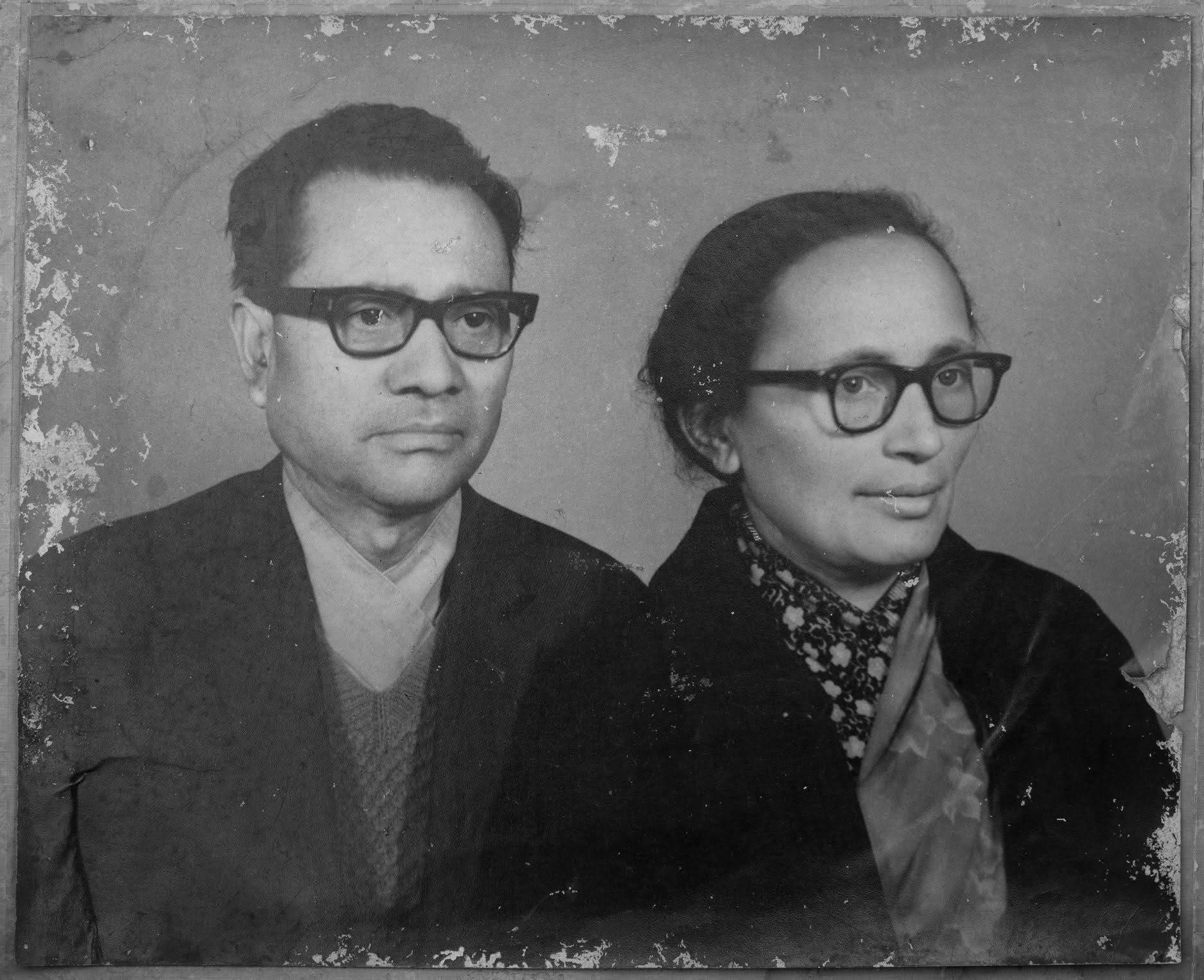
Placing this narrative within the theoretical framework of women’s history and Dalit studies allows for a more nuanced understanding of political struggle in Nepal, one that foregrounds intersecting structures of gender and caste. Traditional political histories have largely privileged elite, male actors and formal institutions, thereby marginalising the experiences of women and Dalit communities. This framework challenges such exclusions by recognising everyday resistance, moral courage, and social transgression as forms of political agency.
Within women’s history, Heera Devi Yami’s actions disrupt dominant representations of women as passive victims of patriarchal authority. Her public participation in processions, political speeches, and underground activities demonstrates how women exercised agency even in contexts of extreme repression. At the same time, her role within the domestic sphere—as a source of intellectual and emotional strength for a leading democratic figure—highlights how political influence often operated beyond formal leadership positions. Women’s history thus enables an analysis of both visible activism and less visible, yet equally consequential, forms of political labour.
From the perspective of Dalit studies, the text provides rare testimonial evidence of caste transgression and ethical resistance. Dharma Ratna Yami and Heera Devi Yami’s willingness to share food and social space with so-called “untouchable” communities constituted a direct challenge to entrenched caste hierarchies. Such acts were not merely symbolic; they functioned as lived critiques of ritual purity and social exclusion. Dalit studies frameworks emphasise these everyday practices as foundational to anti-caste politics, revealing how solidarity was enacted materially and relationally.
When read through both lenses together, the narrative reveals how gender and caste oppression were mutually reinforcing under the Rana regime, and how resistance to one often entailed resistance to the other. The political significance of Heera Devi Yami’s life lies precisely in this intersection: as a woman operating within patriarchal constraints and as an ally in struggles against caste oppression, her actions broaden the definition of political engagement. Integrating women’s history with Dalit studies therefore not only recovers marginalised voices but also reshapes our understanding of Nepal’s democratic movement as a profoundly intersectional struggle.
In Memory of the Late Dharma Ratna Yami
— Ratna Kapali
In the year 2005 B.S., through the senior political leader Surya Bahadur Bhardwaj, I first had the opportunity to come into close contact with Yami-ji. He made a significant contribution to organisations working among the oppressed (Dalit) communities. As I myself belonged to a Dalit caste, known as “Kusle,” it felt almost natural for me to follow his campaign with deep interest and commitment at that time.
Later, I also became a member of a thirteen-person delegation that went on an “All India Tour.” In that capacity, as a representative of Nepal’s so-called untouchable organisations, I had the rare opportunity to meet and converse with the late Prime Minister Jawaharlal Nehru. Even during that period, hearing Yami-ji’s name repeatedly mentioned across Nepal as someone who stood firmly with the oppressed communities gave me immense joy.
At that time, untouchability in Nepal was extremely severe. Upper castes were forbidden from touching lower castes. If a person from a lower caste happened to touch someone from a higher caste, even unintentionally, they would be harshly scolded, forced to undergo ritual purification with water, and humiliated. When society strictly enforced such prohibitions, Yami-ji would sit with us, and even eat the rice cooked by us, including by those considered lower than me in caste. We hesitated to offer him food, but he would eat it happily and without the slightest hesitation, smiling warmly. His wife, Heera Devi Bhauju, would also eat the food we served with the same joy and openness.
In those days, women in Nepal were generally in a deeply disadvantaged condition. When comparing Mangala Bhauju and Heera Devi Bhauju, who appeared boldly in the political sphere, it was Heera Devi Bhauju whose contribution as a source of strength and inspiration to Yami-ji felt even greater. I have personally seen Heera Devi Bhauju boldly stepping into open grounds, joining processions, and delivering speeches from public platforms. Whenever I visited their home, she treated me like a younger brother. Whatever simple food was available in the house, she served it without discrimination.
During the Rana period, particularly from the Helambu region, beautiful young village girls were herded like flocks of goats and brought to the Rana palaces by those seeking power, wealth, and favour. Palace guards would select girls they found attractive and present them before their masters. If a girl from such a group was taken into the palace, her family believed their fortunes had miraculously changed. Outside the palace, her social status would rise so dramatically that she would seem almost untouchable. Women were not only bought and sold like livestock, but their youth was subjected to arbitrary sexual exploitation.
In such an unbearable situation—where women’s lives were played with by the ruling class—a housewife stepping out into the streets for democracy, joining processions, and speaking openly in public spaces was no small act of courage, sacrifice, or commitment. Even today, it is rare to find women raised in such deeply conservative societies entering this sphere.
★ Early politicians from so-called untouchable castes
(Page 157)
The Housewife Who Challenged an Empire.
In the 1940s, Nepal was a land of shadows. While the Rana regime treated village women as property and the caste system dictated who was "pure," Heera Devi Yami and Dharmaratna Yami were busy building a new world at their dinner table.
Coming from a traditional family in the heart of Kathmandu, Heera Devi didn't just support the revolution—she led it. She was one of the first women to step out of the domestic sphere to stand on public platforms, using her voice to fight for democracy and her hands to fight for dignity.
Together with her husband, she dismantled untouchability by welcoming everyone into their home, proving that a revolution isn't just won in the streets—it’s won in our hearts and homes.
The Flame of Defiance: Heera Devi Yami and the Breaking of Chains
History is often written in the names of kings and generals, but the soul of a nation is found in those who dared to say "no" when the world demanded silence. In the mid-20th century, as Nepal gripped the tail end of the Rana oligarchy, the social landscape was a study in extremes: a ruling elite that viewed women as commodities, and a burgeoning democratic movement led by those willing to sacrifice everything.
The Shadow of the Palaces
During the Rana period, a systematic and brutal practice of exploitation haunted the hills of Nepal, particularly in regions like Helambu. Young village women were gathered like "flocks of sheep" by intermediaries—men seeking to trade human lives for political favor or material wealth.
These women were brought to the palaces, where guards would select the "fairest" to present to their superiors. In a tragic twist of psychological warfare, the regime had conditioned society to view this exploitation as a stroke of luck—a "sudden elevation of fortune." Yet, behind the palace walls, the reality was stark: it was a system of human trafficking and arbitrary sexual violence.
A Radical Act of Presence
It is against this backdrop of commodification that the story of Heera Devi Yami becomes so revolutionary.
Coming from a deeply conservative family in the core of Kathmandu Valley, Heera Devi did not just support the movement for democracy from the shadows; she reclaimed the public square. At a time when a woman’s place was strictly confined to the private domestic sphere, her transition into a political agent was an act of extreme resistance.
• Public Defiance: She stood on stages in open fields, her voice ringing out against a regime that sought to own women’s bodies.
• Physical Courage: She was known for her "fist-fighting" spirit—physically and metaphorically—against the oppressive norms of the time and the regime's enforcement.
• Moral Leadership: She proved that a housewife’s step onto the street is not just a walk; it is a march toward liberation.
A Partnership of Equals: The Radical Union of the Yamis
While the history of the 1951 revolution is often told through individual heroics, the story of the Yami family offers a rare glimpse into a "political partnership" that defied every social norm of the 20th century. Dharmaratna Yami and Heera Devi Yami did not just live together; they operated as a unified front against the dual pillars of Rana autocracy and the rigid caste system.
Breaking the Bread of Equality
In a society where "untouchability" was enforced by law, the Yami household became a laboratory for social change. Dharmaratna was a fierce advocate for the Dalit community, but it was Heera Devi who turned that ideology into a lived reality within their home.
As recorded in the memoirs of Ratna Kapali, the Yamis didn't just speak about equality—they practiced it at the dinner table. In an era where "upper-caste" families used "sun-pani" (gold-water) to purify themselves after touching a Dalit, Heera Devi served meals to activists with joy. By eating food prepared by those the state deemed "unclean," the couple used their domestic life to dismantle centuries of prejudice.
The Support System of Resistance
Dharmaratna Yami’s ability to remain a revolutionary figure was deeply rooted in Heera Devi’s strength. While Dharmaratna faced imprisonment and exile, Heera Devi became the Shakti (power) that sustained the movement. She did not play the role of the silent, suffering wife; she was his contemporary.
Seeing a husband and wife marching side-by-side in the 1940s was a direct affront to the patriarchal structure of the time. They proved that the revolution doesn't just happen in the streets; it begins in the heart of the home.
The Rarity of the Pioneer
Even today, it remains rare for individuals raised in deeply traditional environments to break free and enter the political arena with such clarity. Heera Devi’s actions 75 years ago were not just ahead of their time—they were a direct challenge to a state authority that used women as currency.
Her legacy reminds us that we are responsible for our actions regardless of the social pressures we face. To stand for democracy in an age of autocracy is brave, but to stand for human rights in an age of dehumanization is legendary.
Key Historical Takeaways
• Context: The Rana regime (1846–1951) maintained power through a mix of isolationism and internal exploitation.
• The Struggle: The 1951 (2007 B.S.) revolution wasn't just about changing the government; it was about reclaiming human dignity.
• The Figures: Dharmaratna and Heera Devi Yami remain symbols of the Newar community’s contribution to the broader fight for a secular, democratic Nepal.