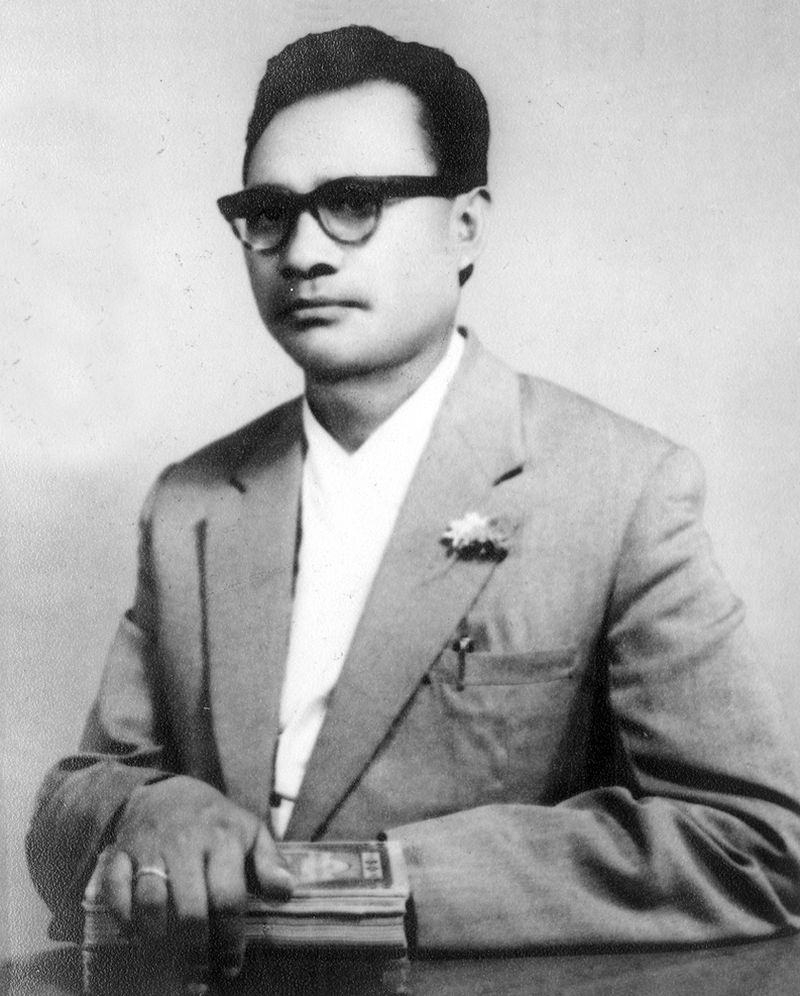
Stay at ‘ Yami House’ Kathmandu
Even the world Buddhist Conference was a war zone for Dr. Ambedkar, who had earned fame by popularizing the term ‘Dalit’ as an identity of self-respect for the “untouchables”. He had agreed to participate in the Kathmandu conference at the request of his colleagues, as he was physically unwell. Even amid his illness, he had set off to travel to Nepal along with his doctor, Dr.Malvankar, who was taking care of him. He and his team flew from Patna for Kathmandu on 14 November 1956. Also in his group were his wife, Dr.Savita Ambedkar; M.B.Chitnis, Principal of Milind Mahavidyalaya in Aurangabad; and B.H. Varel. He needed company and assistance of others when descending from the airport by holding to other’s arms. His health did not improve at all during his stay in Kathmandu.
Accommodation for Dr. Ambedkar in Kathmandu was managed by M.Jyoti of Kolkata. M.Jyoti might be ManiharshaJyoti (Kansakar), the renowned merchant from Nepal, who used to trade from Kolkata at that time and was also a Buddhist activist. Dr. Ambedkar was lodged at “Yami house” where a practical battle was fought against caste hierarchy and untouchability. His stay in Bhurankhel at the house of Dharma RatnaYami( Tuladhar ) and Hira Devi Yami (Tuladhar) who themselves were strong opponents of caste system and untouchability was historic. During Nepal visits, Rahul Sakrityayan used to stay in the house of Dharma Ratna Yami, who also was a fighter for democratic movement, a former deputy minister and a writer. Probably the two scholars stayed together. Dr. Ambedkar had brought some manuscripts for his editing work during his stay in Kathmandu. The manuscripts were related to his yet incomplete book and his articles. After writing the great book The Buddha and His Dhamma, he was working on Buddha and Marx and Revolution and Counterrevolution in Ancient India. His writing and editing continued amid the travel, stress, and illness. The ideas expressed at the Conference were a reflection of and postscript to these works.
Published By:
SAMATA foundation
Katmandu Nepal