Bhansa Chhen: The Crucible of Heritage, Trade, and Resistance
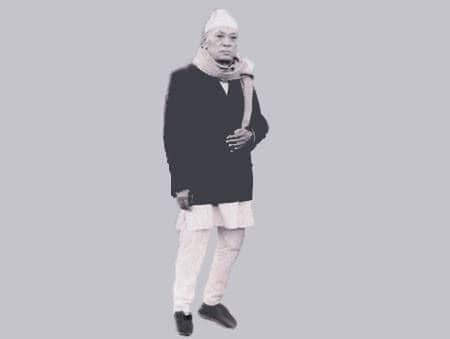
In the heart of historic Kel Tole—steps away from the sacred shrine of Janabaha Dyo (Seto Machhindranath)—stands Bhansa Chhen (भाँसा छेँ). To the passerby, it is a traditional Newar residence tucked within one of Kathmandu’s most culturally rich courtyards. But historically, Bhansa Chhen was far more than a family home: it was the ancestral residence of Sahu Heera Kaji Kansakar, a prominent merchant in the Lhasa trade, and the childhood sanctuary of his daughter, the pioneering social reformer and activist Heera Devi Yami (née Kansakar).
In the traditional Lhasa Newar trading system, a family residence in Kathmandu was never merely a domestic space. Ground floors and central courtyards served as functional logistics hubs for caravans traversing the treacherous Himalayan passes through Kuti and Kyirong. High-value cargo—raw mountain wool, musk, yak tails, and salt—was unloaded directly into these brick courtyards.
Behind quiet brick facades and carved wooden windows, Bhansa Chhen was transformed into a vibrant, living workshop where trade, art, and the seeds of social change were quietly nurtured.
The Alchemy of Raw Wool: From Trail Dust to Textile
The raw Tibetan fleece arrived at Bhansa Chhen weathered by months of high-altitude winds, trail dust, and mountain frost. Before a single thread could be spun, the dense, matted wool had to be thoroughly opened and carded on the brick floor.
Children learned their culture not from books, but through sight, sound, and touch. Observing the women pluck the hand bow—known in Nepal Bhasa as the dhuni or dhunwa—and handle the carding comb (kaa) was a child’s first lesson in patience, craftsmanship, and resourcefulness. The rhythmic twang of the dhuni snapped through the coarse fibers, loosening the wool into cloud-like tufts ready for the spindle.
Only then could the wool meet the tukali (drop spindle) or traditional spinning wheel (kaat). Mastering these tools was a rite of passage, transforming raw trade goods into warm, usable textiles that connected the harsh trails of Tibet to the domestic warmth and artistry of a Newar home.
Crafting Independence: From Domestic Skill to Silent Resistance
Recognizing the value of self-sufficiency, Heera Devi’s brother, Dhana Kaji, encouraged her from a young age to master traditional spinning and weaving. She quickly became remarkably adept, moving beyond simple thread to weave intricate designs, carpets, heavy woolen blankets, and clothing.
What began as a traditional domestic skill evolved into something far greater. The patience and grit forged while carding and spinning raw fleece directly shaped the resilience Heera Devi brought to Nepal’s political and social movements.
During the dark years of the autocratic Rana regime, when she joined the underground movement for democracy, her mastery of wool became a vital lifeline. The quiet, rhythmic motion of the tukali produced the very blankets and garments that sustained her family, fellow political dissidents, and activists in exile or hiding. In her hands, traditional craft was transformed into an instrument of quiet resistance, economic independence, and radical sanctuary.
A Lasting Legacy
Bhansa Chhen stands as a witness to a remarkable convergence of history: where the arduous trans-Himalayan trade routes met the domestic craftsmanship of Kathmandu, and where a young girl spinning Tibetan wool on a courtyard floor grew into one of Nepal's most fierce champions for justice, education, and human dignity.