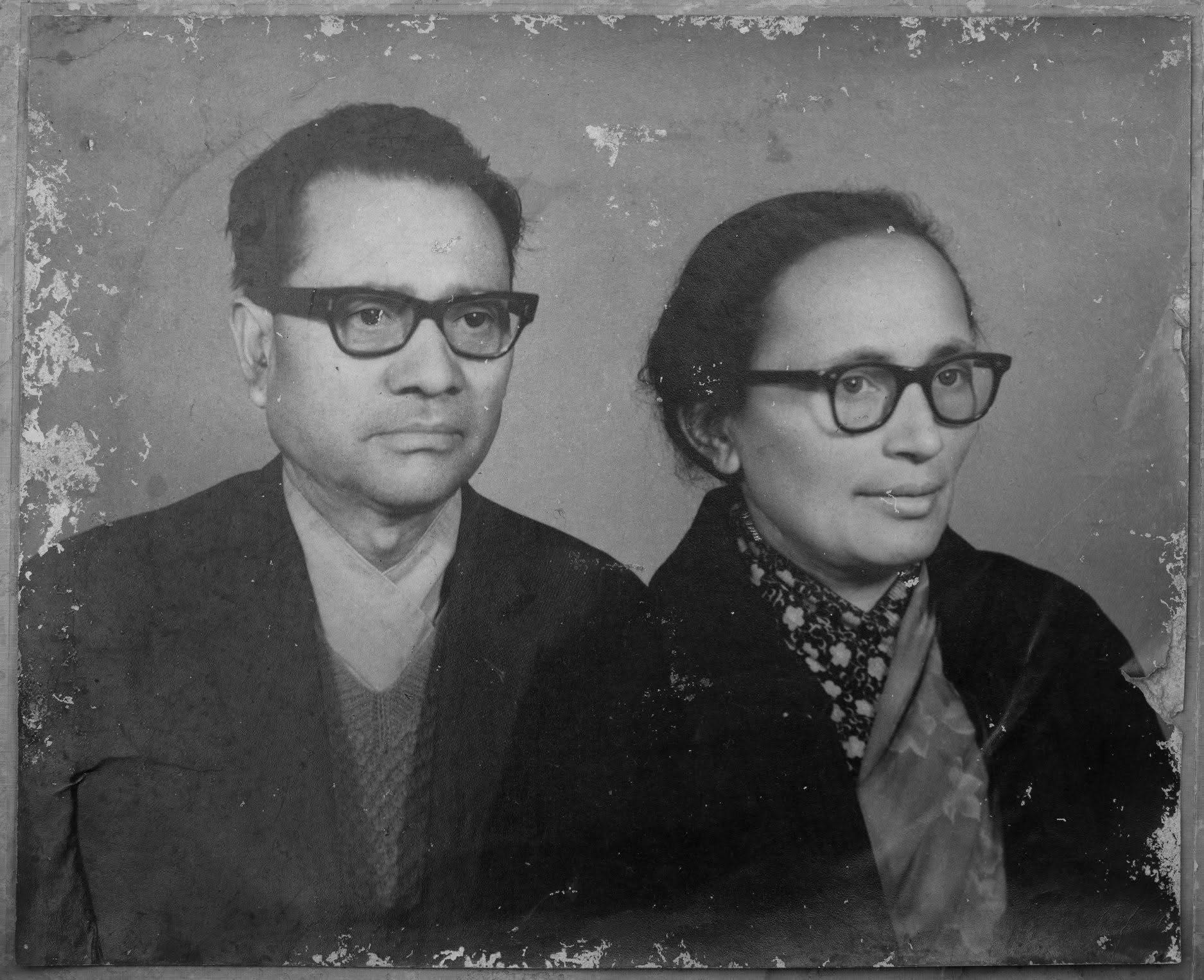
History often remembers those who stand on public platforms, publish books, lead movements, and become the visible faces of social change. Far less frequently does it remember those who quietly bear the burdens that make such work possible. Among those unsung figures was Heera Devi Yami—a woman whose courage, foresight, resilience, and sacrifice helped sustain not only her family but also an intellectual, social, and democratic culture during a difficult period in Nepal’s history.
To understand Heera Devi Yami’s contribution, one must first understand the era in which she lived.
During the Rana period and even in the years that followed, many people believed that silence was the safest path. Speaking openly about political, social, or democratic issues could invite suspicion, retaliation, or hardship. Documentation was discouraged. Preserving records, writing about controversial subjects, or openly expressing dissenting opinions could be risky. Consequently, many people chose caution, avoided involvement, and remained silent.
As a result, countless stories, sacrifices, and experiences disappeared from history.
Heera Devi Yami understood the danger of such silence.
She believed that important events, struggles, and ideas should be documented and preserved. While others feared recording sensitive information, she encouraged her husband, Dharma Ratna Yami, to write. Whenever he felt that an issue deserved documentation, analysis, or publication, she urged him to record it. She recognized that future generations would learn from written experiences and that truth could easily be lost if not preserved.
In this sense, she was not merely a supporter of documentation; she was a guardian of historical memory.
Many of Dharma Ratna Yami’s writings and reformist ideas could not always be openly circulated. Public discussion of certain social and political issues was not always safe. Therefore, the Yami residence gradually became an alternative forum for discussion and intellectual exchange.
The living room of the Yami home became a gathering place where people came to hear Dharma Ratna Yami’s writings, discuss social issues, debate political ideas, and engage in conversations that could not easily occur elsewhere. In many respects, the house functioned as an informal public forum where democratic thought and critical discussion survived despite restrictions.
Yet sustaining such a space carried enormous costs.
People who gathered often spent long hours in the house. Hospitality was expected. Guests needed to be welcomed and fed. The responsibility for organizing, preparing, and managing these gatherings largely fell upon Heera Devi Yami.
At the same time, she was raising a large family, managing household expenses, and struggling to educate her children despite severe financial limitations. Every rupee mattered. Every household decision required careful planning.
While Dharma Ratna Yami remained deeply absorbed in writing, public affairs, and intellectual work, practical family responsibilities rested largely on Heera Devi Yami’s shoulders.
The burden was immense.
Her own health was steadily deteriorating. She suffered from severe asthma for many years. Advanced treatment was not available in Nepal at the time. Yet she continued caring for her family, supporting visitors, and managing the household.
Only shortly before her death, during medical examinations at the All India Institute of Medical Sciences in New Delhi, it was discovered that two of her heart valves had been severely damaged. The diagnosis came tragically late, only a short time before she passed away.
Looking back, it becomes evident that she had been enduring extraordinary physical suffering for years.
There were occasions when she experienced severe cardiac distress while traveling on the streets and had to be helped home by concerned members of the public. Such incidents were often regarded as isolated health events rather than signs of the overwhelming physical and emotional burden she was carrying.
One of the most painful aspects of her life was that much of her suffering remained invisible.
Many relatives, members of the wider family circle, and people in the surrounding community preferred to remain detached from the intellectual and political activities associated with the Yami household. Like many people of that era, they had learned to protect themselves through caution and non-involvement. Rather than engage with difficult realities, they chose distance.
As a result, few fully understood the pressures under which Heera Devi Yami lived.
She was simultaneously managing a growing family, educating children, coping with severe financial hardship, supporting frequent visitors, sustaining her husband’s intellectual work, and battling chronic illness.
Yet much of this struggle remained unseen.
The emotional burden was equally significant. Dharma Ratna Yami carried the frustrations and disappointments associated with political struggle, public life, and intellectual work. At times, those frustrations found expression within the household. The emotional pressures created by these circumstances added to the responsibilities already weighing heavily upon Heera Devi Yami.
The children were too young to fully comprehend the magnitude of their mother’s sacrifices. Relatives and acquaintances saw only fragments of her reality. Few understood the extraordinary combination of financial strain, chronic illness, emotional stress, and relentless responsibility that defined her daily life.
Yet she continued.
She continued to educate her children.
She continued to support her husband’s work.
She continued to maintain a welcoming home.
She continued to preserve historical records and encourage documentation.
She continued despite failing health and overwhelming burdens.
What makes her story even more remarkable is that her contribution extended far beyond her immediate family.
Within her community, Heera Devi Yami became a trusted source of guidance, education, and support. At a time when many ordinary citizens were intimidated by courts, government offices, and legal procedures, she was willing to confront these systems on behalf of others.
Many people were afraid to challenge manipulated property records, disputed ownership claims, or violations of legal rights. Others lacked the confidence to approach courts or government agencies. Heera Devi Yami helped them understand their rights and encouraged them to seek justice.
She also advocated for educational opportunities. Parents who were reluctant to approach government offices or the Ministry of Education often sought her help. She understood the importance of education and was willing to confront bureaucratic obstacles to ensure that children received fair opportunities.
For many ordinary citizens, she became a source of strength, practical guidance, and encouragement.
People trusted her because she was willing to act when others hesitated.
Only after her death did many people fully realize how much they had depended upon her.
When Heera Devi Yami passed away in January 1970, the public response revealed the true extent of her influence. Many people openly wept. Streets filled with mourners. Community members spoke of the help she had provided, the advice she had given, the rights she had defended, and the encouragement she had offered during difficult times.
Their grief reflected more than personal affection.
They had lost someone who had stood beside them when they were afraid to stand alone.
They had lost someone who helped them navigate legal disputes, defend property rights, pursue educational opportunities, and confront institutions that many found intimidating.
They had lost someone who educated, guided, and empowered ordinary people.
The tears shed upon her passing were a testament to a life devoted to service.
Today, Heera Devi Yami’s legacy extends far beyond the role of wife, mother, or supporter of a public figure. She was a preserver of history, an advocate for education, a defender of ordinary citizens, a supporter of democratic dialogue, and a woman who carried extraordinary burdens with remarkable courage.
The democratic and intellectual legacy associated with Dharma Ratna Yami was sustained not only by his writings and public work but also by the invisible labor, resilience, wisdom, and sacrifices of the woman who stood beside him.
History often overlooks such individuals.
Yet the story of Heera Devi Yami reminds us that nations are shaped not only by those whose names appear in official records but also by those who quietly create the conditions that allow truth, justice, education, and democratic values to survive.
Her life was a testament to courage in the face of fear, perseverance in the face of hardship, service in the face of illness, and an unwavering commitment to helping others.
Her legacy deserves to be remembered not as a footnote to history, but as an essential chapter within it.