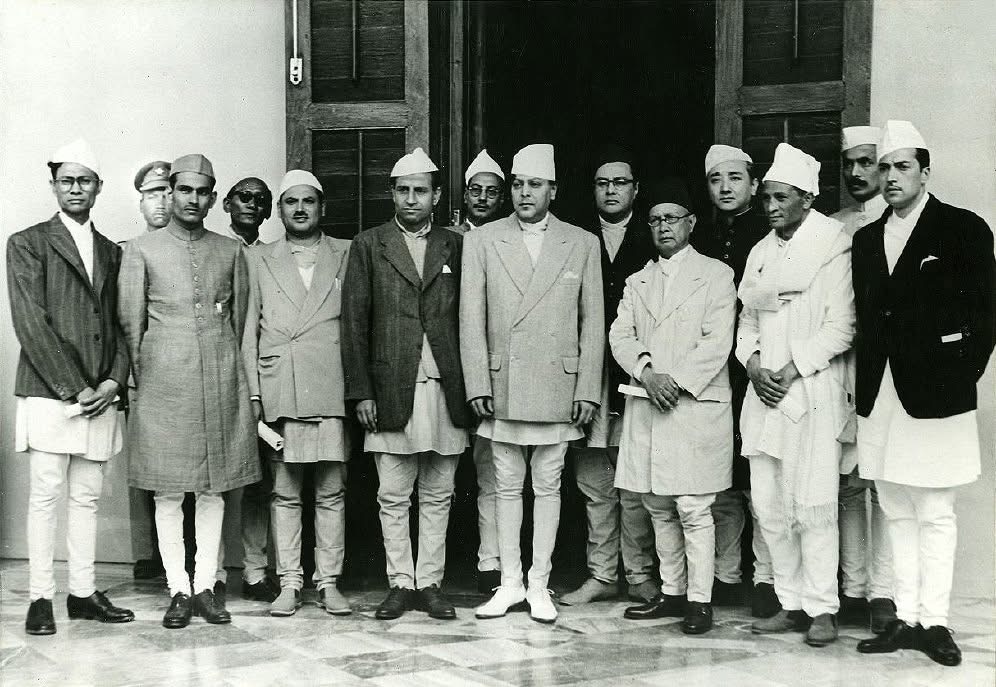
For over a century, the Kathmandu Valley—the cultural heart of the land where Siddhartha Gautam was born—remained a landscape of spiritual silence. Under the autocratic Rana regime, the "saffron robes" of Theravada monks were viewed as a threat to the state-sanctioned religious monopoly. This culminated in two major waves of persecution in B.S. 1983 (1926 CE) and B.S. 2000 (1944 CE), where monks were exiled for the "crimes" of preaching, ordaining women, and writing in the native Nepal Bhasa.
However, the fall of the Ranas in 1951 did more than usher in democracy; it sparked a radical cultural reclamation led by one of Nepal’s most defiant visionaries: Dharma Ratna Yami.
The Radical Diplomacy of 1951
When Dharma Ratna Yami ascended to the role of Deputy Minister in the post-revolution government, he faced a nation at a crossroads. While the political borders had opened, the social corridors remained guarded by an orthodox elite who had successfully blocked Buddhist initiatives for generations.
Yami recognized a historic opportunity: Sri Lanka had offered to return a sacred portion of the Buddha’s relics (Astu) to Nepal. To the orthodoxy, this was a dangerous breach of tradition; to Yami, it was a necessary act of national healing. In a bold and risky move, Yami bypassed the wall of resistance and convinced King Tribhuvan to grant permission for the entry of the relics and the formal return of the exiled monks.
The Procession and the "Madman" Rumor
The arrival of the relics from Sri Lanka sparked a symbolic journey from the Narayan Hiti Royal Palace to the newly established Anandakuti Vihar in Swayambhu. This was not merely a religious parade; it was a public assertion of a suppressed identity.
The resistance, however, was visceral. Conservative groups, desperate to delegitimize the event, spread rumors among a confused public. They mockingly labeled the ritual:
"Wayen yagu Deshe Kwoyen yagu Jatra"
(In the country of a madman, a procession of bones)
By branding Yami a "madman" and the sacred Astu as "mere bones," the opposition attempted to strip the moment of its dignity. Yet, despite the hostility and the verbal stones cast at the procession, the relics were successfully enshrined. Today, they remain at Swayambhu—a silent but powerful testament to the perseverance of those who refused to let their history be buried.
A Legacy Written in Ink: The Literary Resistance
Dharma Ratna Yami’s victory was not only won in the streets but also on the page. His literary works during this transition served as the intellectual backbone for the Buddhist revival:
• Sandeyā Lisah (Tibet’s Reply): An epic that preserved the cultural memory of the Newar diaspora and the linguistic identity of Nepal Bhasa.
• Bauddha Darshan ko Roop Rekha: A masterful distillation of Buddhist philosophy, framing it as a practical guide for social reform and mental peace.
• Arhat Nanda and Jagat Jyoti: These works re-introduced the life of the Buddha to the Nepalese public in a language they could finally call their own.
- Maha Manushya Buddha
- Buddha Manish Hun
Connection to the Global Movement
Yami’s vision was further sharpened by his associations with regional intellectual giants like B.R. Ambedkar and Rahul Sankrityayan. Like Ambedkar’s "Neo-Buddhist" movement in India, Yami viewed Buddhism as a tool for dismantling caste-based hegemony and promoting social equality. This synergy helped place Nepal back on the global map, eventually leading to the hosting of the 4th World Fellowship of Buddhists in 1956.
Conclusion: From Ashes to Awareness
The repatriation of the Buddha’s relics in 1951 was the moment Nepal’s "silenced history" found its voice. Through the courage of Dharma Ratna Yami, the return of the exiled monks and the sacred Astu signaled that the land of the Buddha would no longer be a place of exclusion.
His life serves as a reminder that progress often requires the "madness" of a visionary—the willingness to endure mockery and risk power to ensure that truth and heritage are accessible to all. As the relics sit enshrined at Anandakuti Vihar, they remind us that while regimes may exile people and ban books, they cannot ultimately extinguish the light of a reclaimed identity.