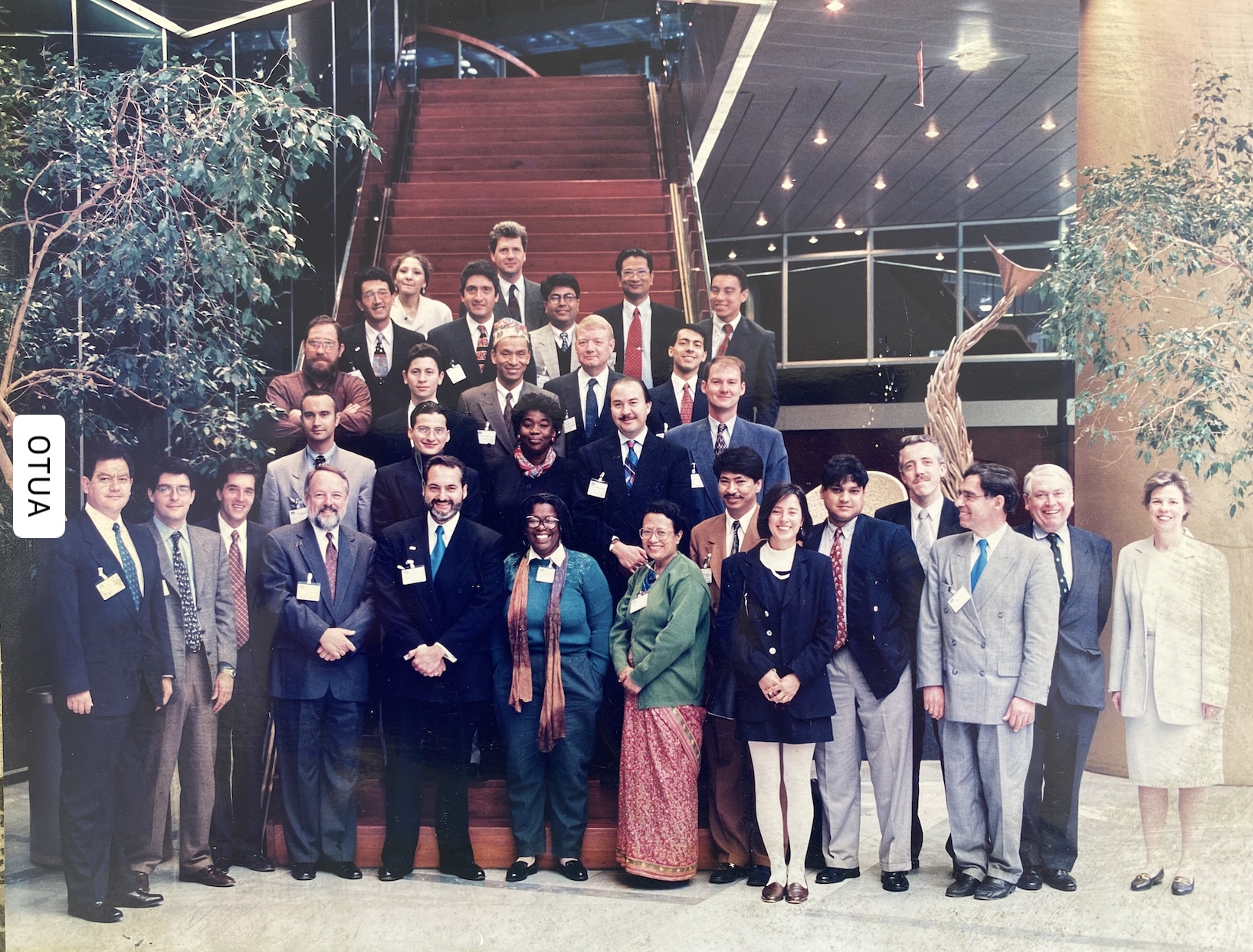
Professor Timila Yami Thapa is a pioneering figure in Nepal’s engineering education and a long-standing advocate for structural reform in higher education. For more than four decades, she has championed a transformative proposal: the establishment of Institutes of National Importance (INI) in Nepal through a Special Act of Parliament.
Her advocacy, which began in 1979, is rooted in both her international academic exposure and her deep understanding of the systemic weaknesses affecting Nepal’s premier institutions. Drawing from her experiences at institutions such as Indian Institute of Technology Kanpur, De Montfort University, and the Philips Research Institute, Professor Thapa observed how world-class institutions thrive on academic autonomy, abundant research funding, and insulation from political interference. The stark contrast with Nepal’s higher education system became the foundation of her reform agenda.
The Vision: Institutes of National Importance (INI)
Professor Thapa proposes granting INI status—modeled in part on India’s system—to Nepal’s leading institutions, including:
-
Institute of Engineering
-
Institute of Medicine
-
Nepal Academy of Science and Technology
Under her proposal, Parliament would pass a Special Act conferring INI status on such institutions. This would:
-
Guarantee Long-Term Financial Stability
Protect institutional budgets from short-term political cycles and fiscal uncertainty. -
Ensure Academic and Administrative Autonomy
Reduce bureaucratic control and political appointments, enabling merit-based leadership and global competitiveness. -
Promote National Development
Empower top institutions to lead scientific innovation, technological advancement, and human capital development—key pillars of a knowledge-driven economy.
Professor Thapa consistently argues that INI status is not symbolic, but a strategic national investment necessary to prevent brain drain, retain top talent, and position Nepal competitively in the global academic landscape.
Structural Challenges to Reform
Despite decades of advocacy, Nepal has yet to adopt a formal INI policy. The obstacles are deeply systemic:
1. Political Instability and Interference
Frequent changes in government have prevented long-term educational planning. Political appointments in academic leadership, politicized student and faculty unions, and shifting policy priorities have stalled structural reforms.
2. Bureaucratic Centralization
Institutions under umbrella bodies such as Tribhuvan University operate under tight administrative and financial control. Granting autonomy through INI status challenges entrenched bureaucratic structures resistant to decentralization.
3. Financial Constraints
Nepal’s higher education sector faces chronic underfunding. Guaranteeing stable, insulated funding for select institutions requires long-term fiscal commitment—often difficult amid competing national priorities.
4. Resistance from Vested Interests
The complex network of affiliated colleges under institutions like IOE and IOM creates financial and political interdependencies. Reform efforts that would restructure or detach core institutions encounter resistance from groups benefiting from the current centralized system.
Ironically, the INI proposal seeks to resolve the very political and bureaucratic culture that blocks its implementation.
Academic Leadership and Institutional Contributions
Professor Thapa’s reform advocacy is matched by her institutional contributions.
She served as Professor in the Electronics and Computer Engineering Department at the Institute of Engineering, Tribhuvan University, from 1979 until her retirement in 2015. She pioneered Nepal’s first Computer Engineering program and played a foundational role in shaping the country’s IT education sector.
As Assistant Dean at IOE, she oversaw multiple constituent and affiliated engineering colleges. Beyond Tribhuvan University, she contributed to national academic policy through service in:
-
Academic and Research Councils under the University Grants Commission Nepal
-
Governing Member of the Nepal Engineering Council
-
Member of the ICT Advisory Board under Nepal’s Prime Minister’s Office
-
Advisory Board Member of the Rural Telecommunication Fund under the Nepal Telecommunications Authority
She also worked with Pokhara University, where she designed curricula for programs such as BE Software Engineering, Computer Engineering, BCA, and BE in Information Technology, and served as a Senate Member.
International Exposure and Inspiration
Professor Thapa earned her B.Tech. in Electronic Engineering (1975 batch) from IIT Kanpur and later completed an M.Sc. in Information Technology (Systems Engineering) from De Montfort University in 1994. She also undertook a UNDP-sponsored advanced program in Systems and Communication Infrastructure in the Netherlands, working closely with research professionals at Philips.
During her time abroad, she witnessed how premier institutions leveraged substantial research funding, concentrated top talent, and cultivated innovation ecosystems. These experiences convinced her that Nepal must create insulated, resource-rich centers of excellence to achieve meaningful national transformation.
A Dual Approach to Reform
Professor Thapa represents a rare combination of technical pioneer and strategic policy advocate. Her approach has been dual in nature:
-
Working within existing structures to improve curriculum, governance, and policy frameworks.
-
Advocating structural overhaul through INI legislation to create autonomous, innovation-driven academic institutions.
Her four-decade campaign underscores a central conviction: meaningful national development in the 21st century requires depoliticized, autonomous, and well-funded institutions of higher learning. Establishing Institutes of National Importance, she argues, is not optional—it is a prerequisite for Nepal’s scientific, technological, and economic advancement.
During her pioneering years as an entrepreneur and software advocate (specifically through her company, Designco Nepal, founded in 1991), Professor Timila Yami Thapa was responsible for developing some of the first critical enterprise software systems for Nepal's largest public utilities.
These projects were the tangible proof behind her CeBIT Hannover campaign, "Software Solutions from the Top of the World."
1. Nepal Electricity Authority (NEA): Billing Software
In the early 1990s, when NEA was struggling with manual, fragmented record-keeping, Professor Thapa’s team handled complex software projects to automate their systems.
-
The Solution: She developed early Energy Billing and Revenue Collection software.
-
The Impact: This was a massive technical undertaking given the "lack of qualified human resources" at the time. It aimed to bring transparency to electricity consumption and reduce the massive leakage and errors found in manual ledger systems.
2. Nepal Water Supply (NWSC / KUKL): Billing & Management
Her work with the Nepal Water Sewerage Corporation (NWSC) and later Kathmandu Upatyeka Khanipani Limited (KUKL) focused on modernizing utility management.
-
The Solution: She designed and implemented Water Billing Software tailored for the complex urban distribution network of Kathmandu and other major cities.
-
The Role: Beyond software, her expertise was so valued that she eventually served as a Board Member and Chairperson of KUKL (a 1,400-employee utility), where she oversaw the integration of technology into the company's industrial administration.
3. Nepal Telecom (NT): Complex Technical Challenges
Professor Thapa’s relationship with Nepal Telecom was both technical and advisory.
-
Infrastructure: Leveraging her training from Philips Holland (sponsored by UNDP), she assisted Nepal Telecom in navigating complex technical challenges related to Software and Communication Infrastructure.
-
Policy: She later served on the advisory board of the Rural Telecommunication Development Fund (RTDF) under the Nepal Telecommunication Authority (NTA), ensuring that technology reached beyond the Kathmandu Valley.
"Software Solutions from the Top of the World"
When she traveled to CeBIT Hannover (1996, 1997, 1999), she used these real-world utility projects as case studies. Her message to the global IT community was clear:
If Nepal can build and manage complex billing systems for its national electricity and water grids, it is ready to handle international software outsourcing.
This advocacy was the "ground zero" for Nepal's current IT export industry. She proved that Nepal wasn't just a place for trekking, but a source of high-level intellectual labor.
nnnnnnnnnnnnnnnnnnnnnnnnnnnnnnnnnnnnnnnnnnnnnnnnnnnnnnnnnnnnnnnnnnnnnnnnnnn
Professor Timila Yami Thapa is a pioneering figure in Nepalese engineering education and a long-term, vocal advocate for a transformative educational reform: establishing Institutes of National Importance (INI) in Nepal, four-decade-long campaign rooted in her international experience and deep commitment to transforming Nepal's academic landscape is driven by her first-hand experience in world-class international institutions and her deep understanding of the systemic flaws plaguing Nepal's premier academic centers. She proposes that granting INI status via a Special Act of Parliament to institutions like ike the Institute of Engineering (IOE), Institute of Medicine (IOM), and the Nepal Academy of Science and Technology (NAST) etc , is designed and would shield them from political and bureaucratic interference, ensuring financial stability and academic autonomy to foster innovation and national development. Professor Timila Yami Thapa's advocacy for establishing Institutes of National Importance (INI) in Nepal is a strategic, Her proposal, which seeks to grant INI status via a Special Act of Parliament to premier institutions l
Rationale: The Vision of INI Status
Professor Timila Yami Thapa’s advocacy for establishing Institutes of National Importance (INI) in Nepal is deeply intertwined with navigating political challenges and promoting technical academic excellence.In Nepal She been advocating on this issue since 1979, however, Nepal government has still not brough out policy on this issue.
The concept of establishing certain academic entities as an "Institute of National Importance" (INI) in Nepal, often inspired by the Indian model, has been advocated primarily by academics and experts. Specifically, Professor Timila Yami Thapa has been a prominent and vocal advocate, publicly urging the government to grant INI status through a Special Act of Parliament to premier institutions.
Key Advocated Institutions
The institutions most frequently mentioned for potential INI status, to grant them greater autonomy and secure long-term funding, include:
- Institute of Engineering (IOE)
- Institute of Medicine (IOM)
- Nepal Academy of Science and Technology (NAST)
Nature of Advocacy
The advocacy centers on the belief that declaring these institutions as INIs would:
- Guarantee Long-term, Stable Funding: Freeing them from political cycles and short-term budget constraints.
- Provide Institutional Autonomy: Allowing for academic and administrative independence necessary for global competition.
- Catalyze National Transformation: By empowering premier academies to lead scientific and technological advancement. While this specific status (INI) is a focused effort, broader educational policy and quality advocacy is conducted by various other organizations, including think tanks and civil society organizations like the National Campaign for Education Nepal (NCE Nepal) and the Nepal Policy Institute (NPI). In Nepal
This advocacy is focused on having the Parliament pass a Special Act to grant INI status to premier institutions like the Institute of Engineering (IOE), the Institute of Medicine (IOM), and the Nepal Academy of Science and Technology (NAST).
Rationale for INI Status
The "Institute of National Importance" status is modeled after India's system and is seen as a strategic measure to address systemic issues in Nepal's top academic and research centers.
The primary goals of this advocacy are:
- Financial Stability: To guarantee long-term, stable funding for these institutions, shielding their budgets from short-term political and fiscal cycles.
- Institutional Autonomy: To grant them the necessary academic and administrative independence to maintain world-class standards, conduct cutting-edge research, and compete globally.
- National Development: To empower these key institutions to lead Nepal's scientific, technological, and human capital development, which is crucial for long-term national progress.
Broader Academic Advocacy
While Professor Thapa focuses on the INI status for premier institutes, the general academic sector in Nepal sees advocacy on various fronts by other organizations, including:
- Think Tanks: The Nepal Policy Institute (NPI) and Nepal Development Research Institute (NDRI) engage in policy research and analysis to inform high-level decision-making on education and development.
- Civil Society Organizations: Groups like the National Campaign for Education Nepal (NCE Nepal) and Youth Advocacy Nepal (YAN) advocate for broader issues such as increased investment in public education, quality, equity, and the implementation of inclusive policies like the National Educational Policy (NEP) 2076.
Professor Timila Yami Thapa’s advocacy for establishing Institutes of National Importance (INI) in Nepal is deeply intertwined with navigating political challenges and promoting technical academic excellence. It is very difficult to promote and enact significant institutional reforms, such as declaring premier public institutions like the Institute of Engineering (IOE) and the Institute of Medicine (IOM) as "Institutes of National Importance" (INI) in Nepal. The difficulty stems from a combination of systemic, political, and bureaucratic challenges that characterize the public sector in Nepal. Here are the major hurdles to achieving this kind of institutional reform:
- Political Instability and Interference
- Lack of Consensus and Vision: Frequent changes in government and political leadership result in a lack of consistent, long-term national vision for the education sector. New policies or ambitious reforms like INI status often stall or are reversed with every change in the ruling
coalition.
- Political Appointments: High-level academic and administrative posts in public institutions are often made based on political affiliation rather than merit. This leads to administration focused on political interests rather than academic excellence and reform.
- Student/Teacher Union Politics: The politicization of student and teacher unions often leads to frequent shutdowns, disruptions, and resistance to administrative or academic changes proposed by reformers.
- Bureaucratic Hurdles and Resistance to Autonomy
- Excessive Central Control: The central government and existing university structures (like the umbrella Tribhuvan University) maintain tight administrative and financial control over constituent institutions. Granting true autonomy, a key component of the INI concept, is resisted by the bureaucracy and existing power structures.
- Slow Implementation: Nepal is often praised for progressive policy formulation, but the actual implementation is slow and inefficient due to bureaucratic red tape, lack of capacity, and weak accountability.
- Financial Constraint: While INI status is designed to guarantee stable funding, the entire public education system suffers from chronic under-funding (Nepal spends a small fraction of its GDP on higher education). Competing demands for limited resources make it difficult to pass a special Act guaranteeing long-term, insulated funding for a select few institutions.
- Resistance from Vested Interests
- Fear of Loss of Power: Existing officials, political factions, and influential groups who benefit from the current centralized, politicized system are the primary opponents of reforms that would grant institutions independent power and financial control.
- Focus on Affiliation: The massive number of affiliated colleges under institutions like Tribhuvan University's IOE and IOM creates a complex financial and administrative web. Detaching the core institutes or granting them INI status would disrupt this system, facing powerful opposition from those who manage or benefit from the affiliates.
Professor Timila Yami Thapa proposed in 1979 the INI status as a necessary step to protect premier institutions from the very challenges listed above, the change itself is blocked by the political and bureaucratic culture it is intended to solve. Her observations on the stark difference in resource allocation and focus between institutions like Philips Research Institute and premier public institutions in Nepal (like IOE and IOM) became a central driving force for her long-standing advocacy in the Nepali education sector. Her main goal was to replicate the model of academic and research autonomy, abundant resources, and innovation focus she witnessed abroad, leading to her proposal for Institutes of National Importance (INI) in Nepal.
The Vision of "Institutes of National Importance" (INI)
The advocacy she led, particularly concerning institutions like the Institute of Engineering (IOE) and the Institute of Medicine (IOM), stems from the need to create academic centers that are: Premier in Name and Function: Institutions like IOE and IOM, which attract the most talented students in Nepal, should operate with the resources and autonomy befitting their status.
- Resource-Rich for Talent: They must have adequate, secure, and abundant research funds to provide talented students with the resources necessary to focus on innovation and immersion in their fields, instead of facing the scarcity prevalent in the public sector.
- Politically Insulated: Proposal is to grant them INI status through a Special Act of Parliament. This would:
- Guarantee Long-Term, Stable Funding (free from political budget cycles).
- Grant Institutional Autonomy (free from bureaucratic interference and political appointments).
- Elevate Global Standards (facilitating international research and faculty exchange).
Advocacy Efforts
Her desire to see such an Institute of Special Importance granted in Nepal led her to:
- Speak to many Ministers and Policy Makers to advocate for this strategic investment in Nepal's future and to emulate successful international models, such as the Indian model of INIs (like the IITs).
- Contribute to policy and curriculum development at institutions like Pokhara University and the University Grant Commission (UGC), working within existing structures to push for greater focus
The Inspiration
Professor Thapa's advocacy is directly fueled by her experiences abroad:
-
At IIT Kanpur , De Montford University UK and Philips Research Institute in Holland, she observed a model where "premier" institutions were defined by:
-
Abundant research funds.
-
A concentration of talented students and faculty.
-
Adequate resources dedicated to immersion and innovation.
-
-
This starkly contrasted with the situation in Nepal, where even the best institutions struggled with scarcity and politicization. She became convinced that Nepal needed to replicate this model of insulated, well-resourced excellence.
Professor Thapa's advocacy is described as "navigating political challenges," as the reform is blocked by the very system it seeks to fix. Her campaign for INI status is a call to consciously decouple centers of academic excellence from the volatile political arena, viewing it as a non-negotiable prerequisite for Nepal’s scientific and economic development. Professor Timila Yami Thapa represents a unique blend of a technical pioneer and a strategic policy advocate. Her four-decade-long campaign for INIs is a direct response to Nepal's educational governance crisis. It is a call to consciously decouple centers of academic excellence from the volatile political and bureaucratic arena, arguing that this is a non-negotiable prerequisite for national development in the 21st century. Her efforts demonstrate a dual approach: working within existing systems to improve them while simultaneously advocating for a fundamental structural overhaul to create islands of excellence and autonomy.
On innovation and technology. Her core argument has consistently been that declaring these institutions as INIs is not merely symbolic but a necessary strategic investment to compete globally, retain local talent (preventing brain drain), and build a knowledge-driven economy. This dual approach reflects her long-term vision: overcoming systemic political obstacles while building technically advanced and autonomous academic institutions crucial for Nepal’s development. The INI status represents a strategic reform to achieve this vision.
Professor Timila Yami Thapa is a graduate of two prominent institutions:
- Indian Institute of Technology (IIT), Kanpur, India
- Degree: B. Tech. in Electronic Engineering (1975 batch)
- De Montfort University, Leicestershire, UK
- Degree: M.Sc. in Information Technology, specializing in Systems Engineering (1994)
- Professor Timila Yami Thapa completed a one-year program in Holland (The Netherlands) at Philips focussed in Systems and Communication Infrastructure. THe program was sponsored by the United Nations Development Programme (UNDP). Nepal Telecom benefited on complex technical challenges through Prof. Timila.
This professional experience in software and communication infrastructure was a part of the foundation for her later work in pioneering the first Computer Engineering program in Nepal at the Institute of Engineering. While in Holland Philips Holland she interacted with professors of Research Institute of Philips Holland and UK and India exploring on how premier Institutions used Research funds in abundance and attracting talented students engagging in Innovation. She wanted that such Institute of special importance should be granted in Nepal.
Professor Timila Yami Thapa served in various academic and policy roles in Nepal.
Academic Roles and Service
Professor Timila Yami Thapa's academic career was primarily with Tribhuvan University (TU), where she was a pioneer in computer engineering.
Educator: She served as a Professor in the Electronics and Computer Engineering
Department at the Institute of Engineering (IOE), Tribhuvan University, from 1979 until her retirement in 2015. She pioneered and initiated the first Computer Engineering program in Nepal.
- Administrator: She served as Assistant Dean at Tribhuvan University, managing four state-owned and ten affiliated engineering colleges.
Academic Committees and Policy Planning
As an educational policy planner and national policy planner, she served as a member of:
- Academic Council, under University Grant Commission (UGC), Nepal.
- Research Council, under University Grant Commission (UGC), Nepal.
- Governing Member of the Nepal Engineering Council (for three years).
- Member of the ICT Advisory Board under the Prime Minister's office (for one year).
She also served as a member of the advisory board of the Rural Telecommunication Fund Board, Nepal Telecommunication Authority (NTA).
The Pioneer of Nepal's IT Industry ft. Er. Timila Yami Thapa | Engineer को कथा - 20 is a video that discusses her role as a pioneer in Nepal's IT industry, which is related to her academic work in computer engineering.
Professor Timila Yami Thapa served in several key academic and policy bodies:
University Grant Commission (UGC)
She served as a member of:
- The Academic Council under the University Grant Commission (UGC), Nepal.
She was involved with Pokhara University in two capacities:
- She worked in Pokhara University for four years designing course-curriculum for programs like BE Software Engineering, Computer Engineering, BCA, and BE in Information Technology.
- She served as a Senate member at Pokhara University.
Other Academic/Policy Roles
Beyond her work at Tribhuvan University (where she was a Professor and Assistant Dean), she
also served as a:
- Governing member of the Nepal Engineering Council for three years.
- Member of the ICT Advisory Board under the Prime Minister's office for one year.
This video discusses Professor Thapa's expertise in policy-making related to technology. Data Science in Policy Making - Prof.Timila Yami Thapa - #techWebinarNepal Series-38 Nepal ceases Nepal it is very difficult to promote good issues, like declaring Premier Public Institutions like Institute of Engineering Institute of medicine Maharajganj and declaring
The Pioneer of Nepal's IT Industry ft. Er. Timila Yami Thapa | Engineer को कथा - 20 is a video about Professor Thapa's pioneering role in engineering education and her broader influence on technology and policy in Nepal.