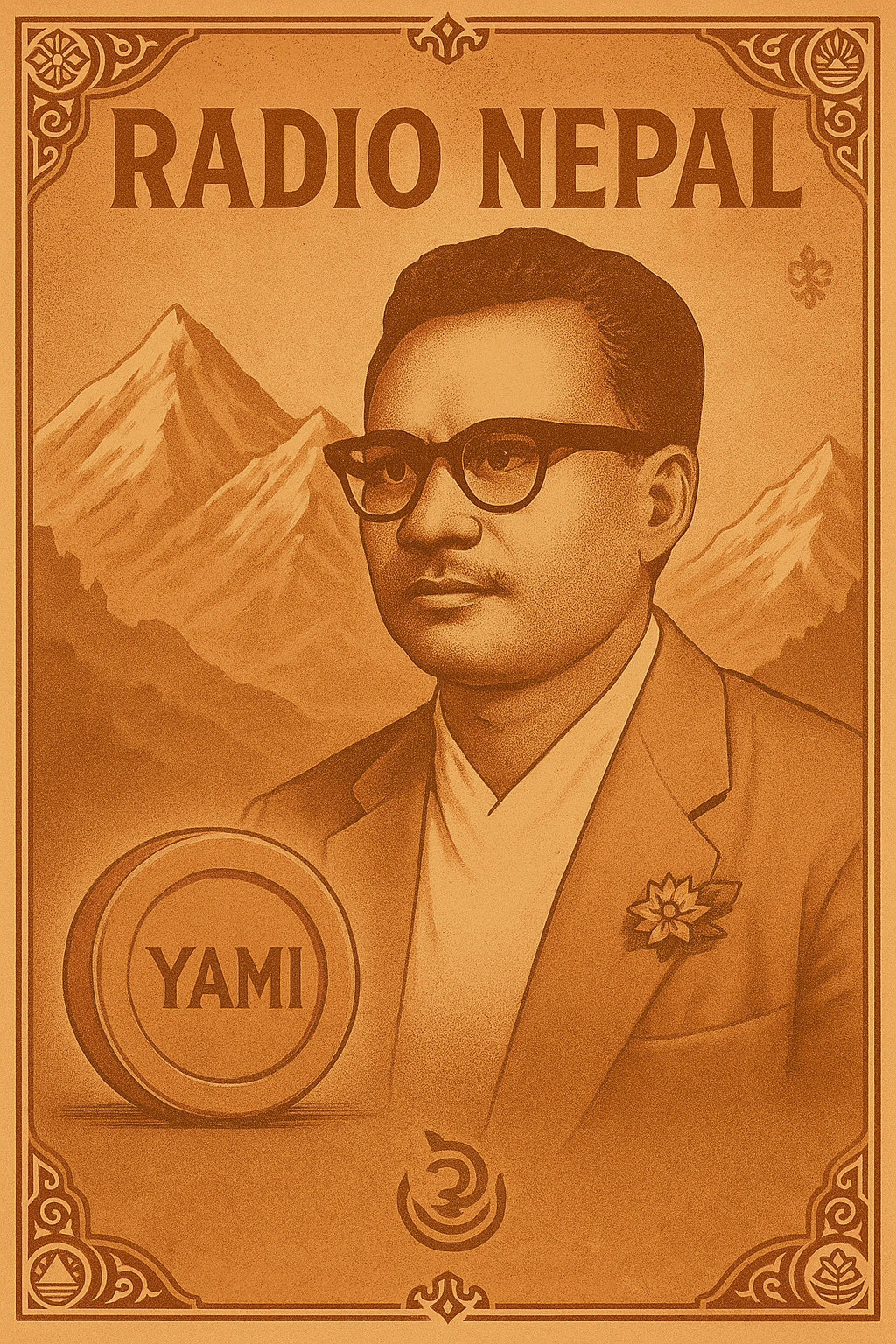
“Freedom must be prepared quietly, beneath the noise of oppression.”
— Dharma Ratna Yami
“The soap shop sold more than soap — it sold the courage to speak, the audacity to dream, and the news that change was coming.”
This is the story of Dharma Ratna Yami, the Newar intellectual, political activist, and social reformer who used a humble soap shop to challenge both the state—and society itself.
Nepal Under the Ranas
For over a century, Nepal lived under the shadow of the Rana dynasty, a hereditary regime that held absolute power, suppressing political opposition and maintaining strict social order. Education was restricted, political parties were banned, and dissent was ruthlessly crushed.
But the seeds of change were quietly taking root. One of those early visionaries was Dharma Ratna Yami. Born in 1915 into a respected Newar Buddhist family in Kathmandu, Yami defied expectations from an early age. A passionate writer, thinker, and activist, he co-founded the Nepal Praja Parishad in 1936—the country’s first political party dedicated to dismantling Rana rule and introducing democracy.
Yet, organizing openly was impossible. Surveillance was constant. Arrests were frequent. So Yami turned to an unusual form of camouflage: soap.
The Shop as a Front for Revolution
In the heart of historic Asan Tole, located in Bhotahiti amidst the bustling spice vendors and cloth merchants, surrounded by temples, market stalls, and narrow brick lanes, stood a modest washing soap shop. Yami’s shop became a quiet nerve center for Nepal’s underground democracy movement. Behind the counter, hidden among bars of soap, were banned pamphlets and political writings, secret meeting notes, messages smuggled between activists in Kathmandu and exiled revolutionaries in India. But to those in the know — to the brave men and women resisting the oppressive Rana regime — this unassuming little store was known by another name: Radio Nepal, secret code. “Radio Nepal” — The Code Name of Resistance, A Symbol Hidden in Plain Sight.
His shop, in defying caste-based discrimination, embodied his broader ideals a secular, inclusive Nepal, where one’s birth did not define their worth, a rejection of social hypocrisy, where “polluted” soap cleansed the same bodies that rejected its sellers, a belief that dignity comes from action, not ancestry. The soap shop was a living metaphor—a place where ordinary transactions masked extraordinary defiance. Eventually, the regime grew suspicious. Yami was arrested. Yet, his resolve remained unbroken.
Resistance Beyond Politics
While the soap shop is often remembered as a site of political resistance, it was also a direct assault on Nepal’s rigid caste hierarchy and religious orthodoxy. Yami believed that political liberation meant nothing without social reform.
Leaders of the anti-Rana democratic movement, including the revered Ganesh Man Singh, jokingly but purposefully referred to Yami’s soap shop as “Radio Nepal.” It was here, amidst the clinking of coin and the aroma of herbal soaps, that news was exchanged, underground pamphlets circulated, and strategies against the Rana autocracy quietly hatched.
The nickname was laced with irony and defiance — there was no real radio station broadcasting truth to the public, so Yami’s soap shop became the living radio, spreading news, hope, and resistance by word of mouth. For the ordinary passerby, the shop was just another trader’s stall. But for the freedom fighters of Nepal’s first democratic struggle, it was a beacon. Every bar of round soap handed over the counter carried with it the silent promise of a freer tomorrow.
But in the 1940s, under the watchful eyes of the autocratic Rana regime, this small shop became much more. Behind its plain facade, it was a center of underground political activity, a sanctuary for banned ideas, and—perhaps most controversially—a quiet rebellion against Nepal’s rigid caste and social hierarchies. Dharma Ratna Yami, a pioneering activist and intellectual, ran the shop under constant suspicion and social scrutiny.
Soap, Stigma, and Subversion
In Nepal at the time, soap-selling was not just mundane—it was controversial. The manufacture and sale of soap were traditionally seen as “impure” occupations, associated with ostracized Muslim communities and lower-caste groups, who were marginalized under the country’s entrenched caste system.
For a Newar intellectual like Yami, choosing to sell soap was considered shameful, a betrayal of caste status and social decorum. He was mocked and ostracized by many in his own community. But for Yami, the soap shop was a calculated disguise — ordinary on the outside, revolutionary at its core. But Yami’s decision was deliberate. Selling soap served two radical purposes meant for providing a cover for clandestine political activity—no one suspected that a soap shop could house resistance. It challenged social injustice, directly confronting caste prejudice and economic exclusion. In essence, Yami was cleansing not only bodies—but the conscience of a nation.
Legacy of a Quiet Revolutionary
After the fall of the Rana regime in 1951, Yami transitioned from activist to statesman. He served as Deputy Minister of Forest and later as Minister of Food. Yet, his heart remained with social justice. As a prolific writer and outspoken critic of religious and cultural oppression, he continued to push for federalism, secularism, and minority rights long before they became mainstream political demands.
Today, his soap shop is gone, but its story lives on. It remains a reminder that the fight for freedom often starts not with loud slogans or violent uprisings—but with quiet acts of defiance, hidden in plain sight.
The Power of the Ordinary
Dharma Ratna Yami’s life and shop stand as a testament to a simple but radical truth. In selling soap, Yami sold more than hygiene products—he sold the idea that no social barrier is unbreakable, no occupation too humble for revolution, and no shop too small to shelter a nation’s hopes. His courage reminds us that resistance doesn’t always roar. Sometimes, it whispers behind a shop counter, wrapped in the ordinary, waiting to change the world.