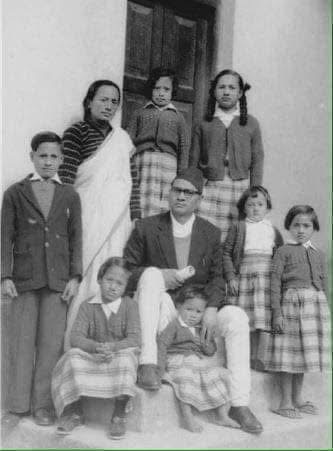
I remember vividly the 1960s, when my mother, Heera Devi Yami, was ridiculed and even abused by society. Her only “crime” was daring to speak out. She tried to educate people about the dangers of blind rituals and unproductive customs—practices that wasted our time, energy, and potential. In those days, challenging social norms wasn’t just unpopular—it was life-threatening. Nepal has endured a long and painful legacy, one that still haunts us today.
She was ridiculed, ostracized, even abused for daring to preach the value of reason over ritual, of knowledge over blind faith. Her advocacy wasn’t just difficult—it was dangerous. To question the status quo meant inviting hatred, suspicion, and social punishment. Yet she persisted. Because she knew that real progress could only come through education that empowers and liberates.
For generations, a dangerous pattern has persisted—one that has crippled our progress and dimmed the minds of our youth. Misinformation, disinformation, and deliberate misguidance have been tools of control, wielded by monarchs and ministers, priests and elites—not to empower the people, but to keep them passive, obedient, unquestioning.
Instead of investing in science and skills, generations were taught that their greatest duty was to perform endless rituals—acts that consumed their time and wealth but did little to advance their lives. This wasn’t just culture—it was control.
Critical thinking used to be discouraged specially for girls and women. Male members used to say POTHI BASEKO ASUBHA HO. Questioning used to be forbidden. Skepticism used to be branded as disrespect—even rebellion.
Instead of cultivating minds, we girls were told our highest purpose was to perform endless rituals. Instead of promoting education and awareness, people were told that suffering was fate, that questioning was sin, and that salvation lay not in knowledge, but in blind faith. My mother used to fight with those who promoted such social norms.
Tradition has its place. Our culture, our spirituality—they can connect us, enrich us, give life meaning. But when they are used to suppress thought, to deny knowledge, and to silence voices—that is no longer culture. That is control and it must end.
We must awaken Nepalese society to the power of critical thinking, to the beauty of science, to the boldness of creativity, and to the tools of STEAM education. Our children must learn not what to think—but how to think. We must replace superstition with science, blind faith with understanding, and fear with courage.
Nepal cannot move forward while people remain in the shadows—shackled by misinformation, blinded by dogma, and disempowered by ignorance. Heera Devi Yami began. She embraced STEM education—Science, Technology, Engineering, and Mathematics when Nepalese society in general had no exposure outside world then.
Let this generation be the one that lights the flame of reason. Let us honor our ancestors—not by repeating their fears—but by asking the questions they were never allowed to ask. Let us build a Nepal that thinks.
I speak today not just with passion—but with memory. In the 1960s, my mother, Heera Devi Yami, stood almost alone in her mission. At a time when our society was bound by superstition, ritualism, and rigid social norms, she promoted something radical—STEM education. Science, technology, engineering, and mathematics—fields that could empower minds, transform lives, and build a modern Nepal. During her treatment for tuberculosis at young age my mother Heera Devi Yami was treated by a German doctor in Calcutta where she had witnessed massacre while India fought against British rule. She understood the tyranny rule of Ranas in Nepal who had the backing of British rule then.
Nepal has long been trapped in a cycle—where misinformation, disinformation, and misused traditions have been tools of control, used by monarchs, ministers, and religious authorities not to uplift the people, but to keep them obedient and unquestioning.
Our culture has beauty. Our spirituality has meaning. But when tradition is used to block inquiry, and when faith is weaponized against thought—then people then didn't have the courage to face ground reality.
Technical skills is not sufficient, people should also have creativity, ethics, and empathy. We must teach our children not what to think, but how to think. We must replace fear with curiosity, superstition with understanding, and silence with voice.
Let Nepal be a nation where a girl in a village can become an engineer. A classroom becomes a lab of ideas, not a shrine of obedience. Let us not honor our ancestors by repeating their fears, but by correcting the mistakes they were never allowed to question. Let us break these chains, and light the flame of reason. Let us learn, teach, and transform Nepal.