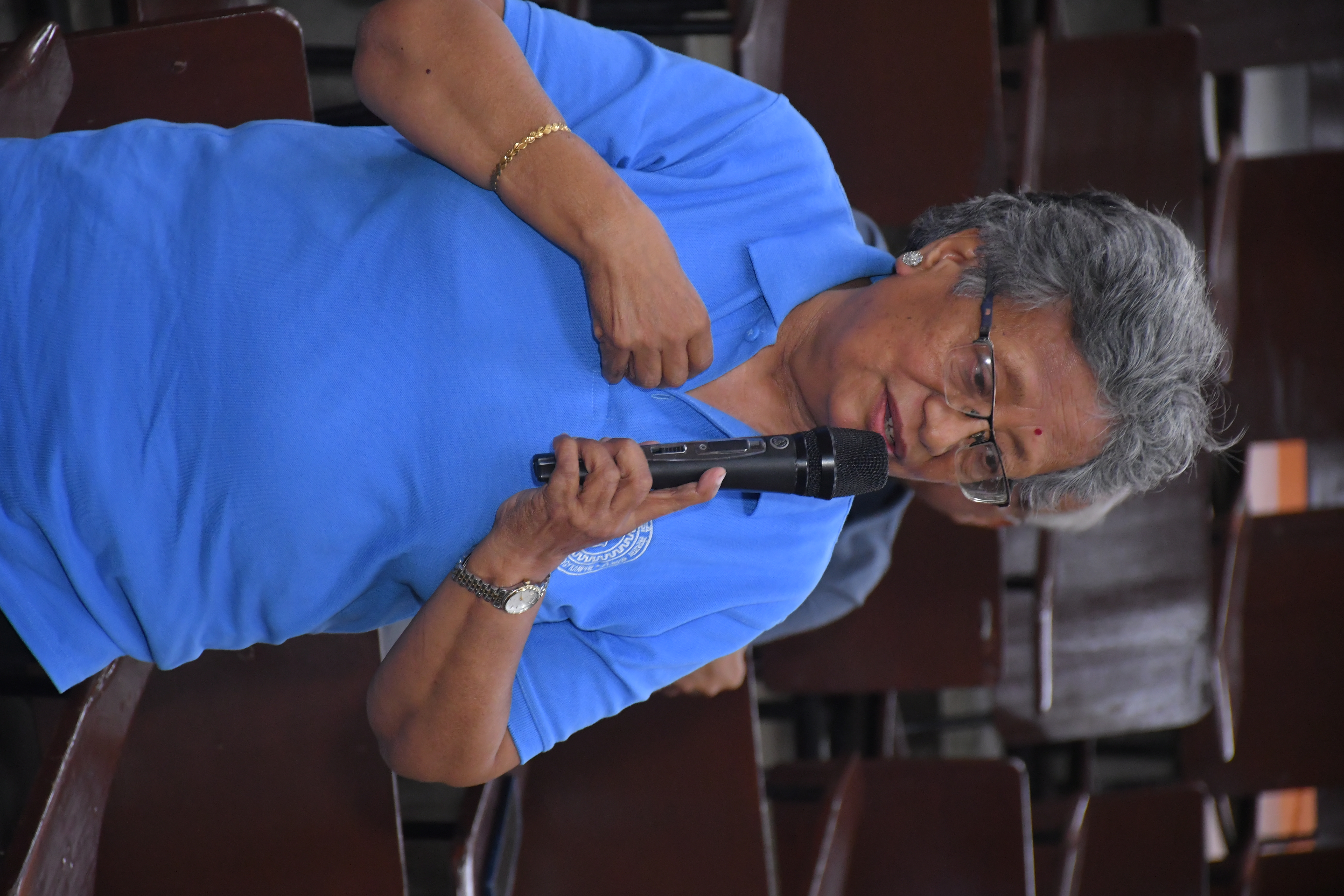
In The Spark Issue #11 from IIT Kanpur, Professor Timila Yami Thapa shares a heartfelt reflection on her time at the institute during the early 1970s. As one of the first Nepali women engineers and a member of the 1970–75 Electrical Engineering batch, she recounts her journey with a blend of nostalgia and insight.
Professor Thapa describes the Girls’ Hostel as a close-knit community where camaraderie and mutual support were paramount. Despite being a minority in a predominantly male environment, she and her peers fostered a sense of belonging and resilience. She emphasizes the transformative impact of her education at IIT Kanpur, highlighting how the rigorous academic environment and exposure to diverse perspectives shaped her analytical thinking and professional ethos.
Her reflection also touches upon the broader socio-cultural context of the time, noting the challenges faced by women pursuing engineering in a conservative society. Yet, she credits the inclusive atmosphere of IIT Kanpur for empowering her to overcome these barriers and lay the foundation for her future contributions to Nepal’s technological advancement.
Professor Thapa’s narrative serves as an inspiring testament to the enduring influence of educational institutions in shaping individual trajectories and societal progress.
Recollections of Timila Yami Thapa
(BT, EE, 1970-75)
Timila Yami was a Professor in the Electronics and Computer Engineering Department in Tribhuvan University, Kathmandu, Nepal, before she retired in 2015. Her contributions are wide-ranging -- from the educational sector, in the area of information technology and computer engineering, to the industrial sector in both administrative and entrepreneurial capacities, and in the social sector working for women, child-education and youth employment. She has served on the Advisory Board to the Prime Minister of Nepal, and chaired committees that manage water supply and sanitation services, rural communications, and women’s upliftment.
My Background
My story at IITK is closely linked to that of my parents, their political activities and struggles for the upliftment of the Nepalese people, especially women’s higher education. My other beacon was my mother’s wish that we should be well-educated. She died at the age of forty-eight in 1970, the year I came to IITK.
At that time, the cultural mindset in Nepal was very different from what it is now. Access to education was confined to the higher castes and wealthier economic strata of the population and the masses were largely illiterate. Social norms discouraged education for women, and early childhood marriage was the norm. I was surrounded by relatives telling me not to leave the country at a young and vulnerable age. Some insisted on my marriage prior to attending IIT Kanpur.
Arriving at IITK
I was the first female studentin the history of Nepal to go to study Electrical Engineering in India. I consider myself lucky to be admitted to the top ranked Indian Institute of Technology. I took a ride in the train and the plane for the first time in my life during my first journey to IIT Kanpur.
My batch had 410 boys and only two girls: Vini Nigam and I. I was very shy and apprehensive of the boys due to my cultural upbringing.Vini was the only person I communicated with during the first year. She would often find me grieving about the loss of my mother and worrying about my younger sisters.
It was only towards the end of the program that I learned to trust my batchmates. I realized that I should have shared my problems with friends who would have helped me with my ongoing stress,
447
coping with the tough academic environment, and managing the responsibility of bringing up my younger sisters. Savita Gupta, a Ph. D student, advised me to bring Hisila, my youngest sister to IITK and enrol her in Central School, to reduce some of my tensions.
Competing with the Nation’s Best
I was enrolled in the Electrical Engineering program that was considered to be the top engineering program of the nation, and attracted the top rank holders of the All India Joint Entrance Examination (JEE). Often, they were toppers in their respective schools, and behaved like "little kings" of little princely states.
The faculty had very high expectations from the students, and grading was very harsh. However, most of the faculty, although very strict in academic matters, were very helpful, and encouraged students to unleash their latent potential. Students and teachers were equally enthusiastic to share a moment together outside the class in the playgrounds and various students' clubs. While students were very focused in studies, they excelled also in the extra-curricular activities. This creative environment not only transformed my life but also helped my sister Hisila’s all-round development.
Life in the Girls Hostel
Following Savita’s advice, I brought my youngest sister Hisila over to stay with me on the IITK campus. The warden of the girls’ hostel refused at first to provide a room for Hisila because children were not allowed in the adults’ hostel. After a lot of persuasion, I managed to get permission for my sister to stay there. It was a turning point for our lives. The transition from instruction in the Nepali language in Kathmandu to instruction in English at Kendriya Vidyalaya was tough for Hisila. With some encouragement and effort, however, she flourished and excelled in academics, sports and cultural activities. She was one of the best athletes in her school, and won sports awards in all-India Junior Sports Competitions.
Hisila’s hard work, boldness and excellent all-round performance saved me from packing my bags and going home. I am very grateful to the girls at IITK for loving and caring for my sister. They called her their "darling little sweet bubbly girl."
Vasundhara Choudhary taught her to play the Sitar. Other girls taught her Bharat Natyam and Kathak dances. Some taught her Hindi songs. Sandhya Deo taught her table tennis. Kalpana Mehta took her to the boys’ hostel to watch various sports competitions.
The interesting thing in the girls’ hostel was that the warden, Mrs. Nanda, got very worried about the safety of the girls when boys entered the visitors’ room. She tried to introduce rules and restrictions which were unusual, knowing that girls worked late hours in the research laboratories and in the library. I feel that these restrictions were not to protect the girls but to satisfy anxious parents who had allowed their girls to study with boys for the first time in their lives.
448
Some of the girls used to invite us to spend time with their families during short holidays when it was not feasible to go back to Kathmandu. During those visits, I observed the grandmothers of my friends, some of them in the mid-eighties, reading the “Times of India” and other magazines. I was shocked to see the level of education of grandmas in India during those days. Suddenly, the educational gap in Nepal became very apparent to me.
After my mother’s demise, our family and our finances were in disarray and despite my scholarship, I was always short of cash. We bought clothes from shops selling inexpensive materials. My worst days at IIT Kanpur were when the hostel warden scolded me in front of some of my classmates in the corridor, when I couldn’t pay the mess-bill for four months in a row. I am grateful to IIT Kanpur for allowing me to work part time and earn some money in the library. I am also very grateful to Professor T. R. Viswanathan for offering me a job after my graduation from the B. Tech. program, for three years in a research project. This was a source of income that helped me sponsor Hisila’s studies at the School of Planning & Architecture in Delhi, untilshe managed to get a scholarship of her own. It also helped to support my sister Kayo’s PhD at the Indian Agricultural Research Institute (the Pusa Institute) in Delhi.
I came to know many faculty families through Hisila's friends. These included Mrs. Meera Parasnis, wife of Professor Arvind Parasnis of the Physics Department. Her son was Hisila's classmate. I had gone to borrow children's books in English at her home so that Hisila could pick up English. Knowing and being with her was like finding my own mother once again in my life. I appreciated the role of the Counseling Service at IIT Kanpur. My student counsellor Professor Raghubir Sharan and his wife Raka used to give us lovely food while mentoring the students. My student guide Neeru Mohan, a final year student, helped me overcome the gap between the English standards of Nepal and IIT Kanpur.
One of my father's aunts, Maya Nini Aji, had dedicated all her life to Buddhism. She was living at Sarnath,Kushinagar. She used to be very worried about my personal safety in Kanpur. Once, she sent a Buddhist monk (Mr. Chandra Mani)from Kushinagar to check on us. A Buddhist monk from Kanpur used to come all the way to our hostel to invite me for different programs.
My Father’s Visit to IITK
My father visited me in 1975. I took him to one of the lecture-halls ‘L-7’, where he asked me: "Why do you attend classes? I never went to any classroom to study, and I authored more than twenty popular books. You are supposed to do self-learning and not depend on any teacher." I was not fully aware then that my father was well known for his passion for self-learning, nor that he was a renowned scholar and a popular writer. He wanted to deliver a lecture in the big hall. I worried if the audience with many different backgrounds would appreciate his lecture, and I didn't inform anyone.
449
A telex announcing my father's death arrived two months after he visited me, just before the end-semester examination. My father was only sixty years old, and Hisila and I had never known he had any health problems. I was devastated, and was ready to leave for Nepal to attend his funeral. But Mrs. Parasnis took immediate control of the situation and convinced me not to go to Nepal, but to take the end-semester examinations. For me, IIT Kanpur was not only about academics,it was also about people like Meera Parasnis who saved me from possible consequences of a drastic emotional reaction.
Career in Nepal
IIT Kanpur inspired me to bring sharp changes in Nepal, especially in improving technical education. I had the opportunities to contribute in the ministry, government organizations and private sectors in Nepal. I joined the engineering faculty of Tribhuvan University. This faculty, established in 1972, offered only a three-yeartechnical overseer degree at that time.I feel proud that I helped in initiating the master’s and Ph.D. programs at the Institute of Engineering (IOE), Tribhuvan University, in cooperation with the resource sharing and faculty upgrade program of IIT Kanpur. I made special efforts to initiatea Computer Engineering program for the first time in the history of Nepal in 1998.
Negotiating the male dominated work-places in Nepal also taught me useful lessons. I felt the need of advocating for the policy of inclusion of women in top decision-making places, especially in the public sector where women can play an essential role, notably in addressing the problems of vulnerable populations.
Coming back to the IITK Family
After the earthquake of Nepal 2015, past faculty members like Prof. Viswanathan, Prof. R Sharan and the IIT Kanpur community got in touch to express concern about my safety. Some of the key people from Pan-IIT also communicated with me during that great disaster that destroyed Kathmandu Valley. This disaster also helped me in re-establishing old connections including the IITK community. Facebook, Group mails and other social media brought us back together, helping us to reflect our past student days. Reunions like the Silver Jubilee, and the 40th Reunion, are certainly helping us in connecting with our past and allowing us to share our experiences.
Recently a batchmate, Pulin Kinkhabwala, introduced me to his son when he visited Kathmandu, saying "This is Timila and I am speaking to her for the first time in my life!" This showed how cut off I was from the other students. There was a similar scenario when some of my batchmates introduced me to their spouses during the batch-reunion. I am so happy that social media has brought all of us together once again.
Looking back at my IITK Days
My years at IITK were very difficult because of my personal situation and the highly competitive academic environment. However, that environment transformed me completely. The peer group was superb and Hisila always says "IIT Kanpur days were the golden period of my life" and she often tells us that most of whatever she is, it came from here.
That was a place where some teachers could be real mentors whom you could confide in. We had so much freedom in our campus without the fear of being judged, or hemmed in by rules and restrictions. I recall a lighter moment once, with Prof. Usha Kumar asking the boys in the class "Why is there so little interaction between the boys and the girls in IIT Kanpur?" I firmly believe that the deep relationships I have with my IIT Kanpur friends, especially the Girls’ Hostel friends and the faculty members are because we had no urban affairs to distract us from being together in the campus.
Before my mother’s death, she would tell us "Study hard...no one will be able to steal your educational qualifications. People may steal wealth and jewelry, but not knowledge." Now I feel satisfied to see that my mother’s wish about the future of her seven children is finally fulfilled. All of us have managed to get excellent educations, and have contributed each in our own way to social causes of Nepalese society.
About Hisila Yami:
After completing her studies at KV, IITK, Hisila Yami (Wikipedia) graduated from the School of Planning and Architecture, Delhi in 1982. She completed her M. Arch. from the University of Newcastle upon Tyne, UK in 1995.
Also known by her nom de guerre Parvati, she is a leading Nepalese politician and architect. She is a deputy chairman of Nepal Socialist Party and a former president of the All Nepal Women's Association. During the 1990 uprising against the panchayat regime, Hisila was one of the most high-profile women leaders in the protests.
The text for this story has been adapted from https://www.timilayamithapa.com/blogs/view/44.html